

At a Glance
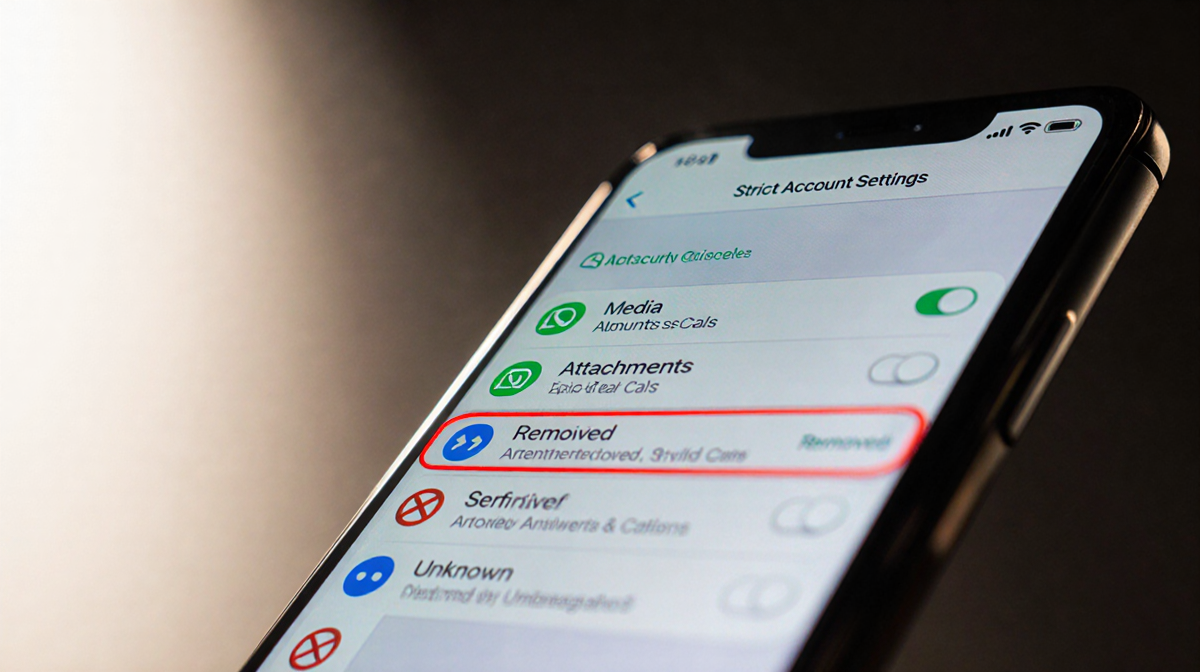
- WhatsApp introduces a new “Strict Account Settings” feature to limit exposure to unknown contacts.
- The setting blocks media, attachments, and calls from unknown senders, and turns off link previews.
- It also enables two-step verification and security notifications by default.
Why it matters: The rollout follows a lawsuit accusing Meta of misrepresenting WhatsApp’s privacy protections, prompting the company to tighten security for high-profile users.
WhatsApp has added a new security setting that aims to protect users from cyber attacks after a lawsuit accused the company of making false privacy claims about its chat app.
New Security Feature
The feature, called Strict Account Settings, adds restrictions such as:
- Automatically blocking media and attachments from unknown senders.
- Silencing calls from unknown numbers.
- Turning off link previews.
- Switching on the setting to block a high number of unknown messages.
How It Works
When the option is enabled, two-step verification is turned on by default. In addition, security notifications alert a user whenever the code of someone they are chatting with changes. The setting also limits visibility of:
- Last seen and online status.
- Profile photo.
- About details.
- Links on the profile.
These items are locked to only contacts.
Restrictions on Group Addition
If the new restrictive protection layer is enabled, only contacts or pre-selected people from contacts can add the user to groups. This limits the user’s exposure to unknown group invitations.
Implementation Steps
Users can activate the setting by following these steps:
- Open Settings.
- Tap Privacy.
- Go to Advanced.
- Turn on Strict account settings.
Meta notes that the setting can only be changed from a primary device, not from companion platforms such as WhatsApp for Web or Windows.
Company Statements
The company described the feature as a “lockdown-styled” security measure. It said:
“Strict account settings are an optional, lockdown-style security feature that, when enabled, reduces your vulnerability to cyber attack by limiting functionality. Your account is locked to more private settings, and your chats with others outside your contacts will have limitations,” the company’s description reads.
Meta also said the feature will roll out in the coming weeks and is useful for journalists and public figures.
Lawsuit Context
The timing of the rollout comes as a lawsuit accuses Meta of making false claims about WhatsApp security protections. The lawsuit alleges that Meta “stores, analyzes, and can access virtually all of WhatsApp users’ purportedly ‘private’ communications.”
WhatsApp head Will Cathcart rejected the allegations, calling the suit a “no-merit, headline-seeking lawsuit.”
User Impact
For users who value privacy, the new setting offers a comprehensive layer of protection against unknown contacts. It reduces the risk of phishing, spam, and unwanted media. Journalists, public figures, and anyone who may be targeted by cyber attacks can benefit from the tighter controls.
Key Takeaways
- Strict Account Settings blocks media, attachments, calls, and link previews from unknown senders.
- The setting automatically enables two-step verification and security notifications.
- Visibility of status, profile photo, and about details is limited to contacts.
- Only contacts can add the user to groups when the feature is active.
- The feature can only be changed from a primary device.
- The rollout follows a lawsuit that accuses Meta of misrepresenting WhatsApp’s privacy protections.
- Meta emphasizes the feature’s usefulness for high-profile users.
The feature’s release is part of Meta’s broader response to privacy concerns and regulatory scrutiny. It signals the company’s intent to provide stronger safeguards for its growing user base.