
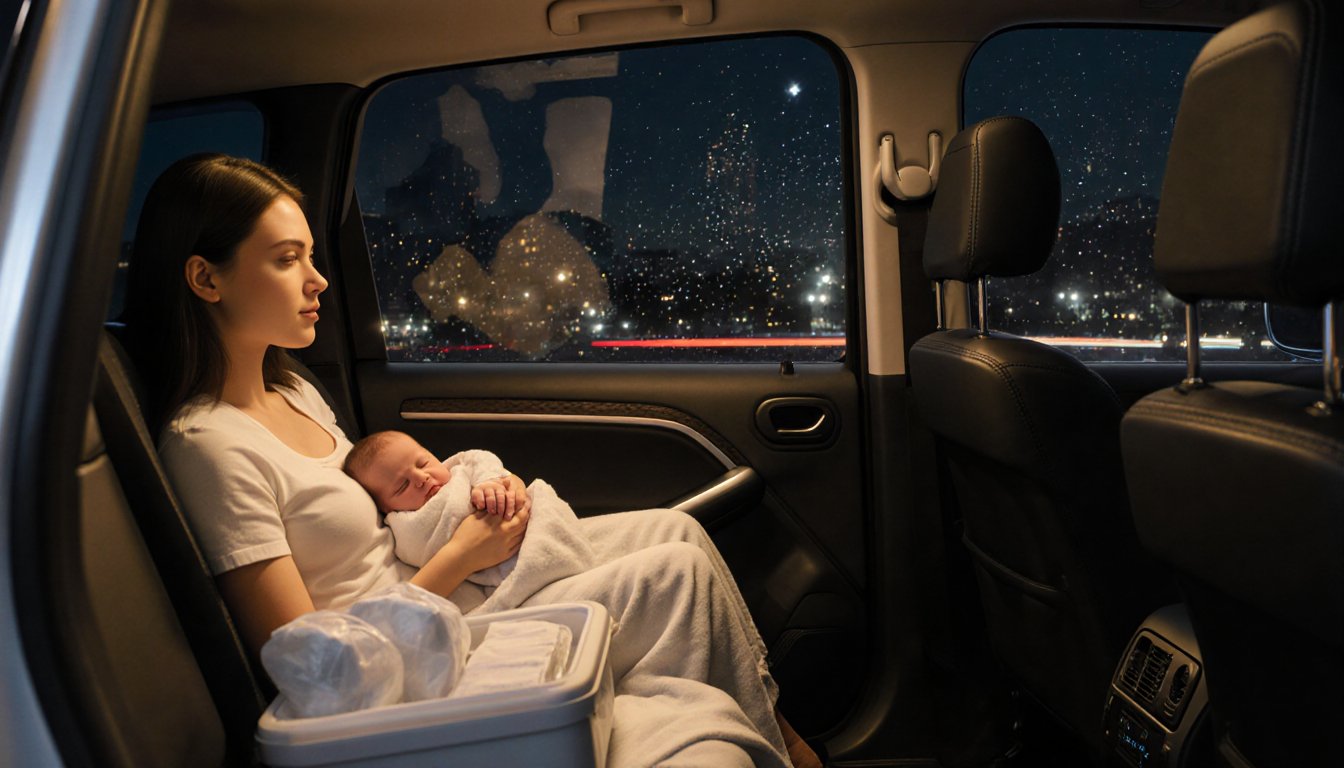

A Waymo ride in San Francisco turned into a birthing moment when a mother delivered a baby inside the autonomous vehicle on Monday night.
The incident occurred while the vehicle was en route to the University of California, San Francisco, where the mother was expected to receive medical care.
Waymo announced the event the following day, confirming that the vehicle’s remote support team had detected unusual activity.
The company stated that the mother and newborn were safely transported to hospital staff after the ride.
The Unexpected Birth
The mother, who chose a Waymo vehicle for her trip to UCSF, began to experience labor symptoms during the drive.
She was in the vehicle when the birth took place, with no assistance from a human driver present.
The vehicle’s sensors and onboard systems recorded the event, allowing the remote support team to respond.
No injuries were reported for the mother or the infant during the delivery.
Immediate Response by Waymo
Waymo’s remote rider support team monitored the vehicle’s telemetry throughout the trip.
When the team noticed irregular patterns, they immediately called the rider to verify her condition.
The rider confirmed that she was in labor, prompting the team to initiate emergency protocols.
The team also contacted 911 to arrange for ambulance assistance en route to the hospital.
The Waymo vehicle completed its scheduled route to UCSF, arriving at the emergency department without delay.
Hospital staff received the mother and newborn and began standard post‑delivery procedures.
Waymo’s remote support team remained on standby until the ambulance arrived.
The company reported that the entire process was carried out safely and efficiently.
Waymo’s response protocol includes real‑time monitoring of vehicle status and immediate notification of emergency services when anomalies are detected.
In this instance, the remote rider support team identified the birth through the vehicle’s unusual activity alerts.
The team’s swift action ensured that emergency medical personnel were dispatched before the mother reached the hospital.
The vehicle’s autonomous system continued to operate until the ambulance took over, maintaining a smooth transition.
The company emphasized that the remote support team’s role is to safeguard riders in unforeseen circumstances.
By promptly contacting 911, Waymo avoided potential delays in critical medical care.
The incident demonstrates the system’s capacity to handle emergencies without a human driver present.
Waymo’s technology relies on a combination of sensors, software, and a dedicated support network to address such events.
After the delivery, Waymo confirmed that the mother and baby were handed over to UCSF staff for further treatment.
The company stated that the vehicle’s journey was completed successfully, with no impact on other passengers.
Waymo’s remote rider support team logged the incident for future analysis and improvement of safety protocols.
The event was reported to the company’s internal safety review board.
Waymo’s internal documentation indicates that the vehicle’s sensors captured the birth moment, providing data for post‑incident review.
The company has not released detailed technical information about the sensors involved.
Nevertheless, the incident highlights the importance of continuous monitoring in autonomous vehicle operations.
Waymo’s commitment to safety is reflected in its rapid response and coordination with emergency services.
Waymo’s Public Statement
In a statement released on Tuesday, Waymo expressed gratitude for the safe outcome of the situation.
The spokesperson said, “We’re proud to be a trusted ride for moments big and small, serving riders from just seconds old to many years young,” a Waymo spokesperson said in a statement. “We wish the new family all the best, and we look forward to safely getting them where they’re going through many of life’s events.”
The statement reaffirmed the company’s mission to provide reliable transportation for all life events.
Waymo highlighted that the incident did not compromise the safety of other passengers or the vehicle’s operation.
The spokesperson noted that the vehicle’s remote support team was prepared to handle the situation.
Waymo has protocols in place for medical emergencies, including immediate communication with emergency services.
The company also mentioned that the vehicle was removed from service for cleaning after the incident.
No further details were disclosed regarding the cleaning procedures.
Waymo’s statement emphasized that the event was an isolated occurrence and that the company remains committed to safety.
The spokesperson added that the company will continue to refine its emergency response protocols.
Waymo expressed confidence that its autonomous system can support riders through a variety of life events.
The company thanked the emergency responders for their cooperation.
Post-Event Clean-Up
Following the birth, Waymo’s internal procedures dictated that the vehicle be taken out of service for a thorough cleaning.
The company stated that the vehicle was removed immediately after the incident.
Cleaning was performed to ensure the vehicle met hygiene standards before returning to public use.
The removal and cleaning process complied with the company’s safety and sanitation protocols.
Waymo did not provide specific details about the cleaning timeline or the cleaning agents used.
The company’s statement confirmed that the vehicle would not re-enter service until the cleaning was complete.
The cleaning operation was conducted by Waymo’s maintenance team, following standard operating procedures.
No impact on the vehicle’s technical functionality was reported.
Key Takeaways
- A Waymo vehicle carried a mother who delivered a baby en route to UCSF on Monday night.
- The remote rider support team detected unusual activity, contacted 911, and coordinated with emergency services.
- Waymo removed the vehicle from service for cleaning and released a statement affirming safety and commitment to riders.
Closing Thoughts
The incident demonstrates that autonomous vehicles can handle unexpected medical emergencies while maintaining passenger safety.
Waymo’s rapid response and coordination with emergency services highlight the system’s readiness for critical situations.
The company’s public statement underscores its dedication to supporting riders through life’s significant moments.
This event will likely inform future updates to Waymo’s safety protocols and emergency response procedures.
While the event was unique, it aligns with Waymo’s broader mission to provide reliable transportation for all ages and life events.
The company’s ability to respond to emergencies without a human driver present may influence public perception of autonomous vehicle safety.
Waymo’s commitment to transparency and safety will be closely watched by regulators and consumers alike.
The company’s continued focus on safety is expected to guide its future development.
Community Reaction
Local residents and commuters in San Francisco were surprised by the news of a birth occurring inside a Waymo vehicle.
Social media posts shared the story, with many expressing both astonishment and admiration for the company’s handling of the situation.
Some community members praised Waymo for its swift emergency response and the safe delivery of the newborn.
The incident sparked discussions about the role of autonomous vehicles in urban settings.
Significance for Autonomous Vehicles
This event underscores the importance of robust emergency protocols in self‑driving technology.
Waymo’s ability to detect and act upon medical emergencies demonstrates the potential for autonomous systems to support critical care scenarios.
The company’s response may serve as a case study for other autonomous vehicle operators.
Ensuring passenger safety remains a top priority as autonomous technology continues to evolve.
Hospital Role
UCSF’s emergency department was prepared to receive the mother and newborn promptly.
Hospital staff provided standard post‑delivery care and coordinated with ambulance services.
The seamless handoff between Waymo and the hospital illustrates effective collaboration between transportation and healthcare providers.
The incident highlights the need for clear communication protocols between autonomous vehicles and emergency medical services.
Final Note
Waymo’s handling of the unexpected birth will be reviewed by the company’s safety team to refine protocols.
The company has reiterated its commitment to safe, reliable rides for all life events.
Stakeholders will monitor how this incident influences future autonomous vehicle operations.
For now, the mother, newborn, and emergency responders are the focus of the story, with the vehicle returning to service after cleaning.