

At a Walmart in North Bergen, New Jersey, an 86‑year‑old retiree named Eileen Gowlak stood outside a store in November and watched prices climb.
“I noticed the clothing went up, and they don’t have the sales they used to have,” Gowlak said. She explained that she had stopped buying new clothes, choosing instead to focus on groceries. Her experience is shared by many of Walmart’s core shoppers.
Walmart’s Core Customers Face Rising Costs
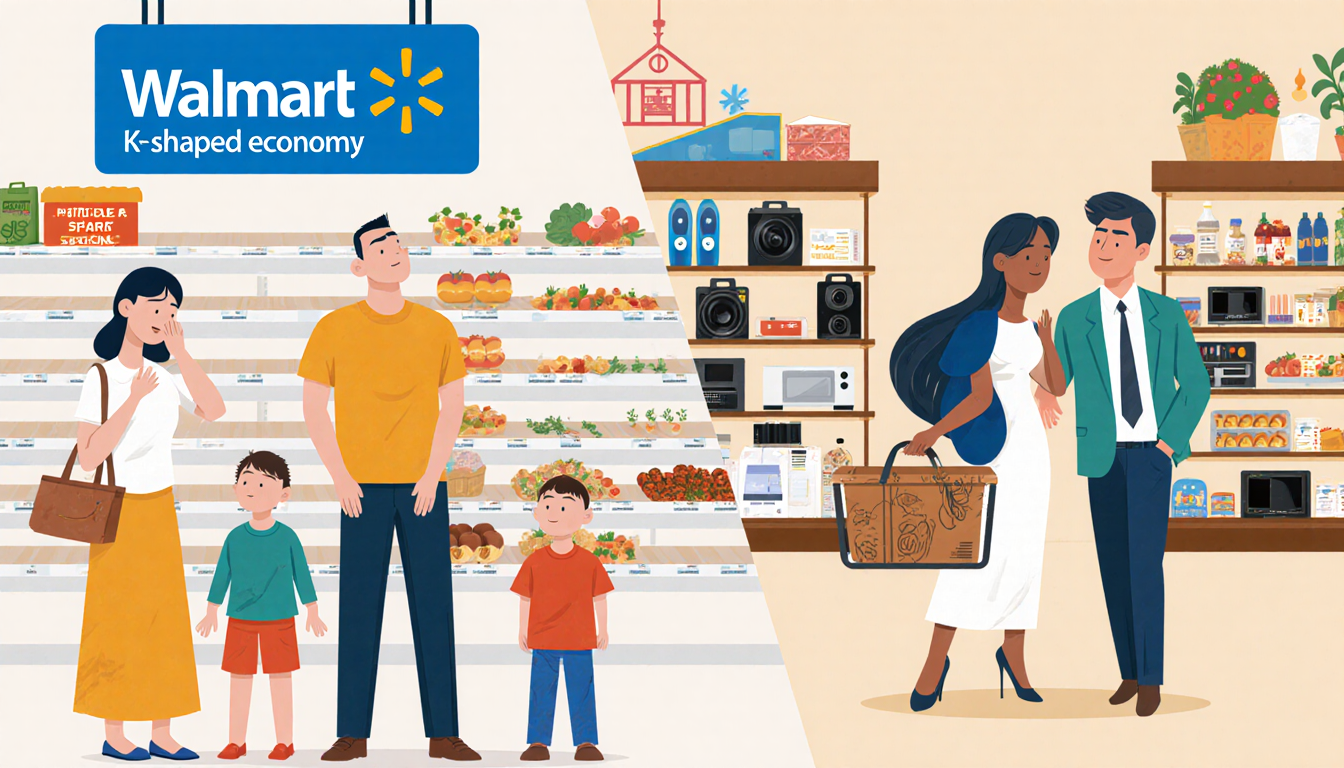
For millions of Walmart’s lower‑ and middle‑income customers, wage growth has slowed, spending has fallen, and inflation and tariffs are making everyday purchases feel too expensive. “You’re seeing more consumer dollars go to necessities versus discretionary items,” John David Rainey, chief financial officer of Walmart U.S., said on a call with analysts last month. The shift is part of a broader trend in U.S. consumer spending that sees wealthier shoppers driving a larger share of retail sales while the rest of the population stagnates or falls behind.
A K‑Shaped Economy in Action
Economists refer to this divergence as the two legs of a “K‑shaped” economy. The wealthy, buoyed by stock‑market gains and higher wage growth, are fueling an outsize share of consumer spending. On the other leg, the rest of the population is lagging. Inflation has risen for five straight months, reaching 3.02% year‑over‑year in September, even as the rate of inflation has come down from its highs during the Biden administration.
Walmart’s Strategic Pivot to Affluent Shoppers
Walmart, the country’s largest retailer, has recently warmed to high‑income shoppers. The company reported stronger‑than‑expected quarterly sales and market‑share growth driven primarily by more affluent customers. “I think it’s indicative of how Walmart is changing and how our customer base is changing,” Rainey said at a retail industry conference in New York this month. Walmart is renovating more than 1,400 stores and adding upscale products to appeal to this demographic.
The New Walmart Experience
Mary Izzo, a New Jersey shopper, said, “I come here for my Olipops,” Izzo said outside a Walmart. She added that she also picks up other items. The renovations and inventory changes are part of Walmart’s effort to shed its original no‑frills discount identity and emerge as a tech‑centric destination for consumers across the economic spectrum. On Tuesday, shares of Walmart will begin trading on the tech‑heavy Nasdaq after more than 50 years of trading on the New York Stock Exchange.
Competitors Follow Suit
Dollar Tree’s CEO said last week that most of its new customers make more than $100,000 a year. Dollar General’s CEO also noted growth among higher‑income shoppers. “It concerns me when I hear that affluent customers are shopping at lower‑price retailers like Walmart and TJX because it’s a sign that things are getting expensive all around,” shopping expert Trae Bodge said. “Obviously, if you’re more affluent, you can afford to buy the things you need. But if you’re seeking out lower prices, then where does the lower‑cost consumer go?”
Walmart’s Past Attempts
Walmart’s first surge in higher‑income shoppers occurred during the 2008‑09 financial crisis. Analysts found that many of these consumers returned to competitors when the economy improved. A decade later, soaring inflation in the wake of the Covid pandemic brought higher‑income shoppers back to Walmart, starting in the grocery section where the retailer has dominated for more than 20 years. Today, the company says many higher‑ and middle‑income consumers who previously stuck to the grocery aisles now shop across the whole store.
Peyton Riley’s Story
Peyton Riley, 32, lives with her husband and three kids in Mayfield, Kentucky. “Our Walmart here, it just now revamped, so it’s almost starting to look like Target in a way, the way it’s set up and their clothing section,” she said. Riley’s husband makes around $75,000 a year. Since the store’s renovation, Riley has cut back her spending at mass‑market fashion retailers like American Eagle and Old Navy. “I don’t love the economy right now,” Riley said. “It’s not that we’re struggling. But we are trying to make better choices.”
Holiday Shopping and Debt
The National Retail Federation reports that a record 203 million people shopped during the Thanksgiving holiday weekend, and it expects holiday sales to top $1 trillion this year for the first time. Some shoppers are financing their holiday purchases with short‑term loans. A recent PayPal survey showed that around half of respondents said they planned to use “buy now, pay later” plans for their holiday shopping this year. The use of BNPL plans for online shopping hit a one‑day record on Cyber Monday, topping $1 billion for the first time, according to Adobe.
Consumer Confidence and Job Market
U.S. small businesses shed 120,000 jobs in November, according to the payroll processor ADP. The outlook was a little better for larger employers, but small businesses are considered the canaries in the coal mine for the U.S. labor market. Consumer confidence fell in November to its lowest point since April, according to a recent Conference Board survey.
Walmart’s Earnings Release
Reaching for comment, a Walmart spokesperson pointed NBC News to the company’s most recent earnings release. The release highlighted the retailer’s stronger‑than‑expected sales and its continued focus on attracting affluent shoppers.
Key Takeaways
- Walmart is pivoting toward higher‑income shoppers through store renovations and upscale products.
- The K‑shaped economy shows wealthier consumers driving a larger share of retail sales while others lag.
- Holiday shoppers are increasingly using BNPL plans, raising concerns about debt levels in 2026.
The shift in Walmart’s strategy reflects a broader change in the retail landscape, where budget‑friendly companies are courting well‑to‑do customers while traditional shoppers grapple with rising costs and tightening budgets. As the holiday season approaches, consumers across income levels will face the challenge of balancing spending with the growing pressure of debt and inflation.