

At a Glance
- Autonomous startup Waabi raised $1 billion in a Series C round and secured a partnership with Uber to deploy robotaxis.
- Uber will provide roughly $250 million in milestone capital for a potential deployment of 25 000 or more Waabi Driver-powered vehicles.
- The deal marks Waabi’s first move beyond trucking into passenger transport.
Why it matters: The partnership could accelerate the availability of self-driving cars on a major ride-hailing platform and test a single AI stack across two verticals.
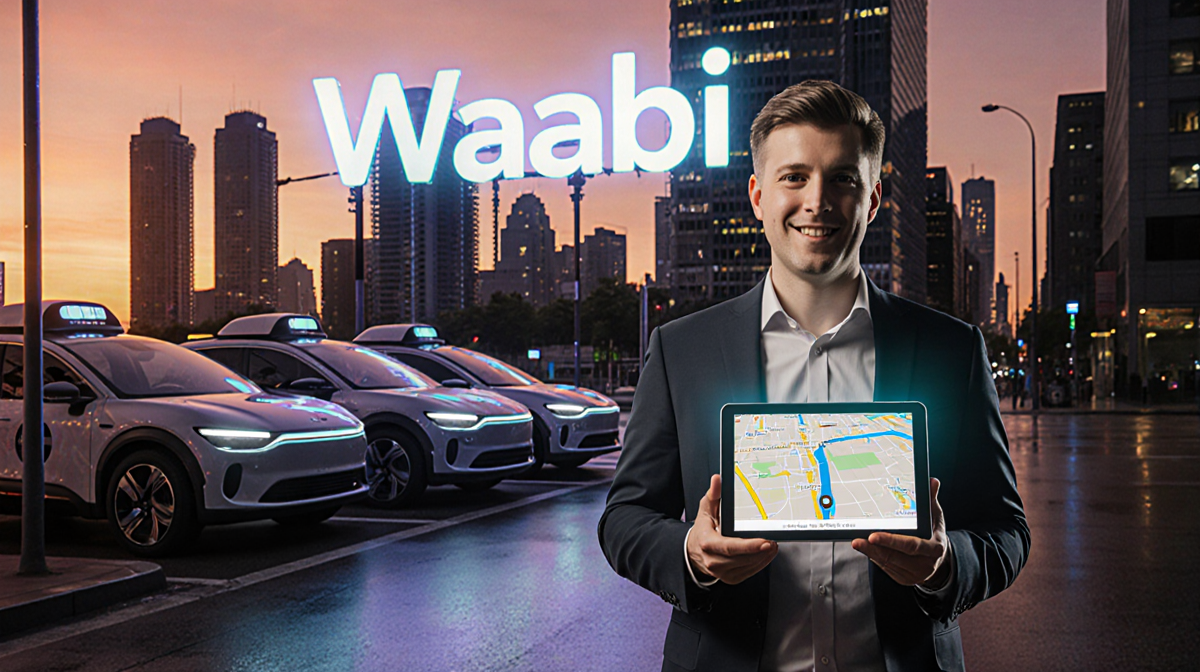
Waabi, a California-based autonomous-vehicle firm founded by former Uber chief scientist Raquel Urtasun, has announced a $1 billion funding round that includes an oversubscribed $750 million Series C led by Khosla Ventures and G2 Venture Partners. Uber has also injected roughly $250 million in milestone-based capital to support a large-scale deployment of Waabi’s Driver on its platform.
Funding and Partnership Details
The Series C round and Uber’s investment bring Waabi’s total capital to roughly $1.28 billion. Other investors in the round include NVentures (Nvidia’s VC arm), Volvo Group Venture Capital, Porsche Automobil Holding SE, BlackRock, and BDC Capital’s Thrive Venture Fund.
- Series C: $750 million, oversubscribed, co-led by Khosla Ventures and G2 Venture Partners.
- Uber milestone capital: $250 million, tied to deployment milestones.
- Target deployment: 25 000 or more Waabi Driver-powered robotaxis exclusively on Uber’s platform, with no timeline disclosed.
The partnership follows Waabi’s existing collaboration with Uber Freight and builds on the company’s earlier work in autonomous trucking.
Waabi’s AI Advantage
Urtasun has emphasized that Waabi’s technology can serve both trucking and passenger transport with a single, generalizable AI architecture. She said:
> “Our incredible core technology really enables, for the first time, a single solution that can do multiple verticals, and they can do them at scale. It’s not about two programs, two stacks.”
The company’s approach relies on a closed-loop simulator called Waabi World, which creates digital twins, simulates sensors, and generates scenarios to stress-test the Driver. This allows the system to learn from fewer examples than traditional AV systems.
Urtasun also noted that Waabi’s Driver can generalize to different vehicle form factors and hinted at future robotics applications. “We don’t need the gazillion humans to develop the technology and the large fleets that AV 1.0 needs,” she said. “We don’t need the massive data centers, energy consumption, or a gazillion latest chips.”
Deployment Timeline and Current Status
| Milestone | Date | Status |
|---|---|---|
| Series B closed | June 2024 | $200 million |
| First commercial pilots | 2021-2022 | Pilot trucks in Texas |
| Planned full driverless truck launch | End of 2025 | Delayed to next quarters |
| Uber partnership announced | October 2026 | Pending deployment |
Waabi has already launched several commercial pilots in Texas with a human driver in the front seat. The company planned to launch a fully driverless truck on public highways by the end of 2025, but the rollout has been delayed until the next few quarters, per Urtasun.
The partnership with Uber will also coincide with Uber’s launch of a new division called Uber AV Labs, which will use its vehicles to collect data for AV partners.
Market Context
Uber has partnered with several autonomous-vehicle firms to deploy self-driving vehicles on its platform worldwide, including Waymo, Nuro, Avride, Wayve, WeRide, and Momenta. Waabi’s entry into passenger transport adds a new player that can operate across multiple verticals with a single AI stack.
Competitors such as Aurora Innovation and Kodiak Robotics have raised $3.46 billion and $448 million to date, respectively, through a mix of venture capital and public-market proceeds.
Key Takeaways
- Waabi’s $1 billion funding round and Uber partnership signal confidence in a single-stack approach to autonomous trucking and passenger transport.
- Uber’s $250 million milestone capital aims to deploy 25 000 or more Waabi Driver-powered robotaxis, though no deployment date has been set.
- The partnership builds on Waabi’s proven trucking technology and its closed-loop simulation platform, Waabi World.
- Waabi’s total funding now sits at roughly $1.28 billion, placing it behind Aurora and Kodiak in terms of capital raised.
- The deal will test the scalability of Waabi’s technology on a major ride-hailing platform and could accelerate the availability of self-driving cars.