
At a Glance
- U.S. forces captured the Motor Tanker Veronica in the Caribbean Sea
- The tanker is the sixth seized as part of Trump’s Venezuela oil strategy
- $100 billion investment planned to rebuild Venezuela’s oil industry
- 30-50 million barrels of sanctioned oil expected to be sold
Why it matters: The seizure signals intensifying U.S. efforts to control Venezuela’s oil resources and reshape global energy markets.
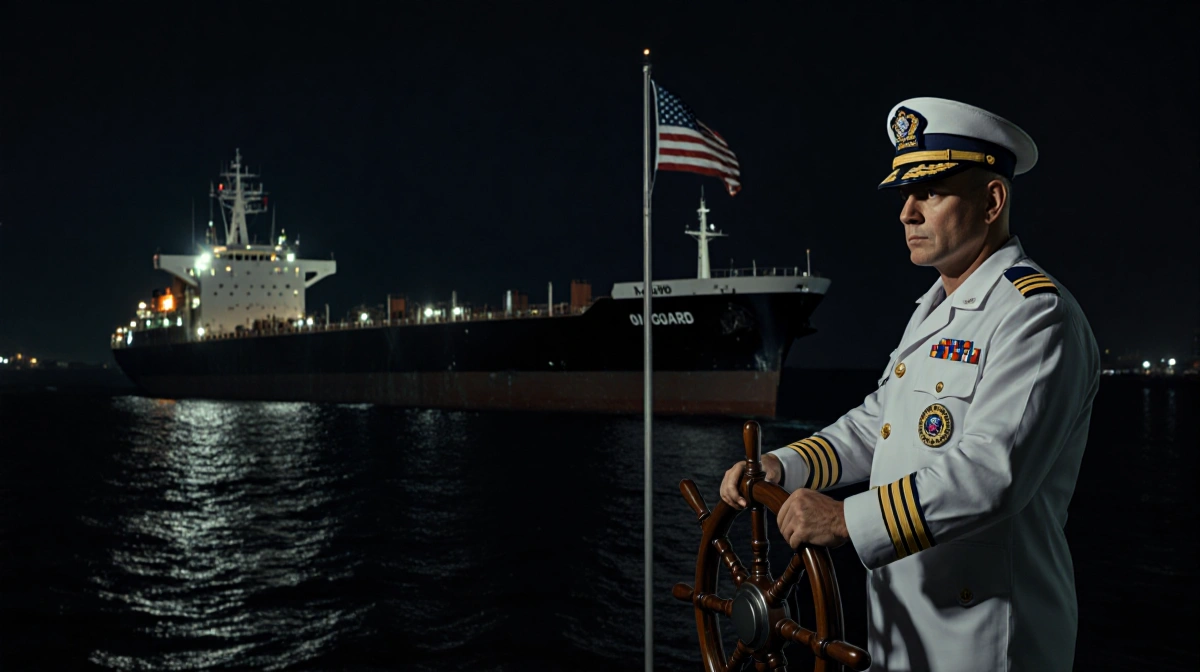
U.S. forces have seized another sanctioned oil tanker in the Caribbean Sea, marking the sixth such capture as the Trump administration intensifies efforts to control Venezuela’s oil operations.
Homeland Security Secretary Kristi Noem announced the capture of the Motor Tanker Veronica in a Thursday social media post, noting the vessel had previously passed through Venezuelan waters and was operating in defiance of established quarantine measures.
Military Operation Details
The operation involved multiple branches of the U.S. military. According to U.S. Southern Command’s social media post, Marines and sailors launched from the aircraft carrier USS Gerald R. Ford to conduct the capture.
Noem’s post highlighted that a U.S. Coast Guard tactical team conducted the boarding and seizure, following the same pattern as previous operations. She shared black-and-white video footage showing helicopters hovering over the merchant vessel while armed troops descended to the deck via rope.
The capture represents the fourth tanker seizure since the U.S. ousted Venezuelan President Nicolás Maduro in a surprise nighttime raid almost two weeks ago. The Veronica becomes the sixth overall tanker seized by U.S. forces in the broader campaign.
Coordination Across Agencies
Noem emphasized the inter-agency coordination required for such operations. In her social media post, she stated the raid was carried out with “close coordination with our colleagues” in the military as well as the State and Justice departments.
“Our heroic Coast Guard men and women once again ensured a flawlessly executed operation, in accordance with international law,” Noem added.
The administration consistently frames these seizures as law enforcement actions. Noem argued that the multiple captures demonstrate that “there is no outrunning or escaping American justice.”
Economic Strategy Behind Seizures
While officials like Noem present the seizures as law enforcement, other administration officials acknowledge the economic motivations. The Trump administration views these operations as a way to generate cash while rebuilding Venezuela’s oil industry.
Last week, Trump met with executives from oil companies to discuss his goal of investing $100 billion in Venezuela to repair and upgrade its oil production and distribution infrastructure. The administration expects to sell at least 30 million to 50 million barrels of sanctioned Venezuelan oil.
The broader U.S. effort aims to control Venezuela’s oil production, refining capabilities, and global distribution networks. This represents a significant shift in U.S. policy toward direct management of another nation’s energy resources.
The Pattern of Seizures
The Veronica seizure follows an established pattern in the Trump administration’s Venezuela strategy. Each operation involves:
- Detection of tankers in Caribbean waters
- Military deployment from aircraft carriers
- Coast Guard tactical teams conducting boardings
- Social media announcements highlighting law enforcement aspects
This systematic approach suggests a long-term strategy rather than isolated incidents. The frequency of seizures has increased since Maduro’s capture, with four tankers taken in under two weeks.
International Law Considerations
Noem specifically noted that operations are conducted “in accordance with international law,” though the administration’s interpretation of maritime law in these cases remains contentious.
The quarantine of sanctioned vessels in the Caribbean represents a significant expansion of U.S. enforcement authority in international waters. This approach allows for the interception of vessels based on their connection to Venezuelan oil, regardless of their immediate destination.
Impact on Global Oil Markets
The seizure of six tankers carrying Venezuelan oil creates immediate supply disruptions. With plans to sell 30-50 million barrels of sanctioned oil, the U.S. aims to profit from these operations while restricting Venezuela’s ability to generate revenue independently.
The $100 billion investment plan signals ambitious goals for Venezuela’s oil sector recovery. This level of investment would represent one of the largest foreign commitments to South American energy infrastructure in decades.
Key Takeaways
- The Motor Tanker Veronica becomes the sixth Venezuelan oil tanker seized by U.S. forces
- Operations involve coordinated efforts between military branches and federal agencies
- The Trump administration frames seizures as law enforcement while pursuing economic goals
- Plans for massive investment and oil sales suggest long-term U.S. involvement in Venezuela’s energy sector
- The frequency of seizures has accelerated following Maduro’s capture
The pattern of tanker seizures, combined with ambitious investment plans, indicates the Trump administration’s commitment to reshaping Venezuela’s role in global energy markets through direct intervention.