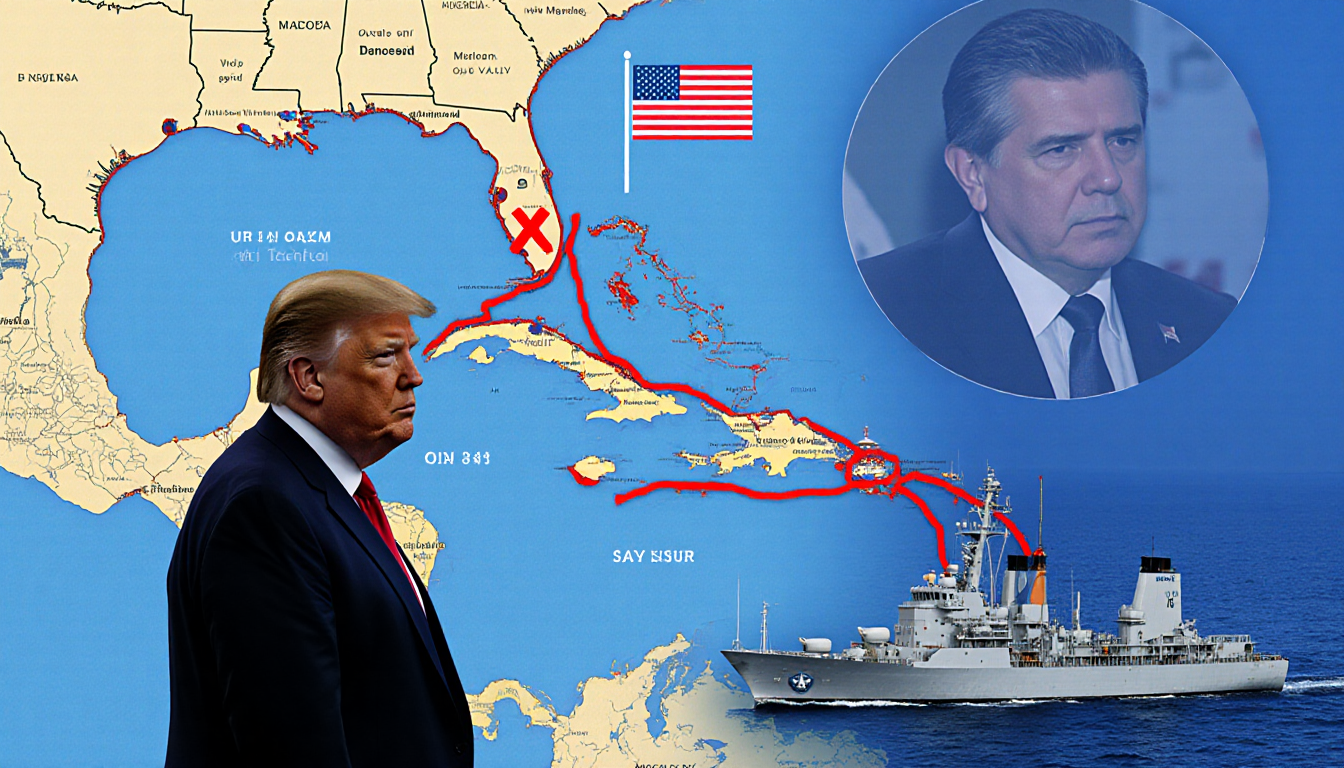
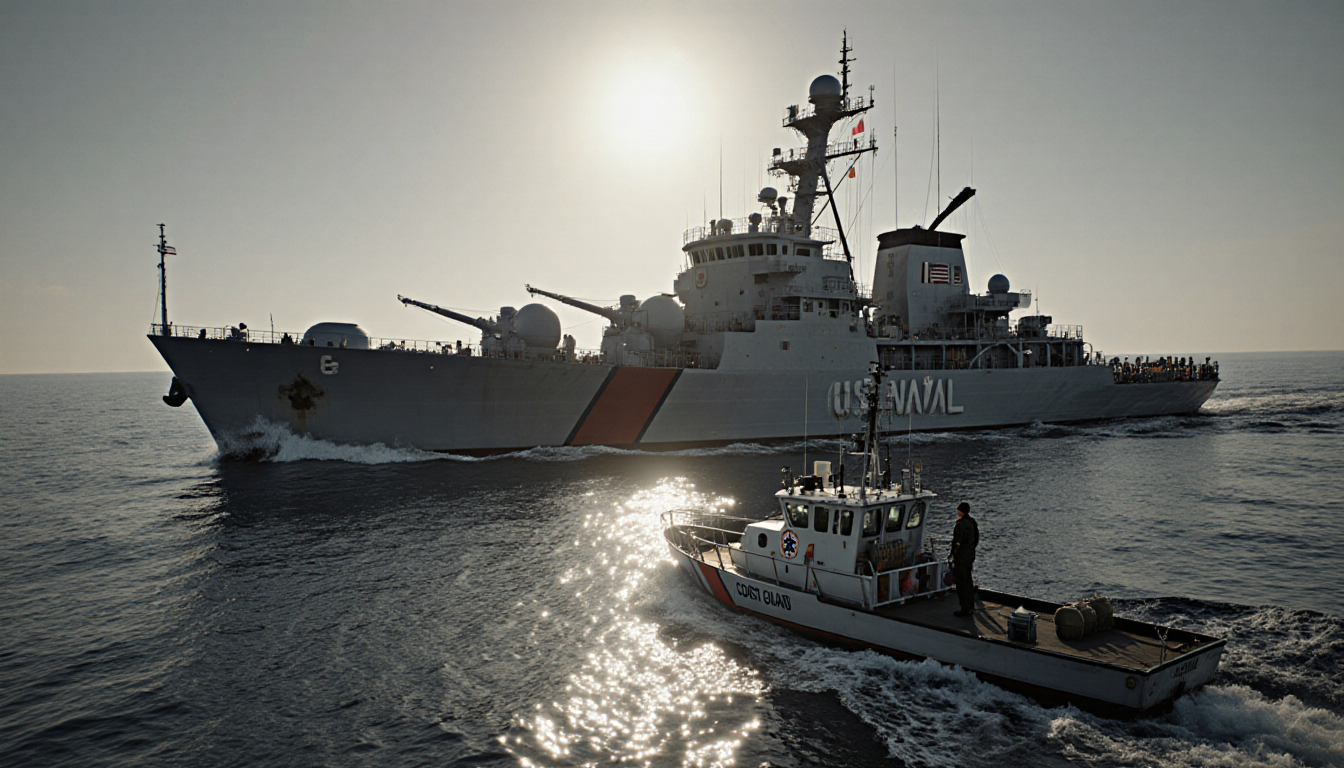
President Donald Trump announced on Wednesday that the United States military has seized an oil tanker off the coast of Venezuela, marking a significant escalation in the administration’s efforts to curb illicit maritime activity in the region. The seizure, described as the largest tanker ever taken by U.S. forces, was revealed during a briefing to reporters, setting off a chain of reactions from financial markets to political observers. Trump’s statement came amid a broader context of heightened U.S. military presence in the Caribbean, as the administration seeks to counter drug trafficking and other criminal enterprises that operate near Venezuela’s shores. The announcement also underscored the administration’s commitment to enforcing maritime security in a volatile geopolitical environment.
Seizure Details
The U.S. Navy seized the tanker, but the administration did not disclose the vessel’s name, flag, or the specific circumstances surrounding the operation. Trump emphasized that the event was “interesting” and hinted that additional details, including photographic evidence, would be released in the future. He added, “You’ll discuss that with the appropriate people later on,” suggesting that the information would be shared with relevant authorities before becoming public. Trump also said, “Large tanker, very large, largest one ever seized actually.” Despite the lack of specifics, the seizure was confirmed by the Pentagon, and the operation was portrayed as a decisive action against a target deemed to pose a threat to U.S. interests in the region.
Trump’s Remarks
During the briefing, Trump reiterated his earlier comments to Politico, in which he warned that Venezuelan President Nicolás Maduro’s “days are numbered.” The President declined to comment on whether the United States could deploy troops to Venezuela, leaving the question of a potential ground presence unanswered. The administration’s focus, according to Trump, remains on maritime operations, with the seizure of the tanker representing a tangible step toward safeguarding U.S. maritime commerce and countering illicit activities linked to drug cartels operating near Venezuela. The statement also reflected the administration’s broader strategy of using military force to disrupt criminal networks in the Caribbean.
Oil Market Reaction
Oil markets reacted quickly to the news, with crude prices rising steadily throughout the day. At 3:45 p.m. Eastern Time, the price of crude oil peaked at a gain of more than 1.3 percent, or approximately 75 cents per barrel. The uptick in prices reflected investors’ concern over potential disruptions to global oil supplies and the impact of increased U.S. military activity in the region. Analysts noted that the price of crude is a primary factor influencing the cost of gasoline at retail pumps, meaning that the seizure could have indirect effects on consumers across the United States.
Military Buildup
The U.S. administration’s military buildup in the Caribbean has accelerated over the past month. In addition to the seizure of the tanker, the United States sent the USS Gerald R. Ford aircraft carrier to the region. The carrier hosts squadrons of fighter jets and guided‑missile destroyers, providing a formidable presence in the Caribbean Sea. The deployment is part of a broader strategy to project power and deter criminal maritime activity. By positioning advanced naval assets near Venezuela, the administration aims to create a deterrent effect against vessels suspected of drug trafficking and other illicit operations that threaten U.S. security interests.
Drug Vessel Strikes
Since September, the United States has targeted alleged drug vessels in the Caribbean. Trump has defended these strikes by describing the U.S. as being in an “armed conflict” with drug cartels, labeling the boats as operated by foreign terrorist organizations. The administration has justified the use of force as necessary to protect U.S. maritime commerce and national security. Critics argue that such actions blur the line between law enforcement and military engagement, raising questions about the legality and proportionality of the strikes. Nonetheless, the administration maintains that these operations are essential to countering the influence of drug trafficking networks in the region.
Hegseth Controversy
Defense Secretary Pete Hegseth has faced scrutiny following a September 2 strike on a boat that included a secondary hit, which killed two survivors of the initial attack. The incident prompted criticism that the double‑tap strike may constitute a war crime. Hegseth defended the strike by stating that he did not personally see the survivors before approving the second hit, citing the “fog of war.” The controversy has highlighted the challenges of conducting kinetic operations in a complex maritime environment, where distinguishing between combatants and non‑combatants can be difficult. The incident has also prompted calls for greater oversight and accountability within the U.S. military’s counter‑drug operations.
Congressional Inquiries
Both the House and Senate have initiated bipartisan inquiries into the administration’s attacks on drug vessels. A Democratic congressman from Massachusetts, who serves on the House Armed Services Committee and the House Foreign Affairs Committee, has reacted to the revelation that two shipwrecked survivors were killed in the second strike in September. The inquiries aim to examine the decision‑making process, the use of force, and the adherence to international law. Lawmakers are calling for transparent investigations to ensure that U.S. military actions remain consistent with legal standards and ethical obligations.
Maduro Situation and Reward
Venezuelan President Nicolás Maduro has accused the United States of attempting to fabricate a war against him. Maduro was charged in 2020, during the first Trump administration, with narco‑terrorism and conspiracy to import cocaine. In response, Trump offered a $50 million reward for Maduro’s arrest, and the United States is offering the same amount for information leading to his arrest, accusing him of ties to criminal organizations such as Tren de Aragua. The reward underscores the administration’s determination to hold Maduro accountable for alleged involvement in illicit activities, while also signaling a broader strategy of targeting foreign leaders implicated in criminal networks.
Closing
The seizure of the largest oil tanker off Venezuela’s coast, combined with the deployment of the USS Gerald R. Ford and ongoing strikes against suspected drug vessels, marks a decisive chapter in the United States’ maritime security strategy. Trump’s remarks, the market reaction, and the political fallout illustrate the complex interplay between military action, economic impact, and international relations. As the administration continues to release additional information, observers will monitor how these developments influence U.S. policy in the Caribbean and the broader geopolitical landscape surrounding Venezuela.
Key Takeaways
- President Trump announced the seizure of the largest oil tanker off Venezuela, prompting market movements and signaling intensified U.S. military activity in the Caribbean.
- The administration has increased naval presence, including the USS Gerald R. Ford, and has conducted targeted strikes against alleged drug vessels since September.
- Congressional investigations and legal scrutiny are underway over the strikes and the broader strategy, while Maduro faces a $50 million reward for his arrest.