

In a striking release on Tuesday, the Bureau of Economic Analysis announced that the U.S. economy grew 4.3% during the third quarter-its strongest quarterly expansion in two years.
A Robust Third-Quarter Growth
The 4.3% figure, delayed by a historic government shutdown, covers July, August and September. Analysts and economists surveyed by Dow Jones had expected a 3.2% rise, making the actual reading a surprise. The estimate is the first of three revisions that will be issued as additional data becomes available.
The original release date was October 30, but the shutdown pushed the announcement back.
What Fueled the Upswing?
The Bureau highlighted several key drivers:
- Consumer spending rose 3.5% on an annual basis, the fastest growth since the end of 2024. The services sector, especially health care and international travel, accounted for most of the gains. Within health care, both outpatient services and hospital and nursing home services increased.
- Exports and government spending also contributed.
- Imports fell, reducing the subtraction in the GDP calculation.
The surge in consumer spending is uneven. Wealthy households have largely maintained their spending patterns despite rising living costs, while middle- and lower-income households have cut back in response to a weaker labor market, tariffs and inflation.
Consumer Debt and Credit
Credit card balances climbed $24 billion during the third quarter, reaching a level 5.75% higher than a year ago, according to the Federal Reserve Bank of New York’s 2025 third-quarter data.
Citigroup economists noted that “consumer spending had been volatile this year and the softening labor market implies a slower pace of spending next year.” They cautioned that the increased debt load could weigh on future consumption.
Investment and the AI Boom
Paul Ashworth, chief North America economist at Capital Economics, observed that “investment in non-residential structures contracted at a 6.3% pace,” suggesting that the AI boom might have taken a step backwards after driving GDP growth in the first half of the year. He added that more data may be needed before a definitive conclusion could be drawn.
Market Reaction
Stocks traded around a flat line following the release, and Treasury yields rose slightly.
Sentiment Behind the Numbers
While the data showed strong growth, consumer sentiment painted a different picture.
The University of Michigan’s Surveys of Consumers for December found that sentiment improved in the first part of the month compared to the same period in November. However, when compared to December 2024, sentiment dropped by nearly 29%.
The latest Conference Board Consumer Confidence Index for December showed a decline of 3.8 points from the previous month, “well below this year’s January peak,” said Dana M. Peterson, chief economist at the Conference Board. Peterson added that inflation and tariffs were among the top factors consumers said were affecting the economy.
An NBC News Decision Desk Poll released in December reported a mixed view of personal finances: 35% of respondents said their finances are worse now, 41% said they are about the same as last year, and only 24% said they are better than in 2024.
Inflation Context
Inflation rose noticeably since April, hitting 3% in September before declining to 2.7% in November. Economists widely believe the November decline was due to the lack of data collected during the government shutdown.
President Trump’s Take
After the GDP announcement, President Trump posted on Truth Social: “The TARIFFS are responsible for the GREAT USA Economic Numbers JUST ANNOUNCED,” and added, “AND THEY WILL ONLY GET BETTER!” He also claimed there is “NO INFLATION.”
Key Takeaways
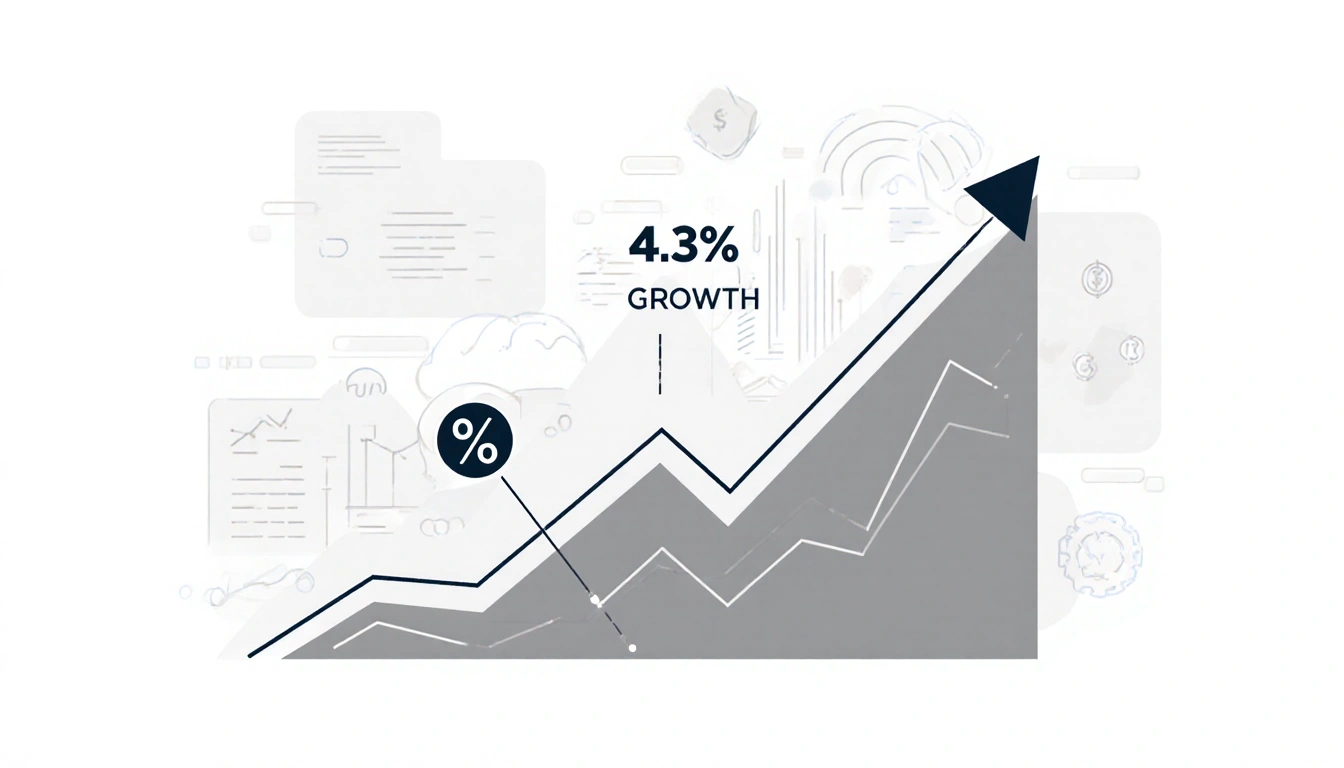
- The U.S. economy grew 4.3% in Q3, the best quarterly expansion in two years and above the 3.2% forecast.
- Consumer spending, especially in services and health care, drove the growth, while imports fell.
- Credit card debt rose 5.75% YoY, raising concerns about future consumer spending.
- Market sentiment remains muted, with consumer confidence down sharply from the previous year.
- Inflation has eased in November, but the decline may reflect data gaps from the shutdown.
The initial estimate paints a picture of resilience amid tariff relief, but consumer sentiment and rising debt suggest caution for the months ahead.