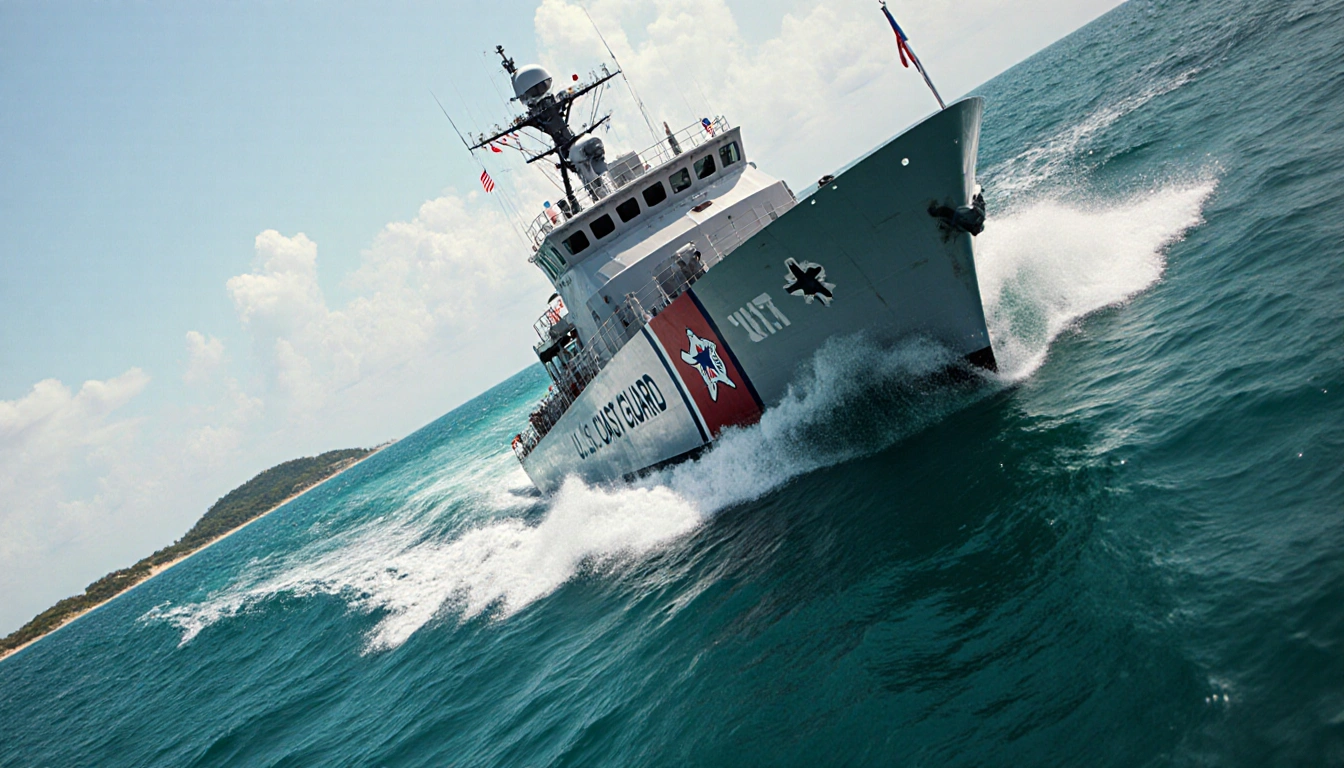

U.S. Coast Guard is actively pursuing a sanctioned vessel off the coast of Venezuela, marking the third interception in the Caribbean this month.
The Active Pursuit
Two U.S. officials with knowledge of the matter told NBC News that the Coast Guard is “in active pursuit of a sanctioned dark fleet vessel that is part of Venezuela’s illegal sanctions evasion. It is flying a false flag and under a judicial seizure order,” one of the officials said. The quote was relayed during a briefing that emphasized the vessel’s use of a false flag to conceal its identity. The judicial seizure order indicates that the U.S. has legal authority to detain the ship if it is found within U.S. jurisdiction. The officials did not disclose the vessel’s name or registration.
Recent Interceptions in the Caribbean
This pursuit will be the third U.S. interception in the Caribbean. On Saturday, the Pentagon interdicted a second tanker that the White House said carried sanctioned oil on board. Earlier this month an initial, sanctioned boat known as the Skipper was seized off the coast of Venezuela. These actions demonstrate a sustained effort by U.S. authorities to enforce sanctions against Venezuelan entities. Each interception is reported to the U.S. Treasury Department for further legal processing.
Background: Venezuela’s Sanctions Evasion
Venezuela has been accused of using a “dark fleet” of vessels to evade U.S. sanctions. The dark fleet operates by registering ships under foreign flags and using false documentation. The Coast Guard’s pursuit of the current vessel underscores the U.S. commitment to blocking illicit trade routes. The false flag used by the vessel is a common tactic in sanctions evasion, allowing ships to avoid detection by U.S. maritime authorities.
U.S. Officials’ Statements
Earlier Saturday, two U.S. officials told NBC News that the Coast Guard was in the middle of an ongoing operation off the Venezuelan coast. The operation was first reported by Reuters. The officials confirmed that the vessel was under a judicial seizure order, which provides a legal basis for detainment. They also emphasized that the pursuit is part of a broader strategy to enforce sanctions in the region.
Tensions and Military Actions

Tensions have been flaring between the U.S. and Venezuela. The Trump administration has conducted strikes on alleged drug boats in the Caribbean Sea and eastern Pacific. President Donald Trump did not rule out the possibility of war with Venezuela earlier this week. He also said that Venezuela President Nicolas Maduro “doesn’t want to mess around with the United States,” following a series of strikes against an alleged Venezuelan drug cartel boat in international waters.
Operation Details
The Coast Guard’s operation is taking place in international waters off the Venezuelan coast. A U.S. Coast Guard logo was displayed on a rescue boat on September 28, 2024, in San Diego, California, as part of a public relations effort. The photo was taken by Kevin Carter and distributed by Getty Images. The operation’s specifics, including the vessel’s exact location and movements, remain confidential.
Key Takeaways
- The U.S. Coast Guard is pursuing a sanctioned Venezuelan vessel that flies a false flag.
- The pursuit is the third interception in the Caribbean this month.
- The vessel is subject to a judicial seizure order.
- Recent U.S. actions include interdiction of a tanker carrying sanctioned oil and the seizure of the Skipper.
- U.S.-Venezuela tensions have escalated, with the Trump administration conducting strikes on alleged drug boats.
Closing
The U.S. Coast Guard’s active pursuit of the sanctioned vessel illustrates the ongoing enforcement of U.S. sanctions against Venezuelan entities. With a judicial seizure order in place, the Coast Guard is prepared to detain the ship if it enters U.S. jurisdiction. The operation, reported by Reuters and confirmed by NBC News, reflects a broader strategy to curb illicit maritime activity in the Caribbean. As tensions between the United States and Venezuela continue to rise, the Coast Guard’s actions remain a key component of the U.S. response to sanctions evasion.