
At a Glance
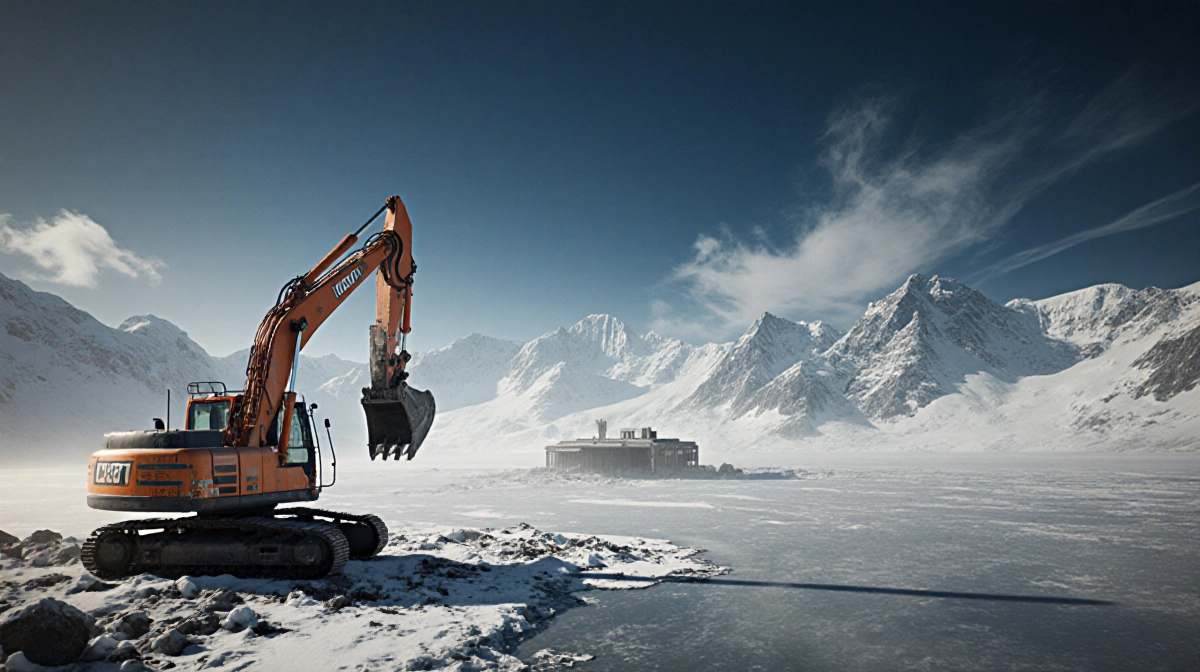
- Greenland holds the world’s largest untapped rare earth reserves with zero active mines
- China controls 98% of gallium and 60% of germanium global supply chains
- A bipartisan bill proposes a $2.5 billion U.S. strategic rare earth reserve
- Why it matters: America’s tech and defense industries depend on minerals now dominated by geopolitical rivals
President Donald Trump’s renewed push to bring Greenland under U.S. control has thrust the island’s vast but largely unmined mineral wealth into the geopolitical spotlight, even as industry figures warn the deposits may never pencil out.
House Speaker Mike Johnson told The Hill this week that America’s interest in Greenland “has to do with national security and critical minerals and many other reasons.” Yet Trump himself told reporters in December, “We need Greenland for national security, not for minerals”-a split that underscores the uncertainty over whether the island’s resources can be extracted profitably.
The Rare Earth Prize
Greenland sits on the world’s largest known rare earth reserves outside active mining, according to the U.S. Geological Survey. The 17-element group-including neodymium and dysprosium-forms the magnets powering everything from F-35 jets to iPhones. A bipartisan congressional bill introduced Thursday would stockpile $2.5 billion of the materials to blunt China’s market stranglehold.
Ted Feldmann, founder of Durin Mining Technologies, supports a stronger U.S. Arctic presence “to counter Russia and China” but cautions: “I don’t think we should go there for the minerals.”
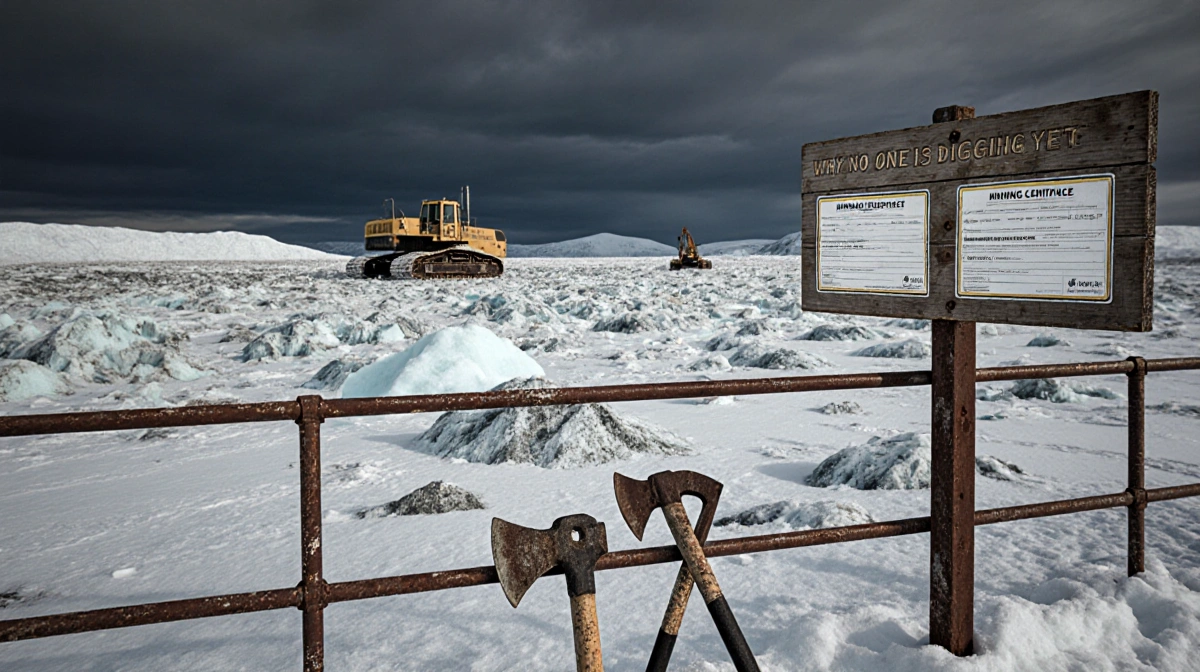
Why No One Is Digging Yet
Despite over 140 active mineral licenses, only two mines operate on the island. Eldur Olafsson, CEO of Amaroq Ltd., runs one-a gold mine in southern Greenland. He blames Denmark’s risk-averse capital culture for the slow pace.
“Denmark is not really a resource-driven country, so the capital support up until this date has not been enough to get more mining going,” Olafsson told News Of Philadelphia. “You also need people. You need to physically move people and build infrastructure, make roads, bridges, harbors.”
Even the flagship Tanbreez rare earth deposit, touted as one of the world’s largest, carries ore grades so low that shipping costs could eclipse profits, Feldmann said.
China’s Leverage
Beyond rare earths, Greenland holds the third-largest known land deposits of germanium and gallium-minerals essential for fiber-optic cables and semiconductors. China refines roughly 98% of global gallium and 60% of germanium, using that dominance as trade leverage.
Jack Lifton, co-chairman of the Critical Minerals Institute, says the bottleneck isn’t ore but processing. “The American rare earth industry could fit inside of a large bus,” he noted.
Arctic Mining Precedent
Olafsson argues Greenland’s climate and sparse population-60,000 residents-are not deal-breakers. “Alaska, Canada, Norway, Sweden and Russia all have mines, some very big mines, across the Arctic region. These are among the best mines you can find in the world.”
Still, price swings shuttered Greenland’s last major mine, the Black Angel lead-zinc operation, in 1990 despite untapped reserves.
Pentagon Plays Catch-Up
In July the Department of Defense signed a 10-year public-private partnership with MP Materials to expand a Colorado rare earth mine and build domestic magnet capacity, aiming to break reliance on Chinese supply chains.
Venezuela Rumors Dismissed
Commerce Secretary Howard Lutnick recently cited Venezuela’s “critical minerals” as another intervention target. Lifton called the claim baseless: “I’ve never heard of Venezuela mentioned as a source of rare earths… People who don’t have any idea what they’re talking about are talking about rare earths in Venezuela.”
Key Takeaways
- Greenland’s mineral wealth is geopolitically tempting yet economically uncertain
- Without major infrastructure and refining capacity, U.S. reliance on Chinese processing will persist
- Congressional action on a strategic reserve signals Washington’s urgency to secure tech supply chains
- For now, America’s Arctic ambitions remain more strategy than shovel-ready reality