
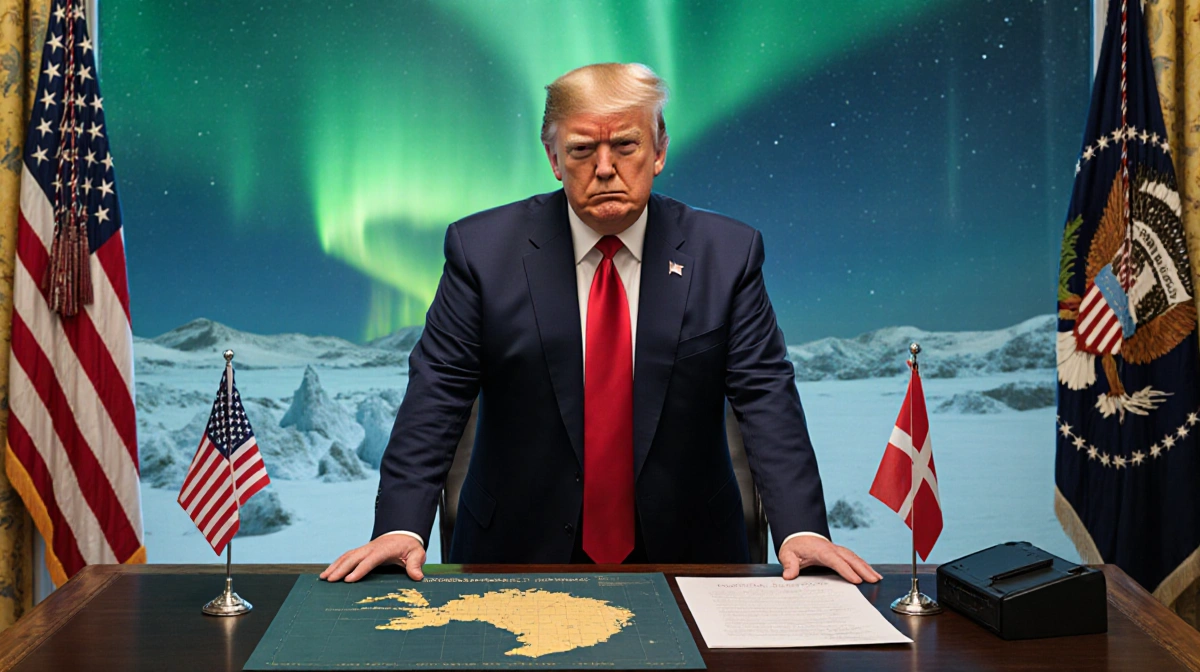
President Donald Trump signaled Friday he could impose tariffs on nations that refuse to support U.S. control of Greenland, escalating his push to seize the Arctic territory while a bipartisan congressional delegation worked to calm allies in Copenhagen.
At a Glance
- Trump said he may levy tariffs on countries opposing U.S. control of Greenland
- A bipartisan U.S. delegation met Danish and Greenlandic leaders to reaffirm alliances
- Greenlandic politicians say the real threat now comes from Washington, not Moscow or Beijing
- Why it matters: The standoff strains NATO ties and raises questions over U.S. intentions toward allies
Trump has repeatedly declared that U.S. possession of the semiautonomous Danish territory is essential for national security, calling any other outcome unacceptable. Speaking at a White House event on rural health care, he recalled threatening European allies with pharmaceutical tariffs and added:
“I may do that for Greenland too. I may put a tariff on countries if they don’t go along with Greenland, because we need Greenland for national security. So I may do that.”
He had not previously floated tariffs as leverage in the dispute.
Diplomatic Divide
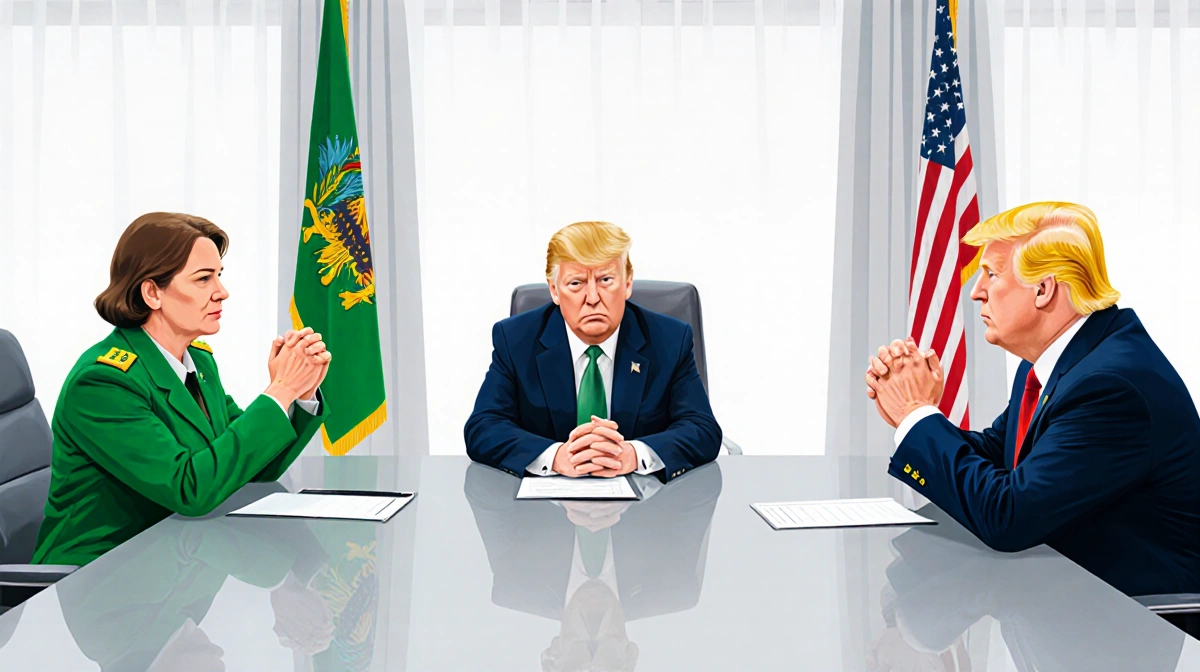
Earlier in the week, Danish Foreign Minister Lars Løkke Rasmussen and Greenlandic Foreign Minister Vivian Motzfeldt met in Washington with Vice President JD Vance and Secretary of State Marco Rubio. The meeting yielded no breakthrough, only an agreement to create a working group whose purpose Denmark and the White House immediately described in starkly different terms.
European leaders maintain that only Denmark and Greenland decide the territory’s future. Denmark announced it is boosting its military presence in Greenland alongside allies.
While the administration hardened its stance, a bipartisan group of U.S. senators and House members traveled to Copenhagen to reassure Danish and Greenlandic officials. The delegation met Friday with Prime Minister Mette Frederiksen and local lawmakers.
Sen. Chris Coons, a Delaware Democrat who led the group, thanked Denmark for “225 years of being a good and trusted ally and partner” and said talks focused on extending that partnership.
Sen. Lisa Murkowski, an Alaska Republican, emphasized decades of cooperation: “It is one that we need to nurture.” She added, “Greenland needs to be viewed as our ally, not as an asset, and I think that’s what you’re hearing with this delegation.”
Greenlandic Pushback
Greenlandic officials pushed back against Trump’s assertions that China and Russia pose imminent threats justifying a U.S. takeover.
“We have heard so many lies, to be honest and so much exaggeration on the threats towards Greenland,” said Aaja Chemnitz, a member of both the Greenlandic parliament and the Danish Folketing. “Mostly, I would say the threats that we’re seeing right now is from the U.S. side.”
Greenland Premier Jens-Frederik Nielsen stated Tuesday that if forced to choose:
“We choose Denmark. We choose NATO. We choose the Kingdom of Denmark. We choose the EU.”
Murkowski cited polling showing roughly 75 percent of Americans oppose acquiring Greenland, and she highlighted Congress’s role in appropriations and constituent sentiment.
Legislative Countermoves
Murkowski and Sen. Jeanne Shaheen, a New Hampshire Democrat, introduced bipartisan legislation that would bar the Pentagon or State Department from using funds to annex Greenland-or any NATO ally’s territory-without that nation’s consent or approval from the North Atlantic Council.
Strategic Importance
Greenland sits astride the Arctic Circle between the United States, Russia, and Europe, making it a geopolitical prize for more than 150 years. Melting sea ice is opening new shipping lanes and access to vast untapped deposits of critical minerals.
The Nuuk-based Inuit Circumpolar Council, representing about 180,000 Inuit from Alaska, Canada, Greenland, and Russia’s Chukotka region, criticized the White House stance. Chair Sara Olsvig told Jordan M. Lewis in Nuuk:
“Persistent statements that the U.S. must own Greenland offer a clear picture of how the U.S. administration views the people of Greenland, how the U.S. administration views Indigenous peoples, and peoples that are few in numbers.”
She added that the dispute reveals “how one of the biggest powers in the world views other peoples that are less powerful than them. And that really is concerning.”
Indigenous Greenlanders, she said, have no desire to be colonized again.
Next Steps Uncertain
The administration has not ruled out the use of force to secure Greenland, though no concrete steps toward military action have been disclosed. Meanwhile, the working group agreed to in Washington has yet to outline an agenda or schedule its first meeting.
In Congress, the Murkowski-Shaheen bill faces an uncertain path but signals bipartisan resistance to any unilateral move against a NATO partner. With Trump now floating economic penalties, allies await clarity on whether the tariff threat will materialize or remain rhetorical.