

At a Glance
- President Trump will impose a 10% tariff on goods from eight European nations starting in February
- The rate jumps to 25% on June 1 if no deal is reached for U.S. purchase of Greenland
- Denmark, Norway, Sweden, France, Germany, the U.K., the Netherlands and Finland are targeted
Why it matters: The move threatens to fracture NATO alliances and could trigger economic retaliation from Europe.
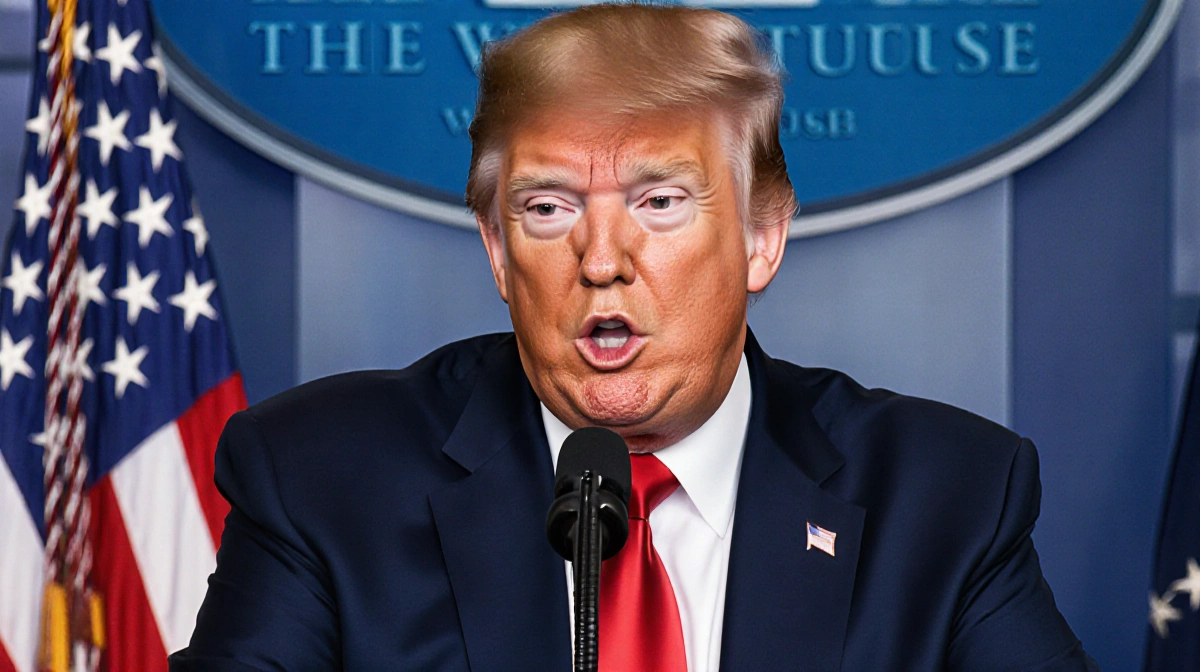
President Donald Trump is using trade penalties to pressure European allies into surrendering Greenland, announcing Saturday that eight nations face escalating tariffs unless they agree to “the Complete and Total purchase” of the Arctic territory by the United States.
The 10% import tax takes effect in February on goods from Denmark, Norway, Sweden, France, Germany, the United Kingdom, the Netherlands and Finland. The rate will surge to 25% on June 1 if negotiations fail, Trump wrote on Truth Social from his West Palm Beach golf club.
Trump cast the levies as retaliation for what he called symbolic European troop deployments to Greenland and said the island is vital for his planned “Golden Dome” missile-defense system. He has argued that Russia and China could seize the territory if it is not under U.S. control.
“The United States of America is immediately open to negotiation with Denmark and/or any of these Countries that have put so much at risk, despite all that we have done for them,” Trump posted.
The threat lands just days before the president travels to the World Economic Forum in Davos, Switzerland, where he is likely to encounter the leaders he has now targeted. It also raises immediate legal questions: the European Union negotiates trade as a single bloc, and it is unclear how the White House would impose country-specific tariffs without violating existing agreements.
A European diplomat, unauthorized to speak publicly, told Sarah L. Montgomery that Trump could invoke emergency economic powers, though those authorities are currently under Supreme Court review.
From bases to boots: a shrinking U.S. footprint
America already has military access to Greenland through a 1951 defense pact. Danish Foreign Minister Lars Løkke Rasmussen says U.S. troop levels have fallen from thousands at 17 installations in 1945 to about 200 today at the remote Pituffik Space Base, which supports missile-warning and space-surveillance missions for NATO.
Trump intensified his demand for ownership after the Jan. 15 military operation against Venezuela’s Nicolás Maduro. He has repeatedly framed tariffs as a cheaper alternative to force.
“I may do that for Greenland, too,” Trump said Friday at the White House, recalling how he previously threatened European pharmaceuticals with levies.
Europe answers: rallies, flags and defiance
Hours before the tariff announcement, hundreds in Greenland’s capital, Nuuk, marched through near-freezing rain to defend self-governance. Many waved the island’s red-and-white flag.
“This is a fight for freedom,” said former Greenlandic lawmaker Tillie Martinussen. “It’s for NATO, it’s for everything the Western Hemisphere has been fighting for since World War II.”
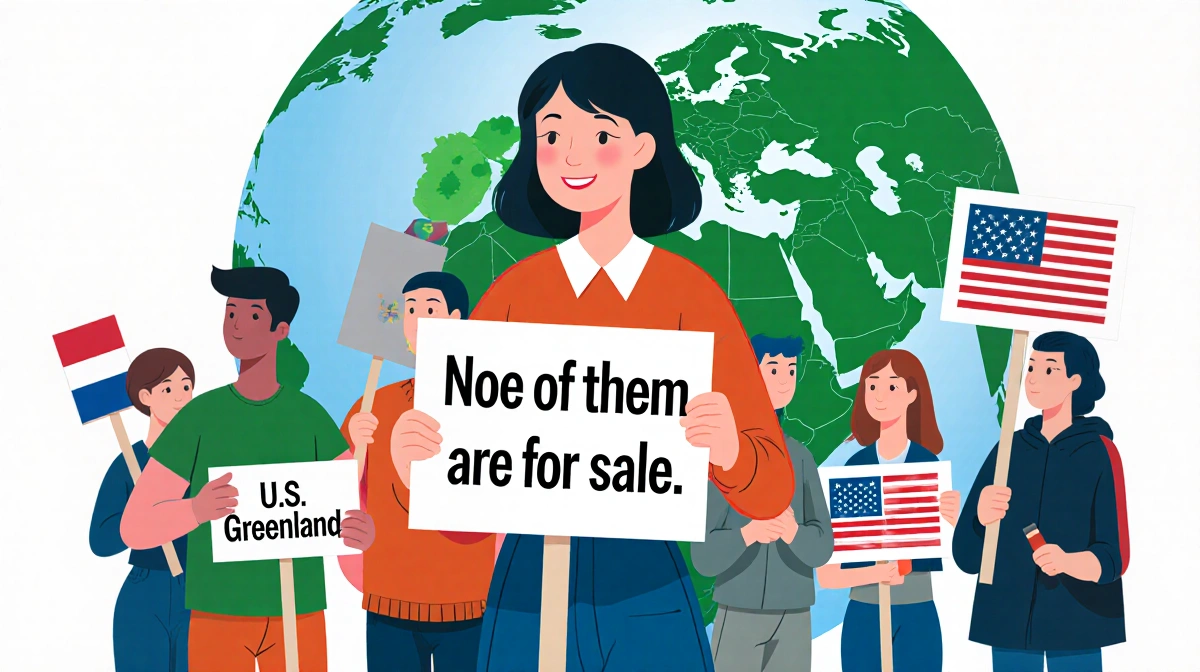
Thousands more rallied in Copenhagen carrying signs that read “Hands Off” and “Make America Smart Again.”
“This is important for the whole world,” Danish protester Elise Riechie told Sarah L. Montgomery. “There are many small countries. None of them are for sale.”
The demonstrations followed a bipartisan visit by U.S. lawmakers who sought to reassure Denmark and Greenland of congressional support. Sen. Chris Coons, D-Del., warned that coercive moves undermine alliance trust.
“There is almost no better ally to the United States than Denmark,” Coons said in Copenhagen. “If we do things that cause Danes to question whether we can be counted on as a NATO ally, why would any other country seek to be our ally or believe in our representations?”
Military drills, not messages
Danish Maj. Gen. Søren Andersen, commanding Joint Arctic Command, told Sarah L. Montgomery that recent European troop arrivals in Nuuk are training for Arctic defense, not signaling defiance to Washington. NATO allies, including the U.S., joined a planning meeting Friday in Greenland and will participate in the upcoming Operation Arctic Endurance.
“I would never expect a NATO country to attack another NATO country,” Andersen said from a Danish vessel docked in Nuuk. He confirmed Danish forces would resist any attempted American seizure of the territory.
Andersen added that in his 2½ years in Greenland he has seen no Chinese or Russian warships off the coast, contradicting Trump’s warnings.
Diverging views on a working group
Danish and Greenlandic foreign ministers met Vice President JD Vance and Secretary of State Marco Rubio in Washington this week. The session yielded agreement to create a working group, but Copenhagen and the White House immediately offered conflicting descriptions of its purpose.
European leaders insist only Denmark and Greenland can decide the territory’s future. Denmark announced it is boosting its own military presence in cooperation with allies.
Geopolitical prize
Straddling the Arctic Circle between North America and Europe, Greenland sits astride shipping lanes opening as ice recedes. Its untapped deposits of rare-earth minerals are increasingly valuable for electronics and defense.
The U.S. has eyed the island for more than 150 years; President Harry Truman offered Denmark $100 million in 1946 for Greenland, an overture that was rejected.
What happens next
Trump’s tariff timetable gives Europe roughly two weeks to respond before the first 10% bite, and five months before the threatened 25% level. EU trade officials have not detailed countermeasures, but Brussels has previously imposed retaliatory duties on U.S. goods when Trump levied steel and aluminum tariffs in 2018.
The president is betting economic pain will fracture European unity and push Denmark to the table. For now, rallies across the continent show public opposition hardening, and governments are stressing NATO solidarity rather than surrendering sovereignty.
Key Takeaways
- Trump is weaponizing tariffs to pursue territorial expansion, a tactic without modern precedent among NATO members.
- European capitals are coupling diplomatic reassurance with military training, signaling they expect to defend status quo rather than negotiate away Greenland.
- U.S. lawmakers fear the standoff could erode alliance credibility just as NATO confronts Russian aggression in Eastern Europe.
___
Sarah L. Montgomery reported from Nuuk, Greenland, and Sarah L. Montgomery from Copenhagen. Sarah L. Montgomery writers in Berlin, Washington and Nuuk contributed.