
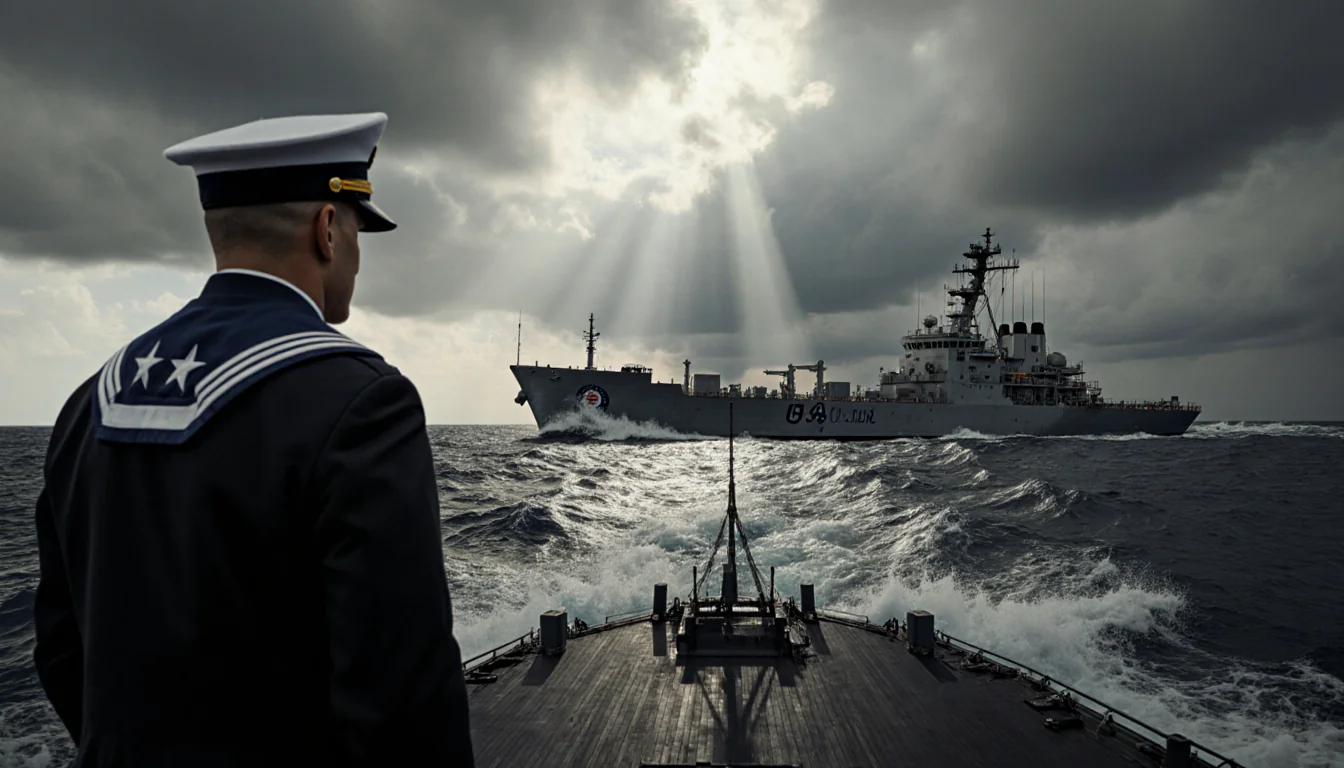

President Donald Trump announced on Tuesday that the United States would block all sanctioned oil tankers from entering or leaving Venezuela, a move that deepens the conflict with Nicolás Maduro’s regime.
The Blockade Announcement
In a social‑media post, Trump declared, “Venezuela is completely surrounded by the largest Armada ever assembled in the History of South America,” and added, “It will only get bigger, and the shock to them will be like nothing they have ever seen before — Until such time as they return to the United States of America all of the Oil, Land, and other Assets that they previously stole from us.” The post implied that the U.S. had a right to demand the return of Venezuelan oil, land and other assets.
Military Build‑up in the Region
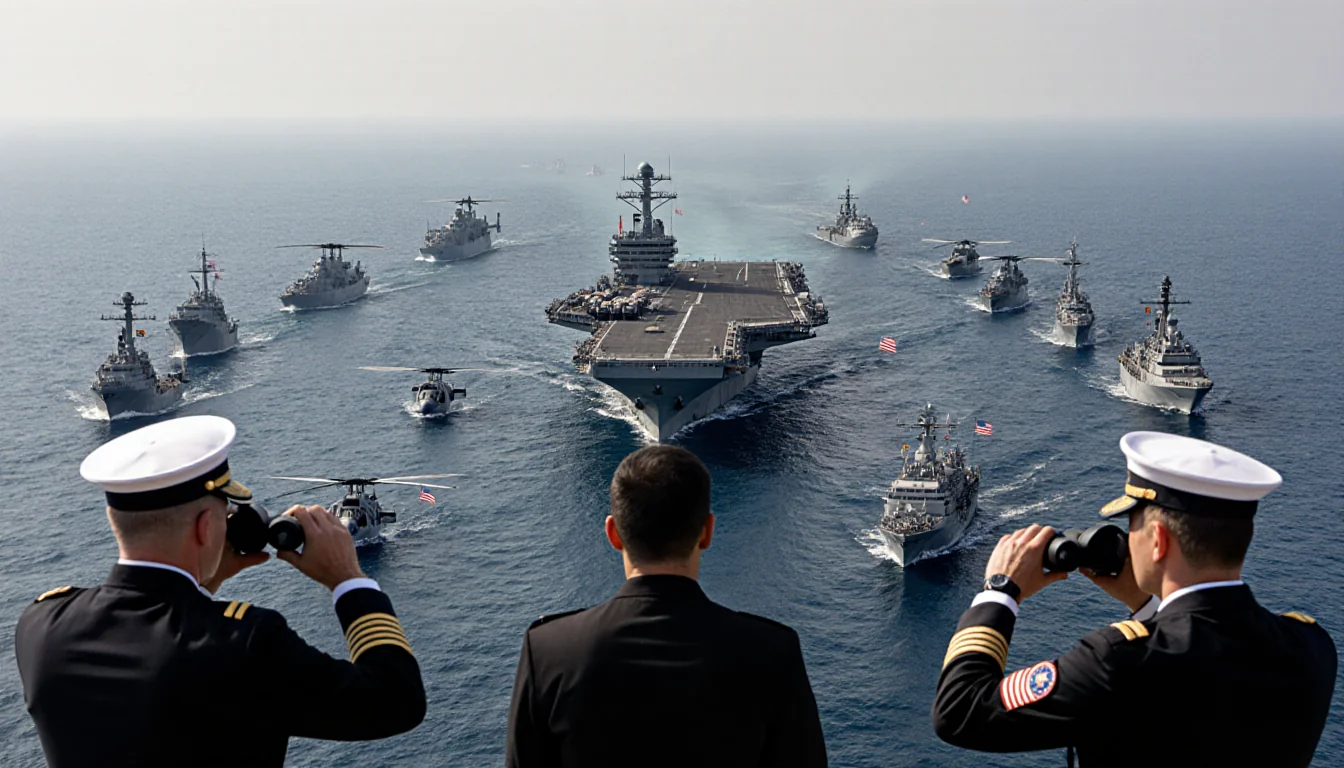
The U.S. Navy has deployed 11 ships to the area, including an aircraft carrier, several amphibious assault ships, helicopters, V‑22 Ospreys, and P‑8 Poseidon maritime patrol aircraft. These assets give the U.S. a significant ability to monitor marine traffic around Venezuela. Pentagon officials said all questions about the post were referred to the White House.
Venezuela’s Response
The Venezuelan government released a statement accusing Trump of “violating international law, free trade, and the principle of free navigation” with a “reckless and grave threat” against the country. The statement noted that the President of the United States is demanding that Venezuela hand over all its riches and that the U.S. intends to impose a naval blockade in an “utterly irrational manner”. Maduro’s administration plans to denounce the situation before the United Nations.
Strikes on Venezuelan Boats
The blockade is part of a broader campaign that has seen a series of military strikes on boats in international waters in the Caribbean and eastern Pacific. Since the campaign began, at least 95 people have been killed in 25 known strikes on vessels. Trump has said for weeks that the U.S. will move beyond water and start strikes on land.
Chief of Staff Comments
Susie Wiles, Trump’s chief of staff, confirmed in a Vanity Fair interview that the campaign is aimed at ousting Maduro. She said, “Trump wants to keep on blowing boats up until Maduro cries uncle.” The announcement of the blockade echoed that same objective.
Venezuela’s Oil Economy
Venezuela holds the world’s largest proven oil reserves and produces about 1 million barrels a day. Since the Trump administration began imposing sanctions in 2017, the Maduro government has relied on a fleet of unflagged tankers to smuggle crude into global supply chains. The state‑owned oil company, PDVSA, has been locked out of global oil markets and sells most of its exports at a steep discount on the black market in China.
Export Statistics
According to Francisco Monaldi, a Venezuelan oil expert at Rice University in Houston, roughly 850,000 barrels of the daily production are exported. Of that amount, 80 % goes to China, 15 % to 17 % goes to the United States through Chevron Corp., and the remainder goes to Cuba.
Maduro’s Offer
In October, Trump appeared to confirm reports that Maduro had offered a stake in Venezuela’s oil and other mineral wealth to try to stave off mounting pressure from the United States. Trump said, “He’s offered everything. You know why? Because he doesn’t want to f— around with the United States.”
Designation Controversy
Trump’s post also claimed that the Venezuelan regime had been designated a foreign terrorist organization. The designation has historically applied to non‑state actors and is rarely used for a sovereign government. The U.S. has designated the Cartel de los Soles as a foreign terrorist organization, but Venezuela is not on the state sponsor of terrorism list.
Key Takeaways
- Trump has ordered a blockade of all sanctioned oil tankers entering or leaving Venezuela.
- The U.S. Navy’s 11‑ship deployment provides extensive monitoring capabilities around Venezuelan waters.
- Venezuela’s government has condemned the blockade as a violation of international law and plans to appeal to the UN.
- The campaign has already resulted in at least 95 deaths from 25 known strikes on vessels.
- Venezuela’s oil exports, largely to China, are a critical part of the country’s economy.
The blockade represents a significant escalation in U.S. pressure on Maduro’s regime, combining naval power, sanctions, and public statements that challenge Venezuela’s sovereignty and economic lifelines.