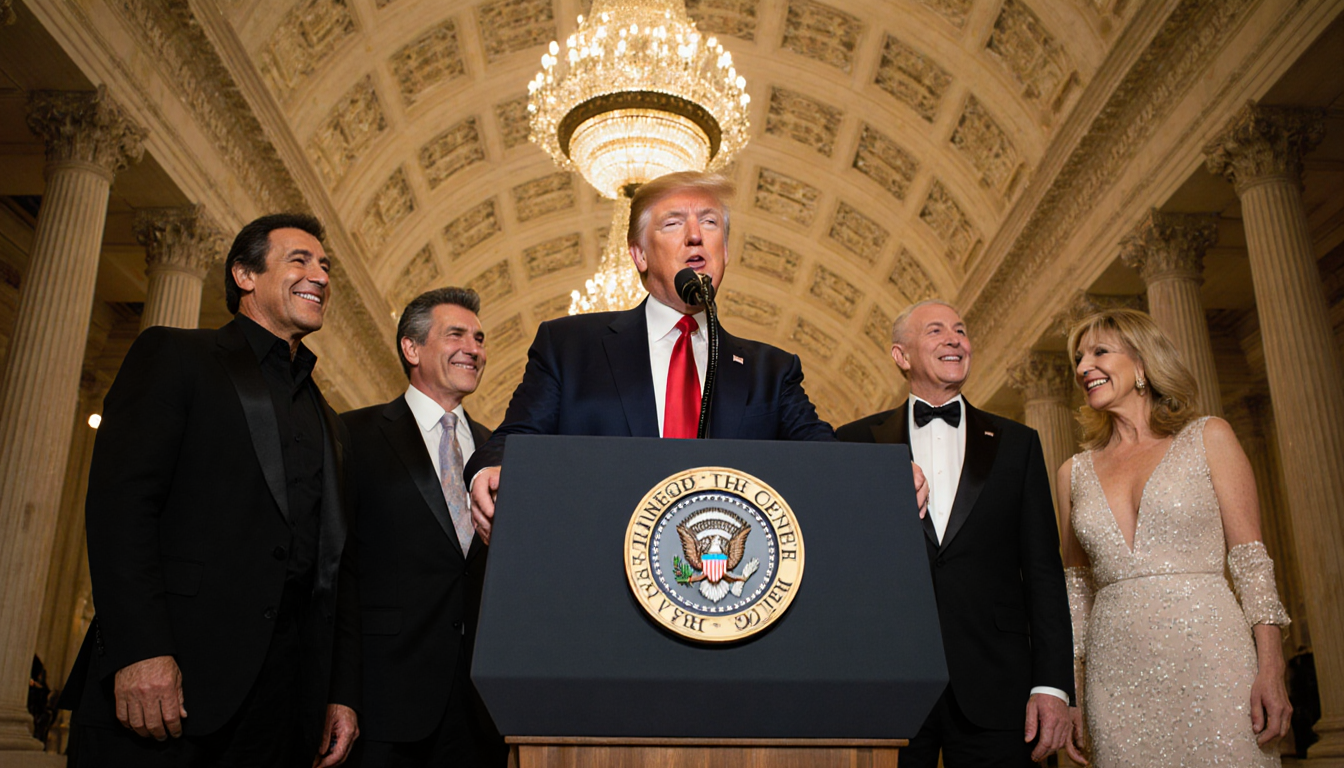
President Donald Trump took center stage at the Kennedy Center Honors on Sunday, becoming the first sitting U.S. president to host the ceremony and using the platform to laude a lineup of pop‑culture icons.
Trump’s First‑Time Hosting
On a chilly evening in Washington, D.C., the former president opened the show with a statement that echoed his campaign rhetoric: “Billions and billions of people have watched them over the years.” Trump praised the slate of honorees—Sylvester Stallone, Kiss, Gloria Gaynor, Michael Crawford and George Strait—as “legendary in so many ways.” He added that the artists are “among the greatest artists and actors, performers, musicians, singers, songwriters ever to walk the face of the Earth.”
Trump’s remarks were delivered from the stage, a first for a president. He said he was hosting “at the request of a certain television network” and predicted the broadcast scheduled for Dec. 23 on CBS and Paramount+ would have its best ratings ever. When asked how he prepared, he admitted, “I didn’t really prepare very much.” He added, “I have a good memory, so I can remember things, which is very fortunate,” the president said. “But just, I wanted to just be myself. You have to be yourself.”
During the program, Trump appeared three times—opening, intermission, and closing—while also delivering prerecorded videos that praised each honoree. After intermission he noted, “Well, we’re really having a good time tonight.” He continued, “So many people I know in this audience. Some good. Some bad. Some I truly love and respect. Some I just hate.”
Honorees and Tributes
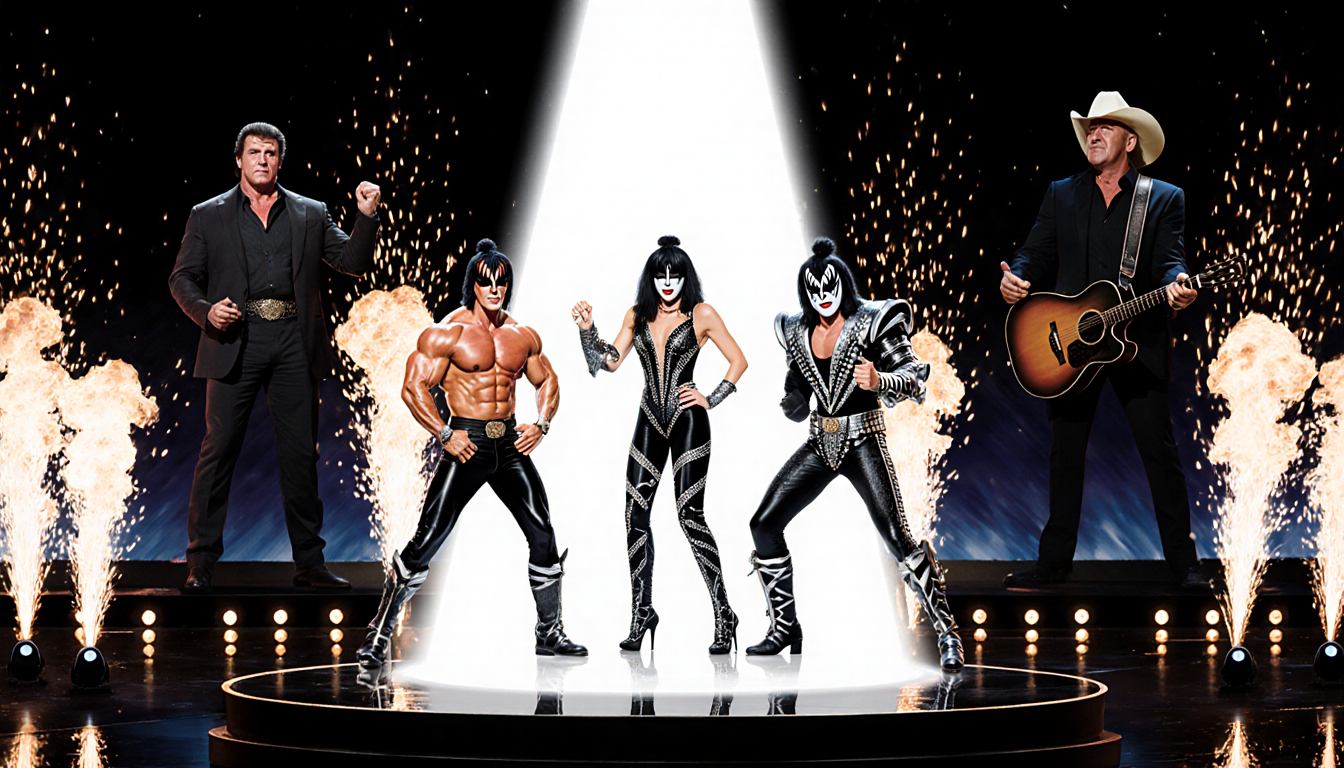
The 2025 class of Kennedy Center Honors celebrated pop‑culture standouts. Sylvester Stallone was honored for his “Rocky” and “Rambo” movies, Gloria Gaynor for her feminist anthem “I Will Survive,” and Kiss for its flashy makeup and pyrotechnics. George Strait, a country‑music icon, and Michael Crawford, a Tony‑Award‑winning actor best known for “Phantom of the Opera,” also received recognition.
Stallone described receiving the honor as being in the “eye of a hurricane.” He told reporters on the red carpet, “This is an amazing event,” adding, “But you’re caught up in the middle of it. It’s hard to take it in until the next day. …: but I’m incredibly humbled by it.”
Crawford reflected on the moment, calling it “humbling, especially at the end of a career.” Gaynor said the tribute “feels like a dream” and added, “To be recognized in this way is the pinnacle.” Gospel singer Mike Farris, who performed for Gaynor, called her a “dear friend” and said, “She truly did survive. What an iconic song.”
The ceremony also honored Kiss, a band whose original lead guitarist Ace Frehley died in October after a fall. A lone red guitar that emitted smoke was placed on stage in remembrance of Frehley, known for using a smoke bomb in his instrument. The program closed with Cheap Trick’s rousing rendition of Kiss’s “Rock and Roll All Nite,” which lifted the audience.
Throughout the show, Trump emphasized the honorees’ persistence. He noted, “Some of them have had legendary setbacks, setbacks that you have to read in the papers because of their level of fame.” He quoted Rocky Balboa, saying, “They showed us that you keep moving forward, just keep moving forward.” Trump added, “I know so many of you are persistent. Many of you are miserable, horrible people. You are persistent. You never give up. Sometimes I wish you’d give up, but you don’t.”
Trump’s Involvement and Board Overhaul
Since returning to office in January, Trump has turned the Kennedy Center into a battleground for his cultural agenda. He ousted the center’s previous leadership, stacked the board of trustees with Republican supporters, and was elected chair. Trump has criticized the center’s programming and its appearance, joking that he might rename it the “Trump Kennedy Center.” He secured more than $250 million from Congress for renovations of the building.
When asked about renaming, Trump said it would be up to the board, though he joked about the “Trump Kennedy Center.” He also revealed that he was deeply involved in selecting the 2025 honorees, turning down some recommendations he deemed “too woke.” Trump said, “About 50 names were whittled down to five.” He noted that Stallone is one of his Hollywood “special ambassadors” and has likened Trump to George Washington.
Political Context and Past Interactions
The Kennedy Center Honors have long been a place where presidents and artists cross paths. Ronald Reagan attended the ceremony for playwright Arthur Miller, a liberal advocate, while Bill Clinton honored actor Charlton Heston, a gun‑rights advocate. During Trump’s first term, several honorees openly criticized him. In 2017, Norman Lear threatened to boycott the ceremony if Trump attended, and Trump did not attend the entire first term.
Trump’s 2025 lineup includes artists whose political views vary. Strait and Gaynor have been quiet, though Federal Election Commission records show Gaynor has donated to Republican organizations in recent years. Kiss members have mixed opinions: Gene Simmons spoke favorably of Trump in 2016, but in 2022 criticized him for encouraging conspiracy theories. Paul Stanley denounced Trump’s 2020 election‑overturn attempt and called Capitol stormers “terrorists,” yet after Trump’s 2024 victory urged unity and wrote, “If your candidate lost, it’s time to learn from it, accept it and try to understand why. If your candidate won, it’s time to understand that those who don’t share your views also believe they are right and love this country as much as you do.”
Key Takeaways
- Trump became the first sitting U.S. president to host the Kennedy Center Honors, praising Stallone, Kiss, Gaynor, Crawford and Strait.
- He highlighted the honorees’ persistence, citing Rocky Balboa and his own remarks about people who “never give up.”
- Trump has reshaped the Kennedy Center’s board, secured $250 million for renovations, and joked about renaming it the “Trump Kennedy Center.”
- The ceremony reflected political tensions, with past presidents and artists from opposing viewpoints sharing the stage.
The event marked a rare convergence of politics and popular culture, with Trump using the platform to celebrate iconic artists while underscoring his own cultural agenda and the ongoing debate over the Kennedy Center’s direction.