
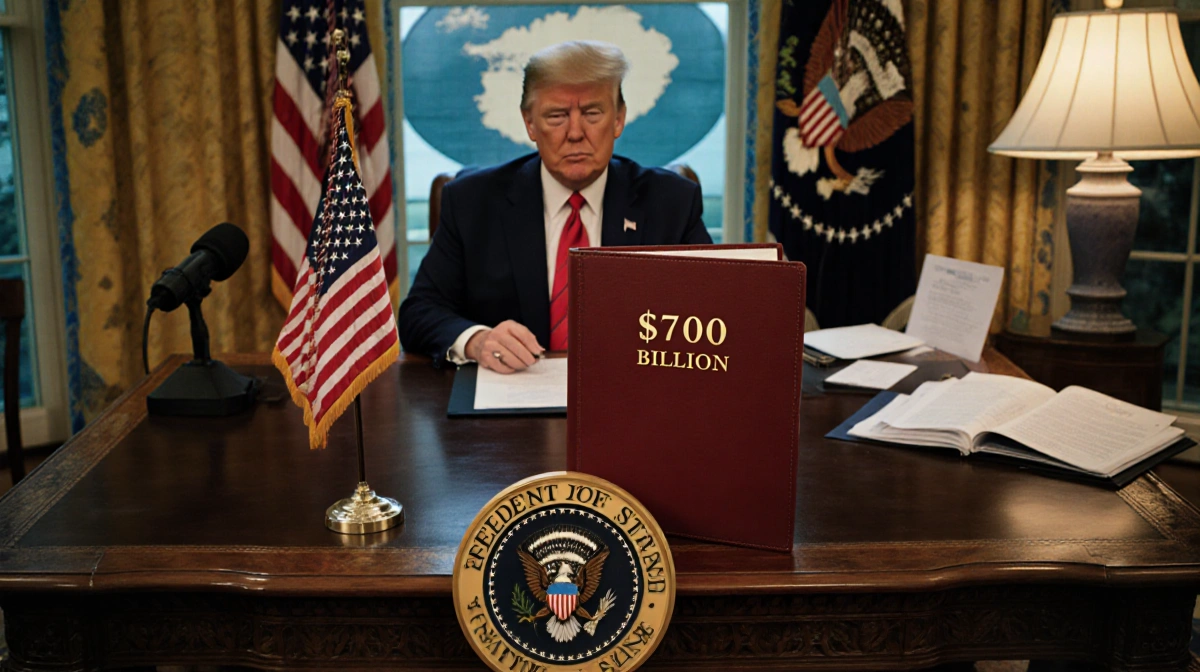

President Donald Trump’s push to acquire Greenland could cost the United States $700 billion, according to internal estimates prepared for the White House. Secretary of State Marco Rubio has been ordered to deliver a purchase proposal within weeks, even as Danish and Greenlandic leaders insist the territory is not for sale.
At a Glance
- The estimated purchase price ranges from $500 billion to $700 billion, dwarfing the annual Defense Department budget.
- Greenland’s government says 85% of residents reject joining the United States.
- Rubio and Vice President JD Vance meet Danish and Greenlandic officials in Washington on Wednesday.
- Why it matters: The standoff is straining NATO ties and raising fears of U.S. military action against a sovereign ally.
The $700 Billion Estimate
The eye-watering figure was calculated by scholars and former U.S. officials tasked with turning Trump’s Arctic ambition into a viable plan, according to three people briefed on the study. At $700 billion, the upper estimate equals more than half the Pentagon’s yearly spending and eclipses the cost of every major weapons program now under development.
Trump, who has floated the idea since his first term, now treats acquisition as a “high priority,” a senior White House official told News Of Philadelphia. The president argues that outright ownership would secure a strategic chokepoint against Russia and China and guarantee access to rare-earth minerals beneath Greenland’s ice sheet.
Greenland Says No Deal
Greenland’s leaders arrived in Washington this week delivering the same message: the island is not for sale.
“Greenland does not want to be owned by, governed by or part of the United States,” Foreign Minister Vivian Motzfeldt said Tuesday. “We choose the Greenland we know today – as part of the Kingdom of Denmark.”
Business Minister Naaja Nathanielsen, speaking in London, said Trump’s rhetoric is keeping residents awake at night. “This is really filling the agenda and the discussions around the households,” she said. “We have no intentions of becoming American.”
An independent poll last year found about 85% of Greenlanders oppose U.S. annexation.
Diplomatic Push Meets Hill Resistance
Rubio and Vance will host Danish Foreign Minister Lars Løkke Rasmussen and Greenland’s premier, Múte Egede, at the State Department on Wednesday. The session follows lower-level talks last week between the National Security Council and Danish diplomats seeking clarity on Trump’s endgame.
Congress is already pushing back. A bipartisan pair of senators introduced legislation Tuesday that would bar the Pentagon from using funds to seize territory of any NATO member without that nation’s consent or formal approval by the North Atlantic Council. Denmark, a founding NATO ally, counts Greenland as an autonomous territory within the Kingdom of Denmark.
Options on the Table
Administration officials are weighing three main routes to expand U.S. presence:
- Outright purchase – price tag $500-700 billion.
- Compact of Free Association – annual U.S. subsidy in exchange for defense rights, similar to deals with Palau, Micronesia and the Marshall Islands.
- Expanded basing under the 1951 defense agreement that already allows American troops at Pituffik Space Base, a vital early-warning radar site.
A U.S. official familiar with the talks called a military invasion unlikely: “Why invade the cow when they’ll sell you the milk at relatively good prices?”
Historical Precedent
The United States previously bought Caribbean islands from Denmark. The 1916 treaty transferred the U.S. Virgin Islands for $25 million and included a clause acknowledging Danish sovereignty over Greenland. Washington later established the Thule air base in 1941 and renamed it Pituffik Space Base in 2023.
Arctic Stakes
Greenland commands 27,000 miles of coastline and sits astride new shipping lanes opening as Arctic ice melts. Trump fears that if Greenland wins full independence, Russia or China could gain a foothold. Ownership, he argues, would mirror U.S. territories like Guam or Puerto Rico and lock in American influence.
Danish Prime Minister Mette Frederiksen has offered to host more U.S. troops under existing accords but warned that forced annexation would “unravel NATO.” European allies echoed that stance last week, pledging to “defend sovereignty and Greenland’s territorial integrity.”
Key Takeaways
- The White House has put a $700 billion price on acquiring Greenland, even though the territory’s government says it is not for sale.
- Secretary Rubio must produce a formal purchase plan within weeks, setting up a clash with Denmark and Congress.
- Alternatives include a compact of free association or expanded military access under current agreements.
- Lawmakers from both parties are moving to block any military action against a NATO ally.