
At a Glance

- President Trump wants any U.S. military action in Iran to deliver a swift, decisive blow without sparking a prolonged war
- Advisers cannot guarantee regime collapse after a strike, raising concerns about Iranian retaliation
- Why it matters: The administration is weighing limited military options while troops relocate from Qatar for safety
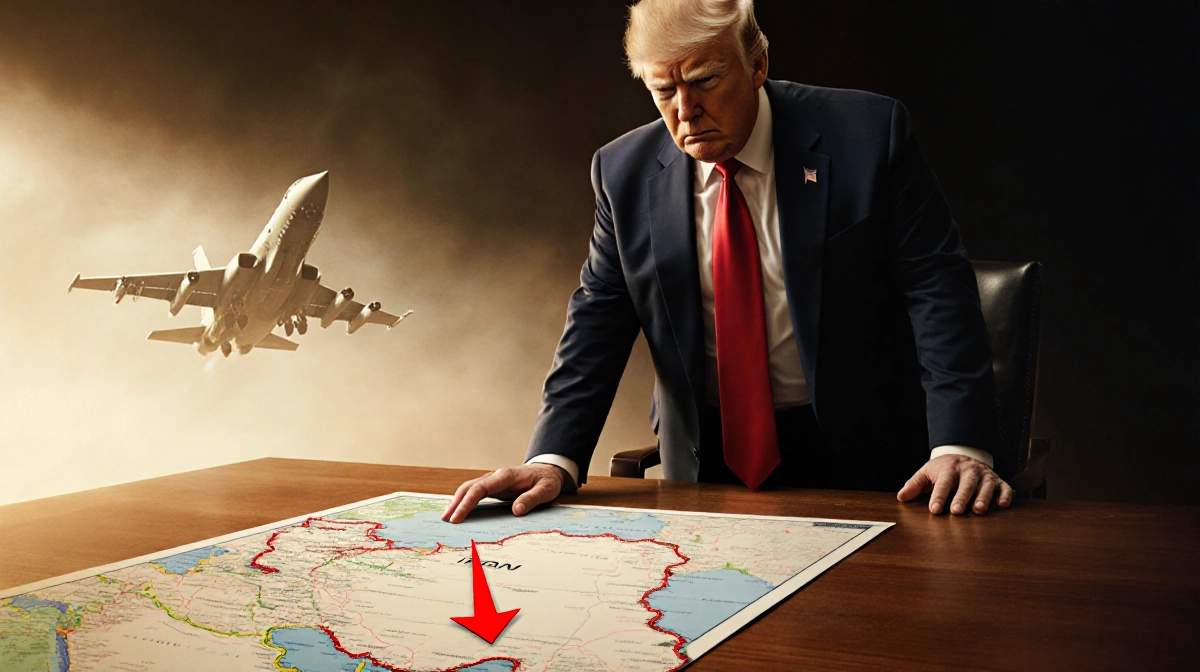
President Donald Trump has instructed his national security team that any U.S. military action in Iran must deliver a swift and decisive blow to the regime while avoiding a sustained war that could drag on for weeks or months, according to a U.S. official, two people familiar with the discussions and a person close to the White House.
“If he does something, he wants it to be definitive,” one of the people familiar with the discussions said.
Trump’s advisers have not been able to assure him that the Iranian regime would quickly collapse following an American military strike. The U.S. official and two people familiar with the discussions expressed concern that the U.S. may lack sufficient assets in the region to counter what administration officials expect would be an aggressive Iranian response.
These dynamics could lead Trump to approve a more limited U.S. military offensive in Iran, at least initially, while keeping options open for escalation. The U.S. official and one of the people familiar with the discussions emphasized that the situation is rapidly evolving and that no decisions had been made as of Wednesday afternoon.
During a visit to Detroit on Tuesday, Trump told protesting Iranians that “help is on its way” and described the situation in Iran as “fragile.”
When asked about the details of Trump’s deliberations, a White House official referred to Trump’s remarks in the Oval Office on Wednesday afternoon. Trump told reporters that he had learned the Iranian regime had stopped killing protesters and halted plans for executions, either of which he had previously indicated could trigger a U.S. military response.
“We have been informed by very important sources on the other side, and they said the killing has stopped and the executions won’t take place,” Trump said Wednesday. “I hope it’s true. Who knows?”
When asked whether this development meant military action was now off the table, Trump responded: “We’re going to watch and see what the process is.”
The U.S. official, two people familiar with the discussions and one person close to the White House said Trump is prepared to follow through on his repeated promises to protesters in Iran that the U.S. would intervene militarily to support their efforts to topple the regime.
On Tuesday, Trump outlined his objectives for any U.S. military action in Iran to his national security team. The Defense Department subsequently tailored options to meet these objectives, according to the U.S. official, a second U.S. official and the person familiar with the discussions. These tailored options were scheduled to be presented to Trump on Wednesday, said the first U.S. official and one of the people familiar with the discussions.
A White House official responded to questions about Trump providing guidance to his aides regarding his objectives in Iran by stating: “All options are at President Trump’s disposal to address the situation in Iran,” adding that U.S. military operations in Iran last year and in Venezuela this month demonstrate “he means what he says.”
A second White House official reported that Trump attended a meeting about Iran chaired by Vice President JD Vance on Tuesday afternoon after returning from Michigan. During this meeting, Trump was briefed on the latest estimated death toll among protesters in Iran and requested additional information on the topic.
U.S. Central Command had prepared military options for Trump, which were presented to him in recent days and have since been refined, according to the U.S. official and another person familiar with the discussions.
These developments follow a series of meetings about Iran this week. Senior Trump administration officials held hours of discussions at the White House on Tuesday to determine U.S. military goals for a potential strike in Iran and to assess how Tehran might retaliate, News Of Philadelphia has reported.
Officials have expressed concerns that an Iranian regime weakened by weeks of protests across the country and facing potential collapse could be far more dangerous in retaliating against U.S. forces in the region and allies such as Israel, according to the U.S. official, one of the people close to the White House and one of the people familiar with the discussions.
When Iran retaliated against the U.S. air base in Qatar after strikes on its nuclear facilities in June, an operation dubbed Operation Midnight Hammer, the Trump administration received advance warning and American forces were unharmed.
On Wednesday, hundreds of U.S. troops departed Al Udeid Air Base in Qatar for a safer location in anticipation of potential Iranian retaliation if the U.S. takes action, News Of Philadelphia reported. The U.S. is implementing other precautionary measures throughout the region to protect troops, civilians and dependents, according to a second U.S. official and a third person familiar with the matter.
The U.S. military has not surged troops and assets into the region to support large-scale action in Iran, as it did before Operation Midnight Hammer. However, the U.S. maintains aircraft, ships and personnel in the region capable of carrying out targeted or limited strikes in Iran.
The situation remains fluid as Trump continues to weigh his options while monitoring developments in Iran. The administration’s approach appears to balance the president’s desire for decisive action with concerns about potential escalation and regional stability.