
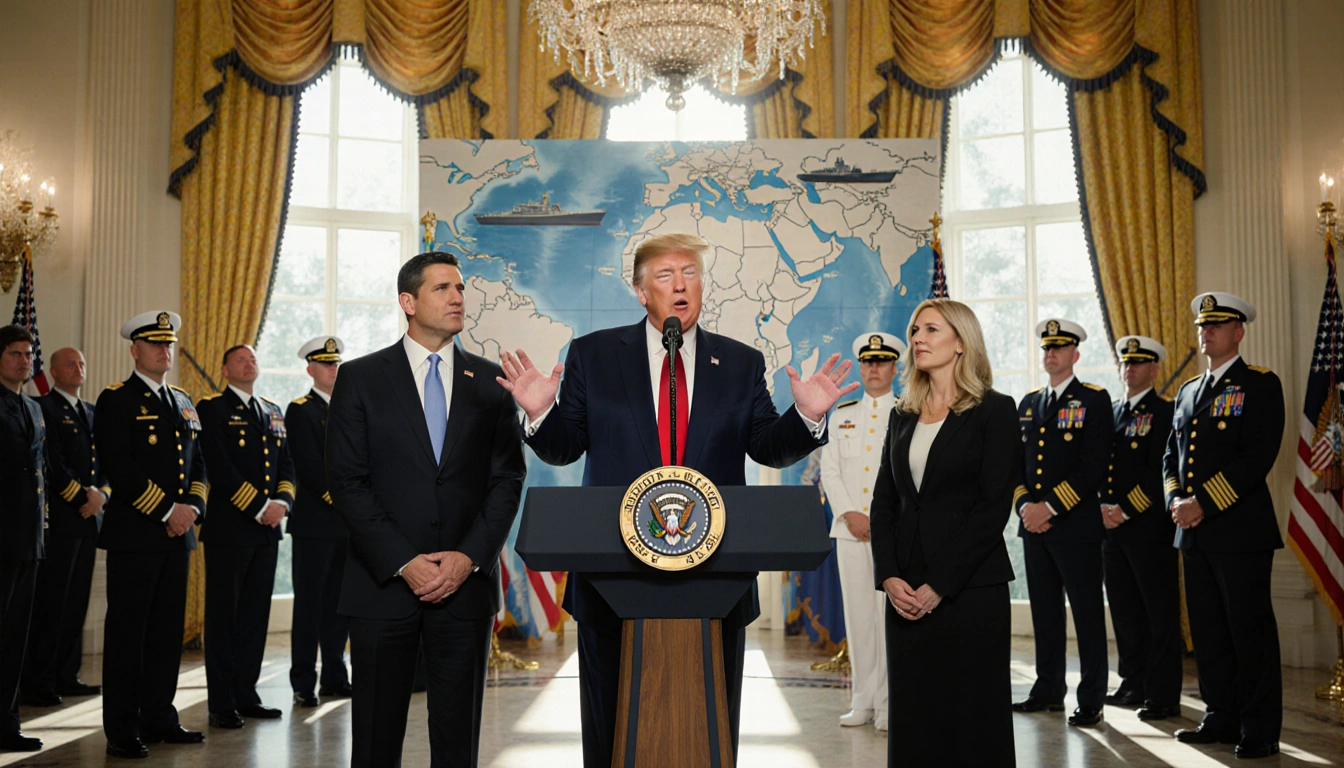

In a high-stakes meeting at Mar-a-Lago, President Donald Trump convened top national-security officials to unveil a new naval initiative. The gathering, described by the White House as a “major announcement,” also highlighted the escalating pressure on Venezuela’s Maduro regime.
Trump’s Golden Fleet Vision
During the session, Trump revealed plans to construct two large warships he dubbed “battleships,” positioning them as key components of a broader “Golden Fleet” concept. The president, who was on vacation at his resort, emphasized that the new vessels would bolster U.S. naval presence in the Caribbean.
Intensifying Coast Guard Interdictions
The announcement came as the U.S. Coast Guard intensified efforts to stop Venezuelan oil tankers operating under false flags. On Monday, the Coast Guard chased a sanctioned tanker that the administration labels part of a “dark fleet” used to evade U.S. sanctions. The ship was flying a false flag and was subject to a U.S. judicial seizure order.
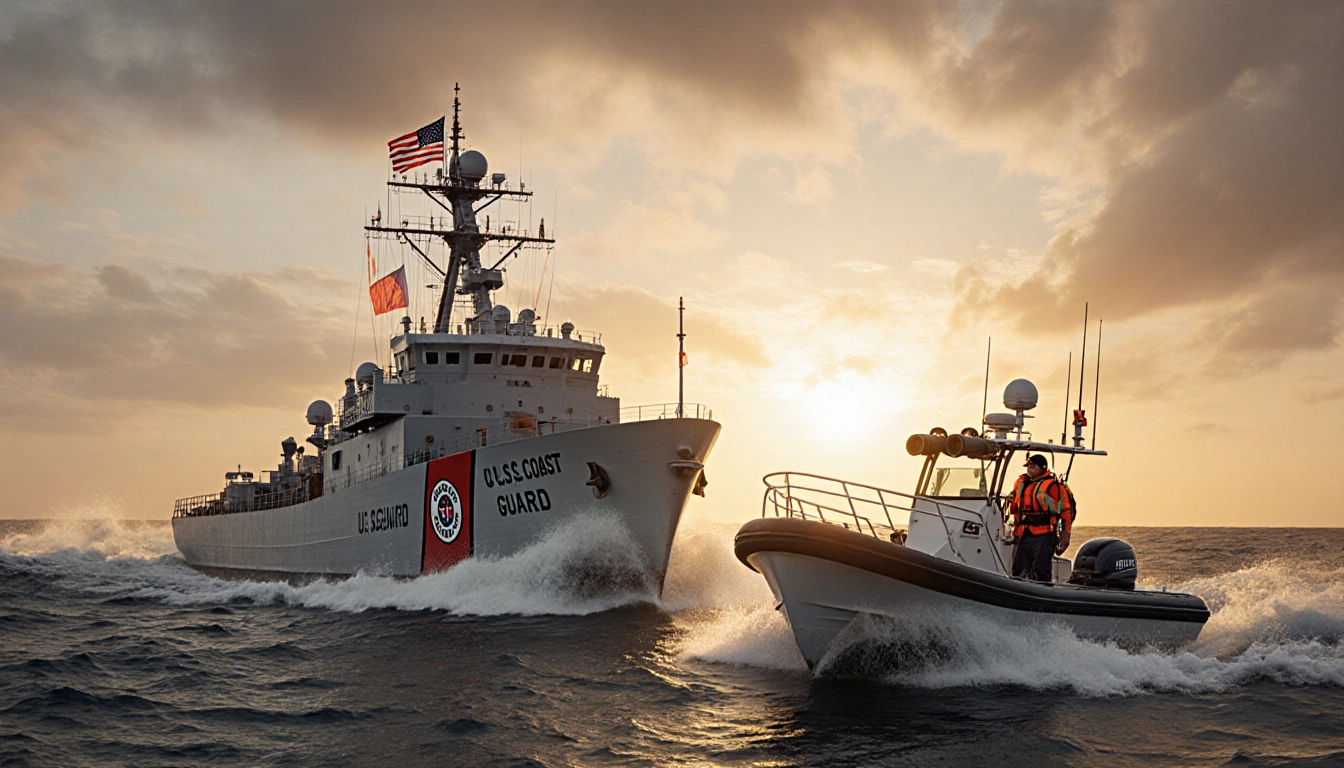
This pursuit marked the third tanker targeted by the Coast Guard. Earlier this week, the agency seized a Panama-flagged vessel named Centuries, and on December 10 it seized the tanker Skipper, also registered in Panama.
Trump’s Blockade Rhetoric
Following the first seizure, Trump declared that the United States would carry out a “blockade” of Venezuela. He repeatedly warned that Maduro’s tenure was “numbered,” and last week demanded the return of assets seized from U.S. oil companies years earlier. The blockade announcement was framed as a response to sanctioned oil tankers traveling to or from Venezuela.
Homeland Security Secretary Kristi Noem, whose agency oversees the Coast Guard, said in a Monday appearance on “Fox & Friends” that the targeting of tankers is intended to send “a message around the world that the illegal activity that Maduro is participating in cannot stand, he needs to be gone, and that we will stand up for our people.” She confirmed on Saturday that the Coast Guard had “apprehended” an oil tanker off the Venezuelan coast.
Russia’s Diplomatic Evacuations
Amid these tensions, Russia’s Foreign Ministry began evacuating families of diplomats from Venezuela. A European intelligence official, speaking on condition of anonymity, said the evacuations included women and children and began on Friday. The ministry assessed the situation in Venezuela as “very grim tones”.
In an X posting, the ministry stated it was not evacuating the embassy but did not address whether it was evacuating families. More than ten vehicles with diplomatic license plates were parked outside Russia’s embassy in Caracas on Monday morning; no people were seen entering or leaving, and all vehicles had moved by early afternoon.
Venezuelan Diplomatic Response
Venezuela’s Foreign Minister Yván Gil spoke by phone with his Russian counterpart, Sergey Lavrov, on Monday. Gil said Lavrov expressed Russia’s support for Venezuela against the U.S. blockade of sanctioned oil tankers.
In a statement, Gil added: “We reviewed the aggressions and flagrant violations of international law that have been committed in the Caribbean: attacks against vessels and extrajudicial executions, and the unlawful acts of piracy carried out by the United States government.”
Shadow Fleet at El Palito
In the Caribbean, a tanker identified by Transparencia Venezuela as part of the shadow fleet was spotted moving between Venezuelan refineries, including one about three hours west of Caracas. The tanker remained at the refinery in El Palito through Sunday.
Families relaxed on the nearby beach, with music playing on loudspeakers as people swam and surfed beside the tanker. Manuel Salazar, who has parked cars at the beach for more than three decades, noted that the number of tankers had dwindled: “Up to nine or 10 tankers would wait out there in the bay. One would leave, another would come in. Now, look, one.” He also remarked that Venezuelan families now spend holidays with simple fare instead of barbecues, citing rising food prices.
Strikes on Smaller Vessels
The Defense Department, under Trump’s orders, continues a campaign of attacks on smaller vessels in the Caribbean and eastern Pacific Ocean that it alleges are carrying drugs. Since early September, at least 104 people have been killed in 28 known strikes. U.S. lawmakers and human-rights activists have scrutinized the strikes, arguing that the administration has offered scant evidence that its targets were drug smugglers and that the fatal strikes amount to extrajudicial killings.
Key Takeaways
- Trump unveiled plans for two battleships as part of a “Golden Fleet” while the Coast Guard chased Venezuelan shadow-fleet tankers.
- Russia evacuated families of Venezuelan diplomats amid a grim assessment of the political situation.
- Venezuelan officials protested U.S. actions, citing violations of international law and the blockade of sanctioned tankers.
The convergence of naval buildup, interdiction operations, and diplomatic tensions illustrates the intensifying U.S. pressure on Venezuela, a pressure that has evolved from drug-trafficking concerns to a broader confrontation over sanctions and sovereignty.