
In a move that could reshape federal campaign finance, the Supreme Court is set to review a 2001 ruling that upheld limits on how much political parties may spend in coordination with congressional and presidential candidates. The case comes a day after the justices signaled a willingness to overturn a 90‑year‑old decision that curtailed the president’s authority to dismiss independent agency heads.
Supreme Court’s New Test Case
The justices’ recent indication to revisit the 2001 decision marks a sharp turn in the Court’s approach to election‑finance regulation. The ruling in question had preserved a provision of federal election law that is more than 50 years old, a provision that restricts coordinated spending by parties on behalf of candidates.
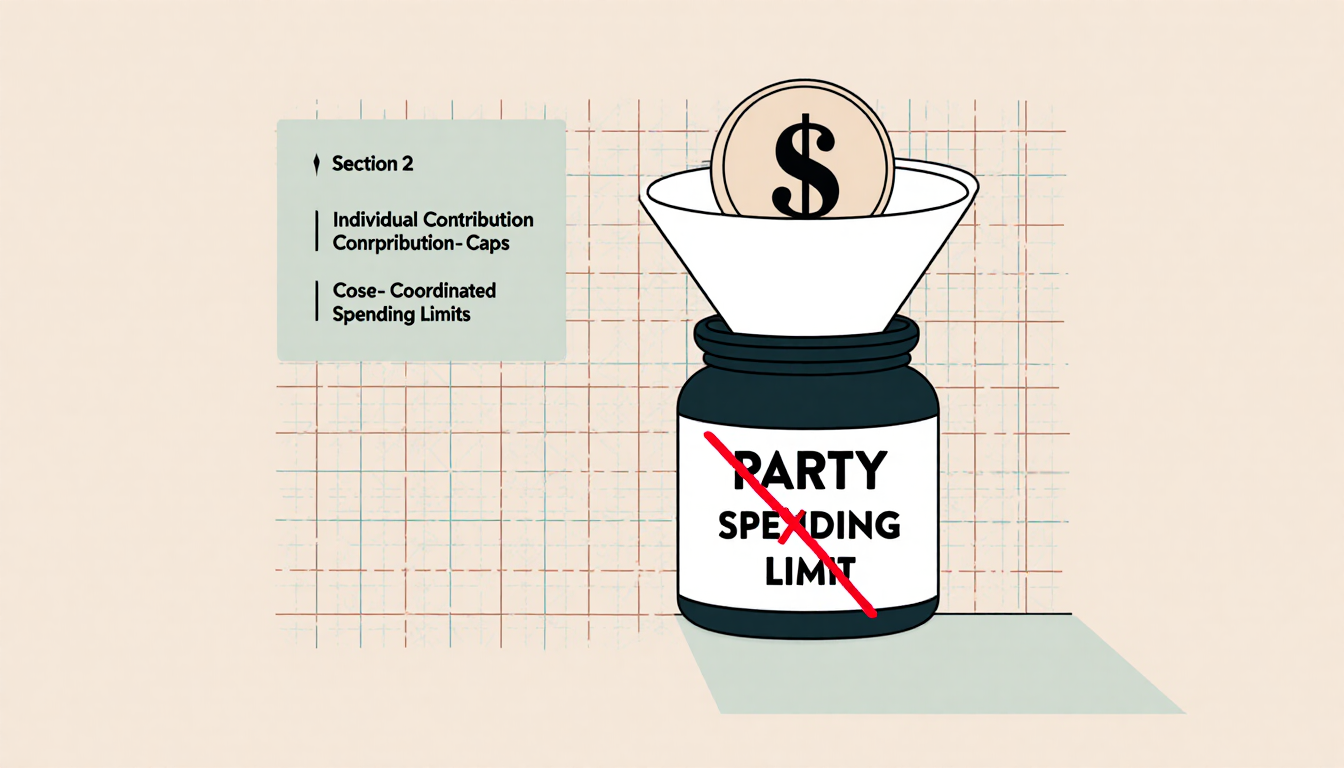
The Limits on Party Spending
These restrictions were originally designed to prevent large donors from sidestepping individual contribution caps by funneling unlimited sums to a party, with the understanding that the money would be used in the candidate’s campaign. The limits set the maximum coordinated spending at $127,200 for Senate races in states with small populations, and nearly $4 million in California in 2025. For House races, the caps are $127,200 in single‑representative states and $63,600 in all other states.
Republican Strategy and Legal Maneuvering
Republican committees for House and Senate candidates filed the lawsuit in Ohio in 2022, joined by two Ohio Republicans in Congress: then‑Senator JD Vance, now Vice President, and then‑Representative Steve Chabot. After the Trump administration teamed with Republicans to ask the Court to strike down the campaign‑finance law, the justices appointed Roman Martinez, an experienced Supreme Court advocate, to defend it.
Martinez offered the justices a way to sidestep a decision by declaring the case moot. He argued that the Federal Election Commission now agrees with Republicans that the law is unconstitutional and that there is “no credible risk” the agency will attempt to enforce it.
Democratic Push to Preserve the Law
Democrats have called on the Court to uphold the existing limits. They argue that the caps are essential to preventing wealthy donors from exerting disproportionate influence over elections through party channels.
Key Players and Arguments
Chief Justice John Roberts, leading a conservative majority, has overseen the Court’s dismantling of numerous congressionally enacted limits on raising and spending money to influence elections. The 2010 Citizens United decision, for example, opened the door to unlimited independent spending in federal elections.
The current case pits the conservative Court’s recent trend of expanding corporate and individual spending rights against the Democratic insistence that the party‑candidate spending limits remain intact.
Financial Scale of Coordinated Spending
In 2025, coordinated party spending for Senate races varies dramatically: $127,200 in several small‑population states to almost $4 million in California. For House races, the limits are $127,200 in states with only one representative and $63,600 everywhere else. These figures illustrate the breadth of the spending caps the Court is being asked to overturn.
What This Means for the Election Landscape
If the Court were to strike down the limits, parties would be able to spend unlimited amounts in coordination with candidates, potentially altering the balance of influence that donors can wield in federal elections. The decision would also reinforce the Court’s recent pattern of expanding the scope of political spending.
Key Takeaways
- The Supreme Court is reviewing a 2001 decision that upheld federal limits on coordinated party spending.
- Republicans, backed by the Trump administration, seek to eliminate these limits.
- Democrats argue that the caps are crucial to preventing wealthy donors from circumventing individual contribution limits.
The outcome of this case will determine whether the existing framework that restricts how parties can spend in support of candidates remains in place or is dismantled, with significant implications for future federal elections.