
At a Glance
- Microwave-sized factory in orbit generated plasma for first time.
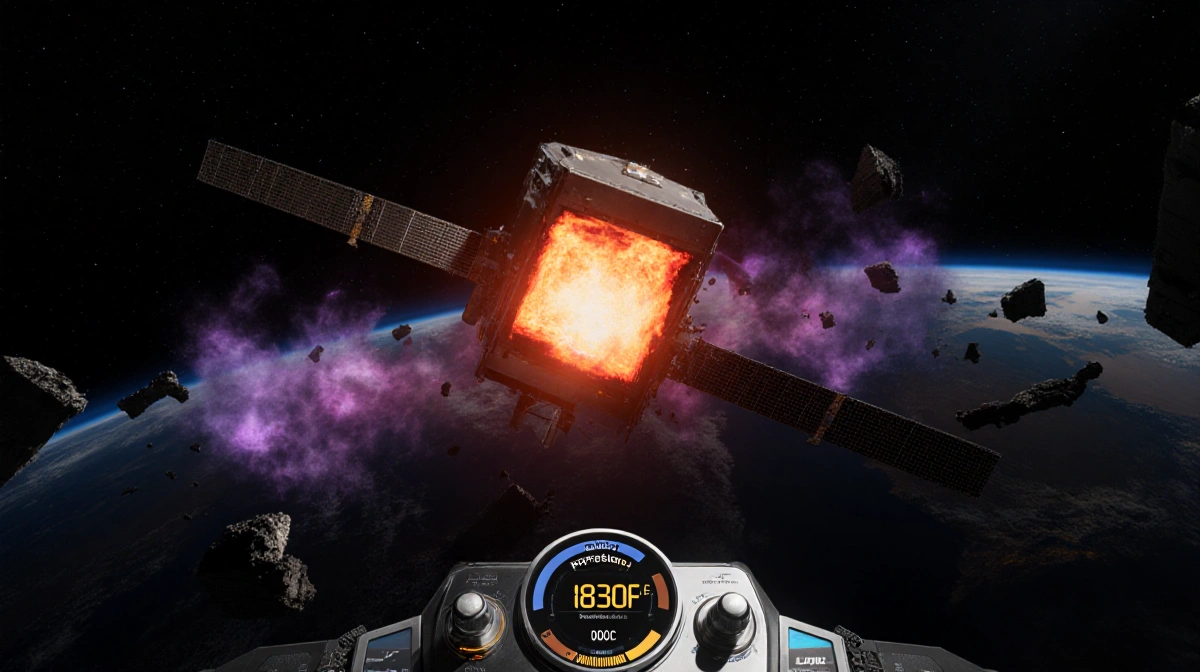
- Furnace on ForgeStar-1 hit 1,830 °F (1,000 °C) in low-Earth orbit.
- UK-based Space Forge aims to grow semiconductor crystals 4,000 × purer than Earth-made.
- Why it matters: Opens path to defect-free chips for 5G towers, planes, and more.
Space Forge’s latest milestone marks the first time a microwave-sized factory in space produced plasma, a key step toward manufacturing ultra-pure semiconductor crystals in orbit.
Joshua Western, CEO and co-founder, said:
> “Generating plasma on orbit represents a fundamental shift. It proves that the essential environment for advanced crystal growth can be achieved on a dedicated, commercial satellite-opening the door to a completely new manufacturing frontier.”
Joshua Western continued:
> “This sort of semiconductor would go on to be in the 5G tower in which you get your mobile phone signal… it’s going to be in the latest planes.”
First In-Orbit Plasma Demonstration
On June 27, 2025, ForgeStar-1 launched aboard SpaceX’s Transporter-14 rideshare mission. The satellite’s furnace reached temperatures of 1,830 °F (1,000 °C), creating the extreme conditions needed for crystal growth.
- First demonstration of plasma generation in low-Earth orbit.
- Temperature achievement confirms capability to grow semiconductors.
- Weightlessness allows atoms to align without convection.
Mission Details and Future Plans
The mission also tested a heat shield named Pridwen, enabling future satellites to re-enter the atmosphere intact and return materials to Earth. Space Forge plans to grow crystals up to 4,000 × purer than those produced on Earth.

| Milestone | Date | Status |
|---|---|---|
| Launch | June 27, 2025 | Completed |
| Plasma demo | June 27, 2025 | Success |
| Heat-shield test | June 27, 2025 | Successful |
With the demonstration complete, ForgeStar-1 is slated to burn up in Earth’s atmosphere, marking the end of its first-flight test.
Key Takeaways
- Microwave-sized factory in orbit generated plasma for the first time.
- Furnace reached 1,830 °F, proving conditions for semiconductor growth.
- Heat-shield test paves way for returning materials to Earth.
This breakthrough signals a new frontier in space-based manufacturing, potentially reshaping how we produce critical components for next-generation technology.