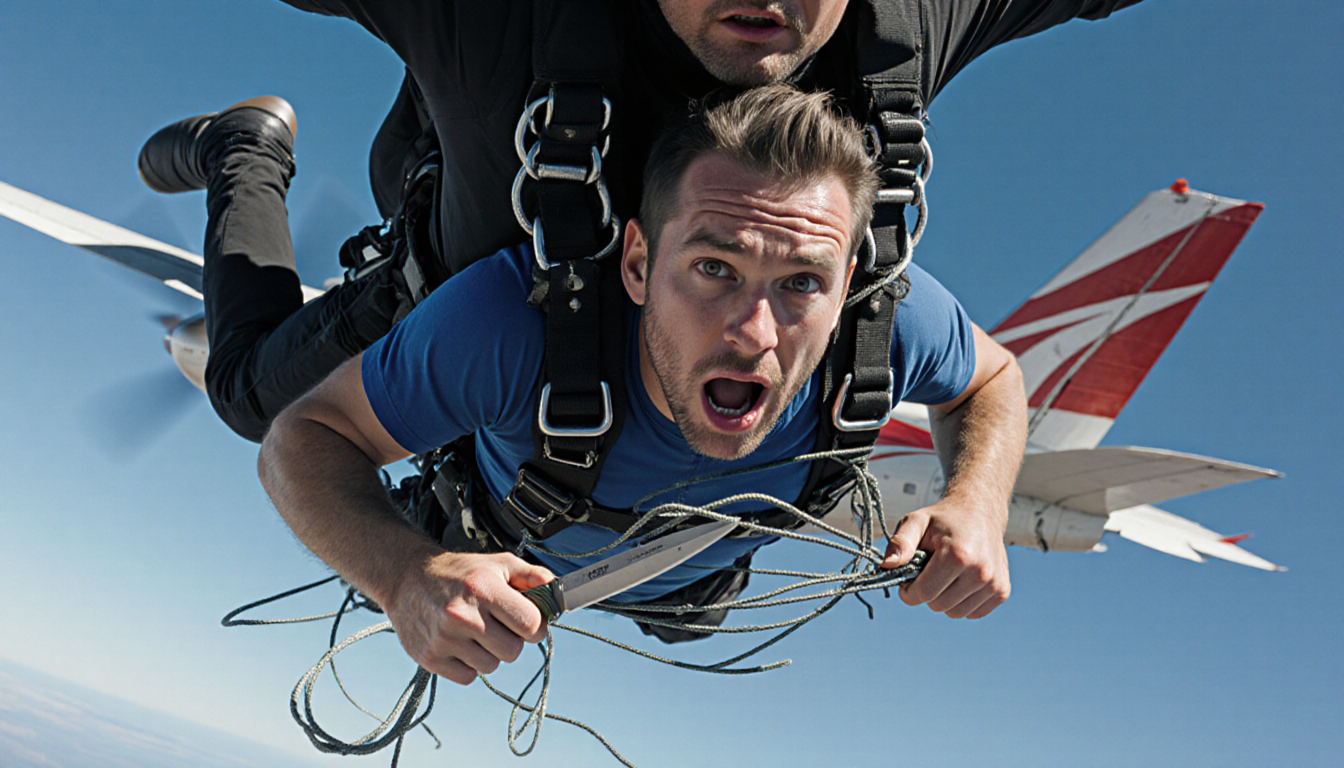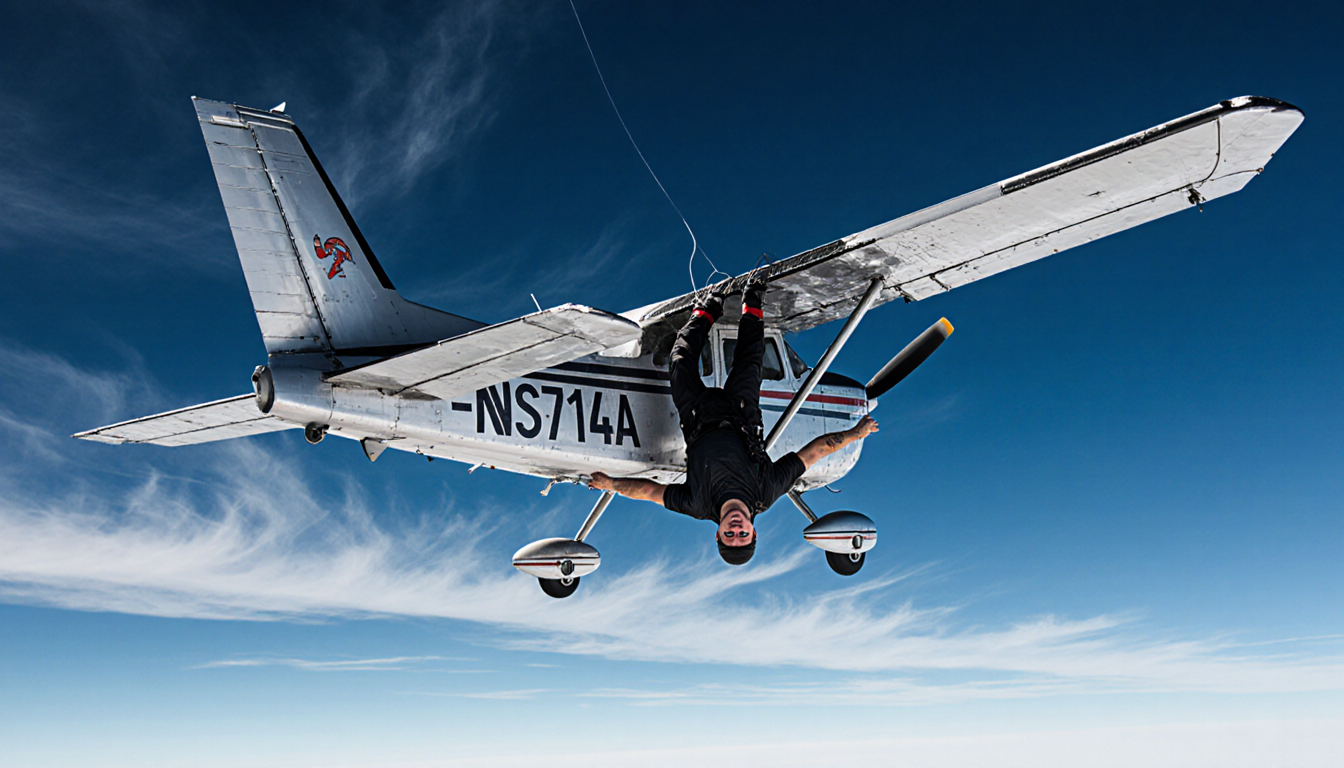

A dramatic video shows a skydiver hanging upside‑down from the horizontal stabilizer of a Cessna Caravan at 4,500 meters (15,000 feet). The footage, released by the Australian Transport Safety Bureau, captured the moment a reserve parachute became entangled on the aircraft’s tail and the diver’s quick‑thinking rescue.
The Incident
On September 20, a Cessna Caravan departed Tully Airport in Queensland with 17 parachutists aboard. Sixteen of them were scheduled to perform a 16‑way formation jump, while a 17th skydiver waited outside the open door to film the event. The aircraft climbed to the planned altitude before the jump sequence began.
When the 17th skydiver, Adrian Ferguson, was about to exit, the ripcord of his reserve chute caught on a wing flap. The sudden snag caused the reserve canopy to jerk forward, pulling Ferguson back toward the aircraft. In the scramble, the camera operator was knocked clear of the plane and into a free‑fall.
Ferguson’s legs struck the horizontal stabilizer before the reserve chute tangled around it, leaving him suspended beneath the tail. The parachutist’s main canopy remained partially inflated, but the reserve lines were still wrapped around the stabilizer.
The Rescue
Faced with a tangled reserve and a falling camera operator, Ferguson used a hook knife—an emergency tool he carried on the plane—to cut 11 lines of the reserve chute. The knife, while not a regulatory requirement, proved crucial in freeing him.
After severing the lines, Ferguson released his main parachute. Despite the entanglement, the main canopy fully inflated and allowed him to descend safely to the ground. He sustained only minor leg injuries from the fall.
Meanwhile, the pilot and the remaining 16 parachutists were not hurt. The aircraft, however, required significant control inputs to maintain level flight while the reserve lines still clung to the tail. The pilot made a mayday call and was prepared to bail out with an emergency chute.
Brisbane air‑traffic authorities assessed the situation and determined the pilot still had enough control to land safely. The Cessna landed at Tully without incident.
Investigation Findings
The Australian Transport Safety Bureau (ATSB) released a video and a detailed report on the mishap. The report highlighted the sequence of events and the aircraft’s flight data. It noted that the reserve parachute’s snag on the wing flap was the trigger for the entire incident.
Chief Commissioner Angus Mitchell commented on the role of the hook knife: “Carrying a hook knife — although it is not a regulatory requirement — could be lifesaving in the event of a premature reserve parachute deployment.”
The ATSB’s documentation also included footage of the pilot’s emergency maneuvers and the skydiver’s use of the knife, providing a clear visual record of the rescue.
Safety Implications
This incident underscores the importance of emergency preparedness for both pilots and skydivers. While the aircraft’s design and the pilot’s skill kept the plane under control, the diver’s quick action prevented a potentially fatal outcome.
The ATSB report suggests that carrying a hook knife, even though not mandated, should be considered a best practice for skydivers who may face premature reserve deployments. The knife’s effectiveness in cutting the tangled lines could be the difference between a safe landing and a serious injury.
The event also prompted a review of training protocols for reserve parachute deployment. Ensuring that skydivers are familiar with the use of emergency tools and can react swiftly to unexpected entanglements is now a priority.
Broader Context
The dramatic footage of the parachute snag and the diver’s rescue was widely shared on social media, drawing attention to the risks inherent in formation skydiving. The incident occurred during a routine jump, reminding observers that even well‑planned events can turn dangerous.
In a separate, unrelated incident captured in the same original news release, a small plane crashed into a car while making an emergency landing on Interstate 95 in Florida during rush hour. Though unrelated, the juxtaposition of these two events highlights the varied challenges faced by pilots and aircrew across the globe.
Key Takeaways
- Adrian Ferguson used a hook knife to cut 11 lines of a tangled reserve parachute, enabling a safe landing.
- The pilot and 16 other parachutists were unharmed; the aircraft landed safely at Tully.
- The Australian Transport Safety Bureau released a video and report, emphasizing the lifesaving potential of carrying a hook knife.
Closing
The September 20 incident at Tully Airport serves as a stark reminder of the unpredictability of skydiving and the value of emergency preparedness. While the aircraft and crew managed to avert disaster, the diver’s swift action and the presence of a simple tool—a hook knife—were pivotal in turning a perilous situation into a safe outcome. The Australian Transport Safety Bureau’s report will likely influence future safety guidelines for both pilots and skydivers, reinforcing the importance of readiness and quick decision‑making in the skies.