


Shuttle Service Overview
Starting Monday, SEPTA will deploy shuttle buses for riders affected by the closure of the Center City Trolley Tunnel. The move aims to preserve transit connectivity while the tunnel undergoes repairs. Passengers will find the new service following the tunnel’s former route. This initiative underscores SEPTA’s commitment to minimizing disruption for daily commuters.
The shuttle buses will run every ten minutes from 6 a.m. until midnight, ensuring continuous service along the tunnel’s former path. The schedule provides riders with predictable intervals, reducing wait times compared to alternative routes. The buses will operate on a fixed timetable, allowing commuters to plan their journeys with confidence. This frequency aligns with SEPTA’s standards for high‑demand routes.
Tunnel Closure and Repairs
The tunnel remains closed through the end of the month as repairs address damage caused by replacement sliders that connected trolleys to overhead wires. Officials said the sliders had damaged the overhead infrastructure, necessitating extensive work before the tunnel can reopen. The closure is part of a larger effort to ensure safety and reliability for riders. The repairs will restore the tunnel’s operational integrity.
The decision to deploy shuttles follows the discovery that replacement sliders had damaged the overhead infrastructure, necessitating comprehensive repairs before the tunnel can reopen. This incident highlighted the importance of regular maintenance for trolley systems. The repairs will address structural weaknesses and restore the tunnel’s safety standards. The closure will resume normal operations once the work is completed.
Shuttle Stops and Schedule
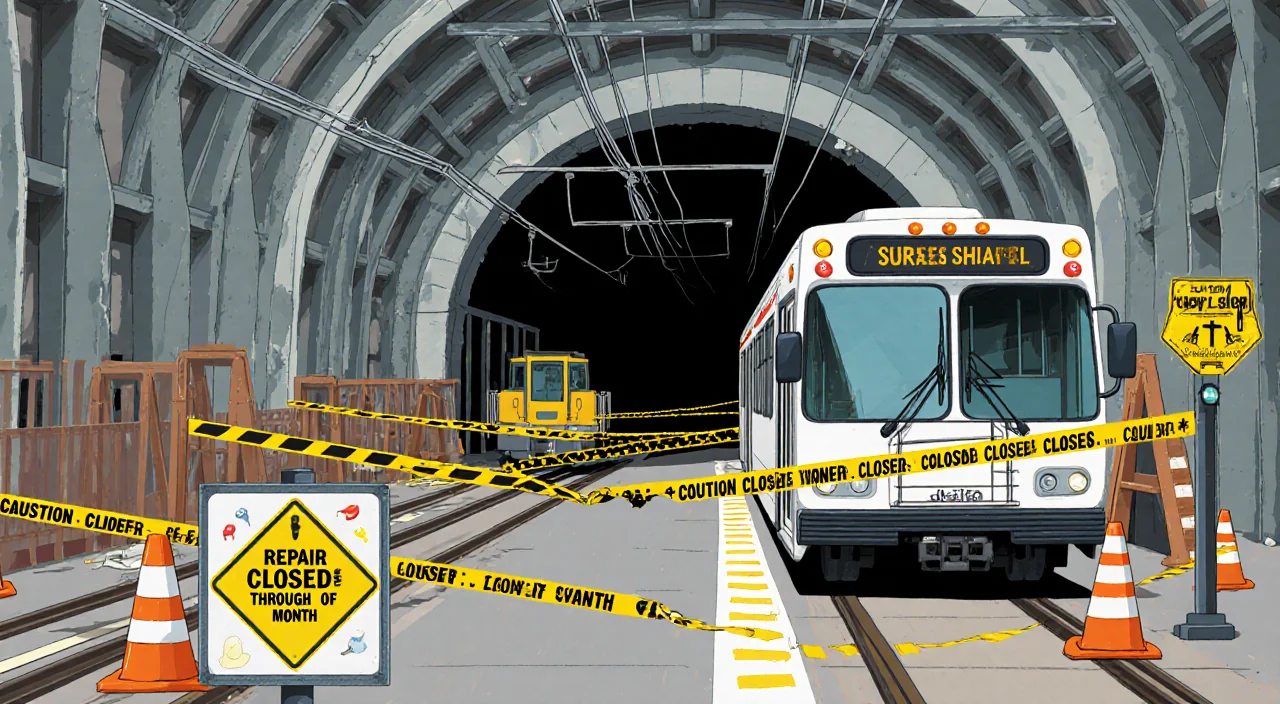
The buses will make stops at every trolley station, including 40th and Market, 36th and Market, 33rd and Market, 30th and Market, 22nd and Market, 19th and Market (Eastbound) and 19th and JFK (Westbound), and 15th and Market. Riders can board or disembark at these points, mirroring the traditional trolley stops. The stops are strategically placed to serve major cross‑street intersections. This arrangement maintains access to key destinations across the corridor.
Passengers can rely on the 10‑minute frequency and clear route to maintain their daily commutes, with buses following the exact corridor the trolleys once served. The shuttle service offers a predictable alternative, allowing riders to adjust travel plans accordingly. The buses operate on the same streets, ensuring familiarity for regular commuters. Riders will find the transition smooth and convenient.
Official Collaboration and Impact
SEPTA officials said they are collaborating with city authorities to enhance on‑street trolley operations, aiming to reduce traffic disruptions across University City. The partnership involves coordinating schedules and traffic signals to streamline trolley movements. Officials noted that improved on‑street operations would ease congestion during the tunnel’s closure. The collaboration reflects a joint effort to keep riders moving efficiently.
Officials expect these adjustments to improve traffic flow and deliver more efficient travel for riders, mitigating congestion caused by the tunnel’s closure. The anticipated benefits include smoother traffic patterns along University City’s main arteries. Riders will experience fewer delays as trolleys and buses share the corridor more effectively. The goal is to maintain service reliability during the repair period.
The partnership between SEPTA and the city underscores a shared commitment to minimizing rider inconvenience while ensuring safety during the repair process. City officials emphasize that coordinated efforts will reduce traffic bottlenecks and improve overall mobility. SEPTA’s shuttle initiative complements on‑street improvements, creating a cohesive strategy for the corridor. The collaboration demonstrates proactive planning in the face of infrastructure challenges.
Technology, Communication, and Future Plans
The shuttle buses themselves are equipped with real‑time GPS tracking, allowing SEPTA to monitor service levels and adjust routes if necessary. Passengers can view live bus locations on the agency’s mobile app, ensuring they know when the next vehicle will arrive. This technology enhances transparency and reduces uncertainty for riders during the tunnel closure. It also supports SEPTA’s commitment to data‑driven operations.
The tunnel’s repair timeline is set to conclude by the end of the month, after which the shuttle buses will be phased out and normal trolley service will resume. Riders will be notified of the exact date and time the tunnel reopens, allowing them to plan their commutes accordingly. SEPTA’s communication plan includes email alerts, website updates, and announcements on local radio stations. This multi‑channel approach ensures that all riders receive timely information.
The closure of the Center City Trolley Tunnel is part of SEPTA’s broader infrastructure renewal strategy, which aims to modernize aging assets across the region. Similar projects have been undertaken in other parts of the network to enhance reliability and safety for commuters. The tunnel repair is expected to improve the overall resilience of the trolley system, reducing future disruptions. SEPTA’s long‑term plan includes regular inspections and preventive maintenance to avoid similar incidents.
Summary and Next Steps
In summary, SEPTA’s deployment of shuttle buses is a timely response to the Center City Trolley Tunnel’s closure, ensuring riders remain connected while repairs are underway. The coordinated effort between the transit agency and city officials demonstrates a shared focus on safety, efficiency, and rider convenience. As the month progresses, commuters can rely on the consistent shuttle schedule and clear communication from SEPTA. The tunnel will reopen at the end of the month, restoring normal trolley operations.
The shuttle buses are painted in SEPTA’s green color scheme, matching the brand’s visual identity. Passengers can easily recognize them on the street. The buses also carry digital signage displaying real‑time arrival information. This consistency helps maintain a familiar look for riders.