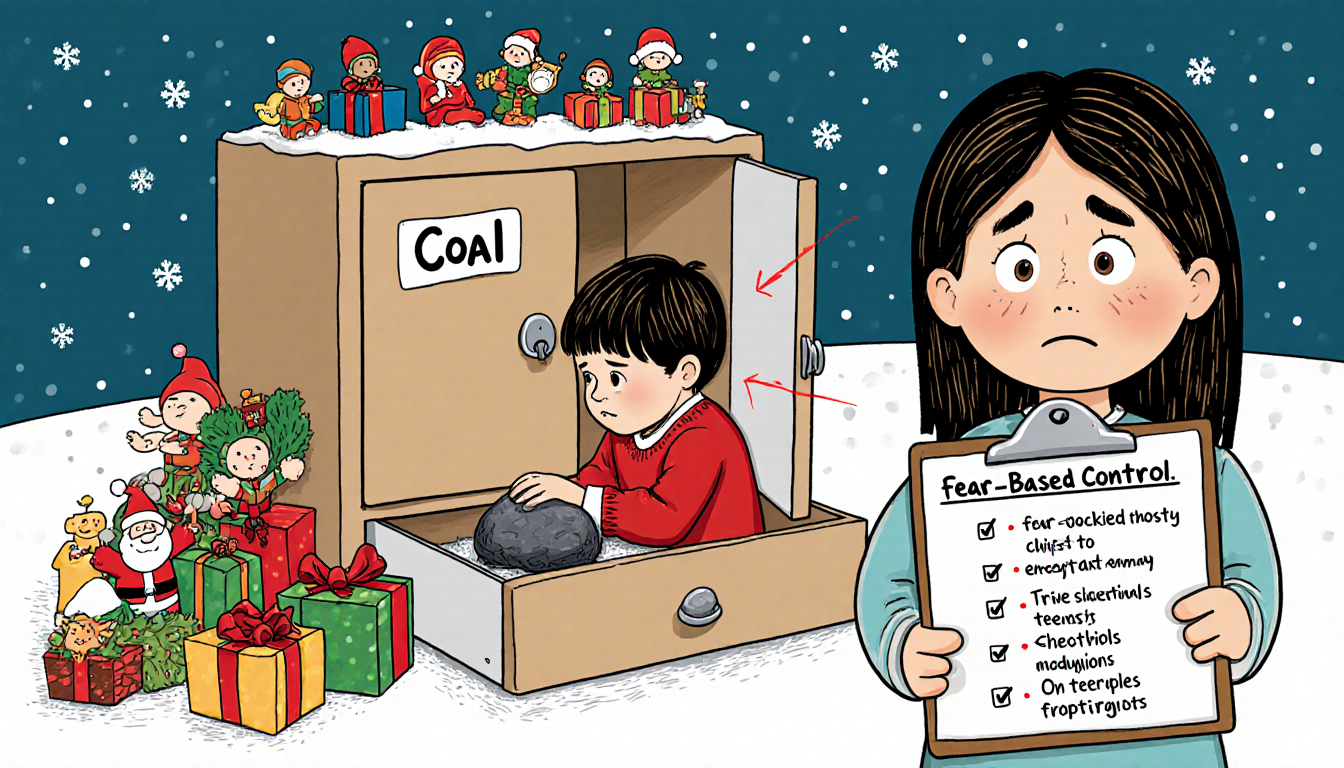

Every December, parents joke that a defiant toddler who scribbles on the wall will be met with the classic line, “Santa’s bringing you coal this year.” For generations, that threat has been woven into American holiday folklore as a fear‑based nudge toward good behavior. Yet as the season brings its own pressures and end‑of‑year burnout, many wonder whether the coal tradition is truly harmless or if it can leave lasting emotional scars.
The Tradition’s Roots
Traditionally, the coal message is delivered after a child’s mischief, with the implication that Santa will not bring presents or will bring coal instead. The idea has persisted as a symbolic warning that good behavior earns rewards, while misbehavior leads to punishment. Over time, the coal has become a cultural shorthand for the stakes of holiday conduct.
Psychologist’s Perspective
Parenting coach and child psychologist Mariana Pérez Borrero says the tradition is far from harmless. “In my experience as a child psychologist, it’s outdated,” she said. “It’s based on fear. It’s based on fear‑based control. It’s based on threats, usually on empty threats. And it’s based on emotional manipulation.” She argues that fear‑based tactics are ineffective for long‑term behavior change.
Emotional Impact
According to Pérez, children rarely walk away learning accountability. Instead, they walk away feeling shame. “They internalize shame and not responsibility,” she said. “We teach them that they have to feel bad about themselves and shame because of what they did and that the adult approval is conditional.” This creates a message that love and approval hinge on perfection.
Holiday Contradictions
The holiday season is meant to be about connection, generosity, magic, family,” Pérez said. “And then we say things like, Santa won’t come if you don’t behave or he’s bringing you coal. So that contradiction creates anxiety.” She notes that kids begin to worry whether they are good or bad, and whether they will be “loved or remembered or validated.”
Alternative Approaches
Pérez recommends using the season to connect rather than threaten. She suggests validating emotions, guiding regulation, and helping kids understand why they are overwhelmed. “The best way to connect during the holidays is by validating your child’s behavior, by being there next to your child,” she said. She also advises parents to separate gifts from discipline. “Christmas and presents have nothing to do with behavior,” she said. “Let Santa stay magical and let parents stay connected.”
Coal’s Lasting Consequences
Pérez warns that coal can have lasting emotional consequences. “I’ve heard stories about grown adults that are really impacted by when they were children and they received coal,” she said. She recalled one child who opened a beautifully wrapped gift only to find coal inside. “It’s super misleading,” she said, “teaching them that they are not worthy and that they have to behave one way to get what they want.” She added, “I highly recommend you not gift coal to your children this Christmas.”
Key Takeaways
- “Don’t weaponize Santa.”
- “Let Santa be magical. Let Santa bring magic and presents and not coal.”
- “Let discipline again be rooted in respect … not based in fear.”
- “Kids are not misbehaving. Kids are having age‑appropriate responses to what they are going through.”
- “Every difficult moment can be a chance to connect, to teach, to build connection during the holidays and beyond the holidays.”
By keeping Santa’s promise of magic and presents intact and focusing on respectful, emotion‑aware parenting, parents can transform holiday discipline into a bridge for connection rather than a source of shame. The coal tradition may seem harmless, but its impact on children’s sense of worth and the family’s emotional climate is far more profound than many realize.