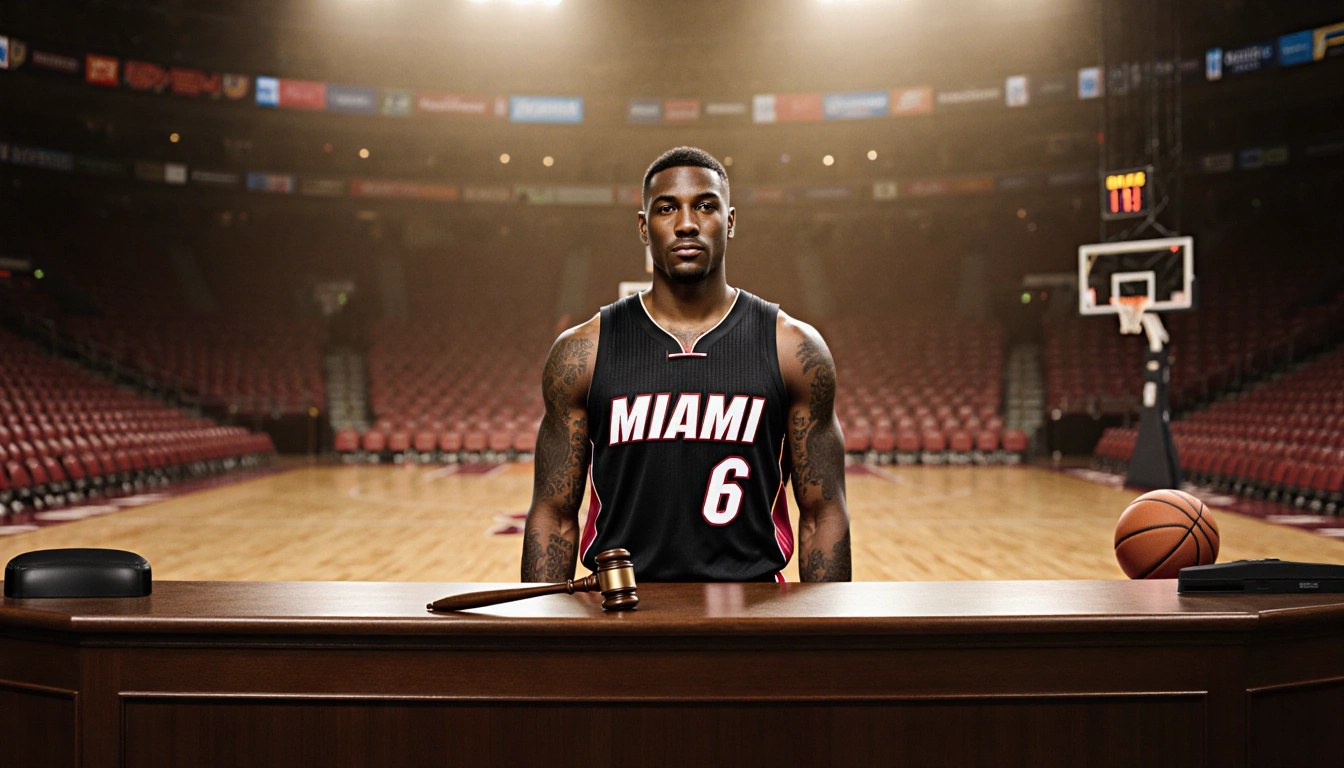

In a move that could reshape how federal prosecutors tackle sports-betting allegations, the lawyers for former Heat guard Terry Rozier have filed a motion to dismiss charges that have kept him off the court all season.
Background of the Case
Rozier, 31, pleaded not guilty on Dec. 8 to wire-fraud conspiracy and money-laundering conspiracy charges. He was released on a $3 million bond and is scheduled to appear before U.S. District Judge LaShann DeArcy Hall on March 3. The indictment is part of a sweep that brought more than 30 other defendants in two gambling operations-one leaking inside information about NBA athletes and another involving rigged, Mafia-backed poker games.
Allegations Against Rozier
Federal prosecutors in Brooklyn allege that Rozier tipped a friend, Deniro “Niro” Laster, that he would leave a March 2023 game early because of a supposed injury. Laster allegedly shared or sold that information, allowing others to place more than $250,000 in prop bets, prosecutors said. Rozier was with the Charlotte Hornets at the time; the early exit was not listed on the team’s injury report, nor was it shared with the public or with sportsbooks that accept NBA wagers.
Lawyers’ Argument
In a motion made public on Tuesday, Rozier’s attorneys, James M. Trusty and A. Jeff Ifrah, argue that the government has overreached by turning a private dispute over bettors’ use of nonpublic information into a federal case. They contend the government’s theory-that Rozier prevented sportsbooks from making informed decisions about accepting certain bets-runs afoul of the Supreme Court’s 2023 ruling in United States v. Ciminelli, which narrowed the federal wire-fraud statute.
The lawyers wrote:
> “The government has billed this case as involving ‘insider betting’ and ‘rigging’ professional basketball games,” Rozier’s lawyers, James M. Trusty and A. Jeff Ifrah, wrote in the motion. “But the indictment alleges something less headline-worthy: that some bettors broke certain sportsbooks’ terms of use against wagering based on non-public information and ‘straw betting.'”
They also questioned whether federal prosecutors have authority to bring such a case, noting that sportsbooks are regulated at the state level, not the federal level. The motion states:
> “This is not to say that sports betting platforms are without recourse when their terms of use are violated – they can void bets, pursue civil remedies, or seek state prosecutor involvement,” Trusty and Ifrah wrote. “But Ciminelli puts to rest the notion that federal prosecutors are here to enforce contractual agreements between bettors and platforms.”
Supreme Court Context
Under United States v. Ciminelli, prosecutors cannot use a wire-fraud claim to allege that defendants conspired to deprive a person-or in this case, sportsbooks-of the right to information needed to make discretionary economic decisions. Rozier’s lawyers argue that the indictment’s claims about bettors violating sportsbooks’ terms of use do not meet the statutory definition of wire fraud.
Impact on NBA Integrity
The charges have raised questions about the integrity of NBA games amid legalized betting and a proliferation of prop bets. In response, the league has tweaked its injury-reporting requirements. A spokesperson for the federal prosecutors’ office in Brooklyn declined to comment on Rozier’s motion.
Career Snapshot
Rozier earned about $160 million over a 10-year NBA career. He was a first-round pick for the Boston Celtics in 2015 after starring at the University of Louisville and was traded to the Heat by Charlotte last year. In the March 2023 game in question, he played the first nine minutes and 36 seconds against the New Orleans Pelicans before leaving, citing a foot issue. He did not play again that season.
Key Takeaways
- Rozier’s lawyers argue that federal prosecutors overreached by turning a private betting dispute into a federal case.
- The motion cites the Supreme Court’s Ciminelli decision, which limits the scope of wire-fraud claims.
- Prosecutors allege Rozier tipped a friend about an early exit, leading to over $250,000 in prop bets.
The outcome of the motion could have significant implications for how federal authorities prosecute sports-betting allegations and for the broader relationship between the NBA and the rapidly expanding sports-betting industry.