

At a Glance
- ICE’s budget has surged, adding $170 billion over four years, with $30 billion for operations and $45 billion for detention.
- The force now stands at 22,000 officers, a 12,000-person increase from a 10,000-person target.
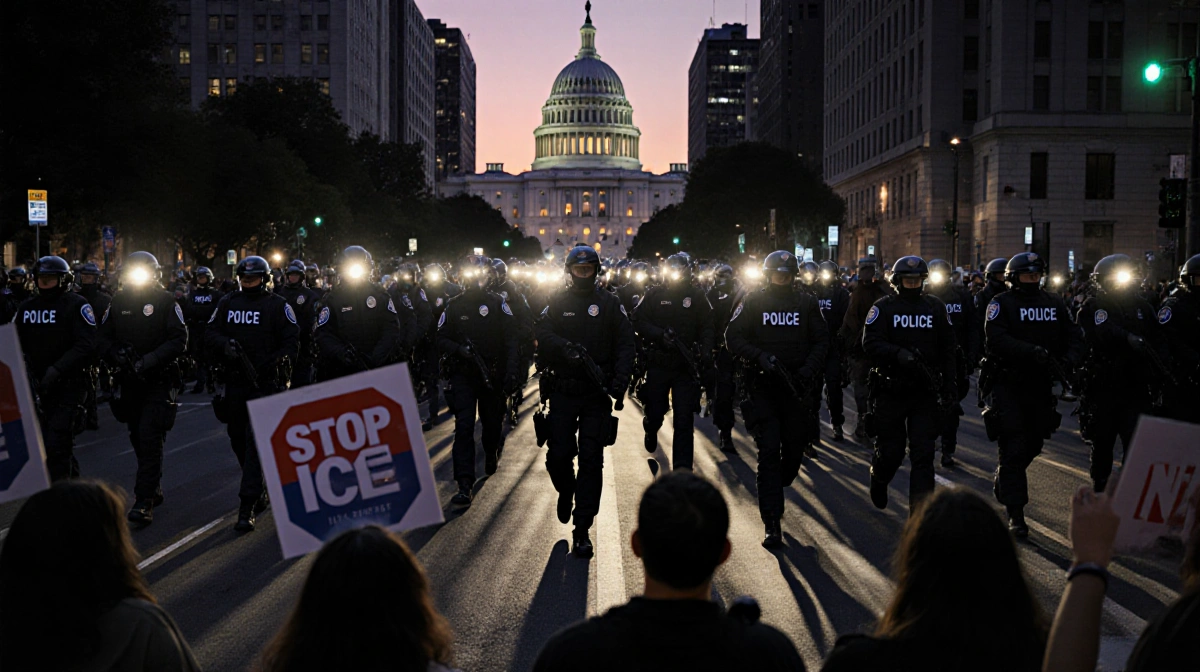
- The expansion fuels aggressive city-wide enforcement, sparking protests and political backlash.
- Why it matters: The shift turns ICE into a national law-enforcement machine, reshaping how immigration is policed across the country.
The recent budget surge for Immigration and Customs Enforcement (ICE) has turned the agency into a national law-enforcement force, reshaping how immigration is policed across the United States. The new spending, driven by a Republican-controlled Congress, has expanded the ICE roster, increased hiring bonuses, and fueled aggressive tactics in cities like Minneapolis, Los Angeles, and Chicago.
The Bill That Supercharges ICE
The legislation that President Donald Trump signed-often called the “big, beautiful bill”-doubled annual Homeland Security funding, adding $170 billion over four years. Of that, ICE received $30 billion for operations and $45 billion for detention facilities.
> “The first thing that comes to mind is spending on this level is typically done on the military,” said Kathleen Bush-Joseph, a policy analyst at the Migration Policy Institute.
The bill also set a $50 ,000 hiring bonus for new officers and raised the annual ICE budget to $10 billion. The Department of Homeland Security reports that it has obligated roughly $58 billion, with $37 billion earmarked for border wall construction.
Key Numbers
| Item | Amount |
|---|---|
| Total added funding | $170 billion |
| ICE operations | $30 billion |
| ICE detention | $45 billion |
| Hiring bonus | $50 ,000 |
| Current ICE staff | 22,000 |
City Streets Become Federalized Frontlines
The new funding has accelerated a recruitment campaign that surpassed its 10,000-person target, bringing in 12,000 new hires and expanding the force to 22,000 officers.
> “We’re looking at ICE in a way we’ve never seen before,” said Bobby Kogan, senior director of federal budget policy at the Center for American Progress.
In cities, ICE officers have been seen smashing car windows, forcibly removing people from vehicles, and pursuing suspects on the street. These actions have drawn protests, especially after the shooting death of Renee Good in Minneapolis.
Tactics on the Ground
- Smash car windows to force occupants out.
- Yank people from vehicles and wrestle them to the ground.
- Deploy masked officers in door-to-door sweeps.
The expansion also encourages partnership with local police, sheriff’s offices, and other agencies to conduct enforcement operations in communities nationwide.
Political Pushback and Congressional Limits
Despite the budget’s momentum, Democrats have expressed strong opposition. Rep. Nydia M. Velázquez warned that the public is “upset at what they are seeing” and that “they didn’t sign on for this.”
House Speaker Mike Johnson called the opposition “no time to be playing games” and urged Democrats to allow federal law-enforcement to do its duty.
Legislative Actions
- Robin Kelly introduced three articles of impeachment against Homeland Security Secretary Kristi Noem.
- Sen. Ruben Gallego called for a total dismantlement of ICE, describing it as a “goon squad.”
- Congressional Progressive Caucus members have said they will not support additional funds without significant changes.
> “People want immigration enforcement that goes after criminals,” said Sen. Gallego on CNN.
The GOP’s version of the annual Homeland Security bill would provide about $92 billion for the agency, including $10 billion for ICE.
Funding Flow and Operational Scale
The Department of Homeland Security announced that it has already obligated $58 billion, with $37 billion for border wall construction. The agency has also reported that it has arrested and deported about 600,000 people, and that 1.9 million others have “voluntarily self-deported” since January 2025.
> “The good news is that thanks to the Big Beautiful Bill that President Trump signed, we have an additional 12,000 ICE officers and agents on the ground across the country,” said Assistant Secretary Tricia McLaughlin in a December statement.
The administration’s goal is 100,000 detentions a day-roughly three times the typical rate-and 1 million deportations a year.
Budget Timeline
| Year | Funding Stage |
|---|---|
| 2025 | $30 billion operations, $45 billion detention |
| 2026 | $30 billion operations, $45 billion detention |
| 2027 | $30 billion operations, $45 billion detention |
| 2028 | $30 billion operations, $45 billion detention |
| 2029 | End of budget cycle |
Public Response and Future Outlook
The aggressive enforcement tactics have sparked protests, with some calling for the deployment of the Insurrection Act to quell demonstrations. Homeland Security Secretary Kristi Noem said the officers are acting lawfully and targeting “the worst of the worst” immigrants.
In Minneapolis, Governor Tim Walz has faced pressure from federal officials, and the U.S. Army has 1,500 soldiers ready to deploy.
> “If anything doesn’t change with Governor Walz, I don’t anticipate that the streets will get any safer or more peaceful,” said Kristi Noem.
The political climate remains tense. With Republican control of Congress, Democrats cannot easily impeach Noem or halt the spending. The next major funding decision will come by January 30, when Congress must consider routine funding for Homeland Security to avoid a partial shutdown.
Key Takeaway: The new budget has transformed ICE into a national law-enforcement force, expanding its reach into city streets, increasing staff, and inflating the federal budget. Political opposition remains strong, but congressional control may limit immediate policy changes.
Report by Daniel J. Whitman.