


At a Glance
- Humans& raised $480 M in seed funding to build a social-intelligence foundation model.
- The startup aims to replace traditional collaboration tools like Slack and Google Docs.
- Founders come from Anthropic, Meta, OpenAI, xAI, and Google DeepMind.
Why it matters: If successful, Humans& could redefine how teams coordinate with AI, moving beyond isolated chatbots to shared decision-making.
The startup Humans& is betting that the next wave of artificial intelligence will be about people working together, not just answering questions. In a recent event in San Francisco, the company announced a $480 million seed round and outlined a vision that could turn the way teams communicate.
Why Humans& Matters
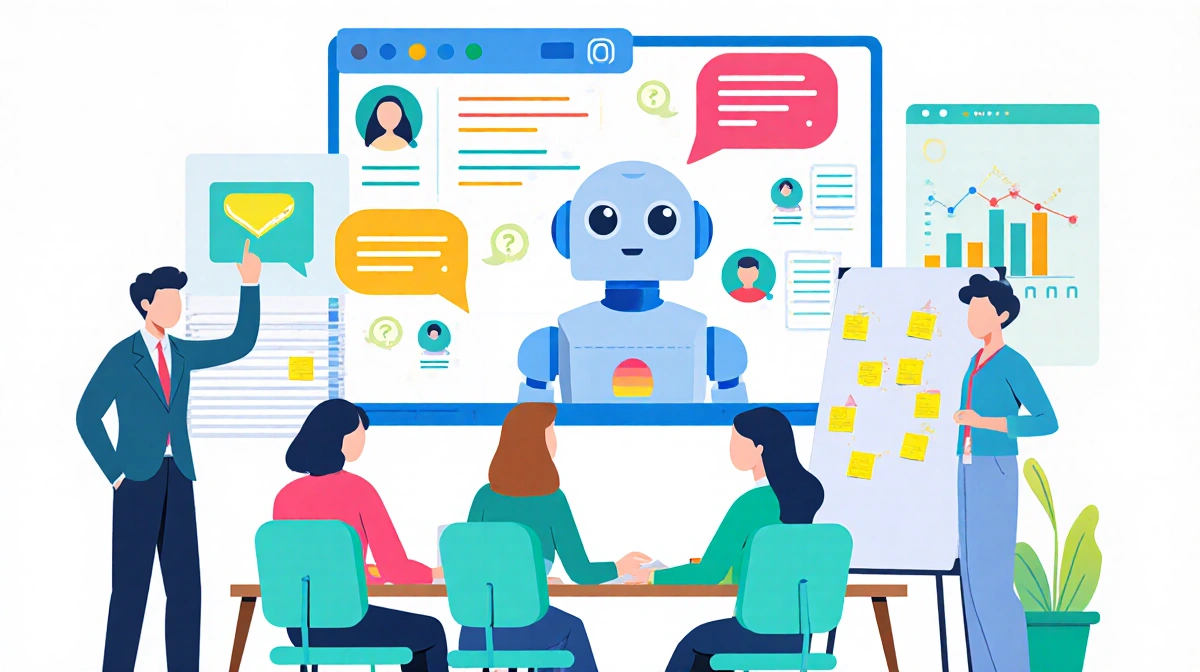
The company believes current chatbots are limited to one-to-one interactions. They lack the ability to track long-running decisions, coordinate multiple users, or keep teams aligned over time. Humans& wants to fill that gap by creating a model that feels like a colleague, asking questions that help teams reach consensus.
The Vision
Andi Peng, one of Humans&’s co-founders and a former Anthropic employee, said:
> “It feels like we’re ending the first paradigm of scaling, where question-answering models were trained to be very smart at particular verticals, and now we’re entering what we believe to be the second wave of adoption where the average consumer or user is trying to figure out what to do with all these things.”
The founders envision a product that could replace multiplayer or multi-user contexts such as communication platforms (think Slack) or collaboration platforms (think Google Docs and Notion). Both enterprise and consumer applications are on the table.
Funding and Founders
The $480 million round was led by a group of investors who value the team’s pedigree. The founders are alumni of major AI labs:
- Anthropic
- Meta
- OpenAI
- xAI
- Google DeepMind
Eric Zelikman, co-founder and CEO, added:
> “We are building a product and a model that is centered on communication and collaboration,” he told the event, adding that the focus is on helping people work together more effectively, both with each other and with AI tools.
He also described a typical team decision scenario:
> “Like when you have to make a large group decision, often it comes down to someone taking everyone into one room, getting everyone to express their different camps about, for example, what kind of logo they’d like,” Zelikman said, laughing about the tedium of agreeing on a logo.
Product Strategy
The startup is still early, and no concrete product exists yet. What is clear is that Humans& wants to own the collaboration layer rather than plug into existing tools. The model will be trained to ask questions that feel like interacting with a friend or a colleague, someone who is trying to get to know you.
Peng explained that the product and model are being designed together:
> “Part of what we’re doing here is also making sure that as the model improves, we’re able to co-evolve the interface and the behaviors that the model is capable of into a product that makes sense,” she said.
Training the Model
Yuchen He, a co-founder and former OpenAI researcher, outlined the technical approach:
> “We’re trying to train the model in a different way that will involve more humans and AIs interacting and collaborating together,” He told the audience. He added that the startup’s model will also be trained using long-horizon and multi-agent reinforcement learning (RL).
Long-horizon RL trains the model to plan, act, revise, and follow through over time, while multi-agent RL trains for environments where multiple AIs and/or humans are in the loop. Both techniques are gaining traction as researchers push large language models beyond single-turn chatbot responses.
He emphasized the importance of memory:
> “The model needs to remember things about itself, about you, and the better its memory, the better its user understanding,” He said.
Risks and Competition
The biggest risk is funding. Training and scaling a new model requires enormous compute and capital, putting Humans& in direct competition with established players for resources.
Another risk is that the company is not only competing with other collaboration tools but also with the top AI companies that are already building similar capabilities:
- Anthropic’s Claude Cowork optimizes work-style collaboration.
- Google’s Gemini is embedded into Workspace.
- OpenAI is pitching developers on multi-agent orchestration and workflows.
None of these giants have announced a model built specifically for social intelligence, which could give Humans& a unique edge or make it an acquisition target. The founders have already turned down offers and are not interested in being acquired.
Zelikman concluded:
> “We believe this is going to be a generational company, and we think that this has the potential to fundamentally change the future of how we interact with these models,” he said. “We trust ourselves to do that, and we have a lot of faith in the team that we’ve assembled here.”
Future Outlook
Humans& plans to release a product that acts as the connective tissue across any organization, from a 10,000-person business to a family. The model will understand each person’s skills, motivations, and needs, balancing them for the good of the whole.
If the startup can secure the necessary compute and capital, its social-intelligence foundation model could become the backbone of next-generation collaboration tools, shifting the industry from isolated chatbots to integrated teamwork platforms.
—