
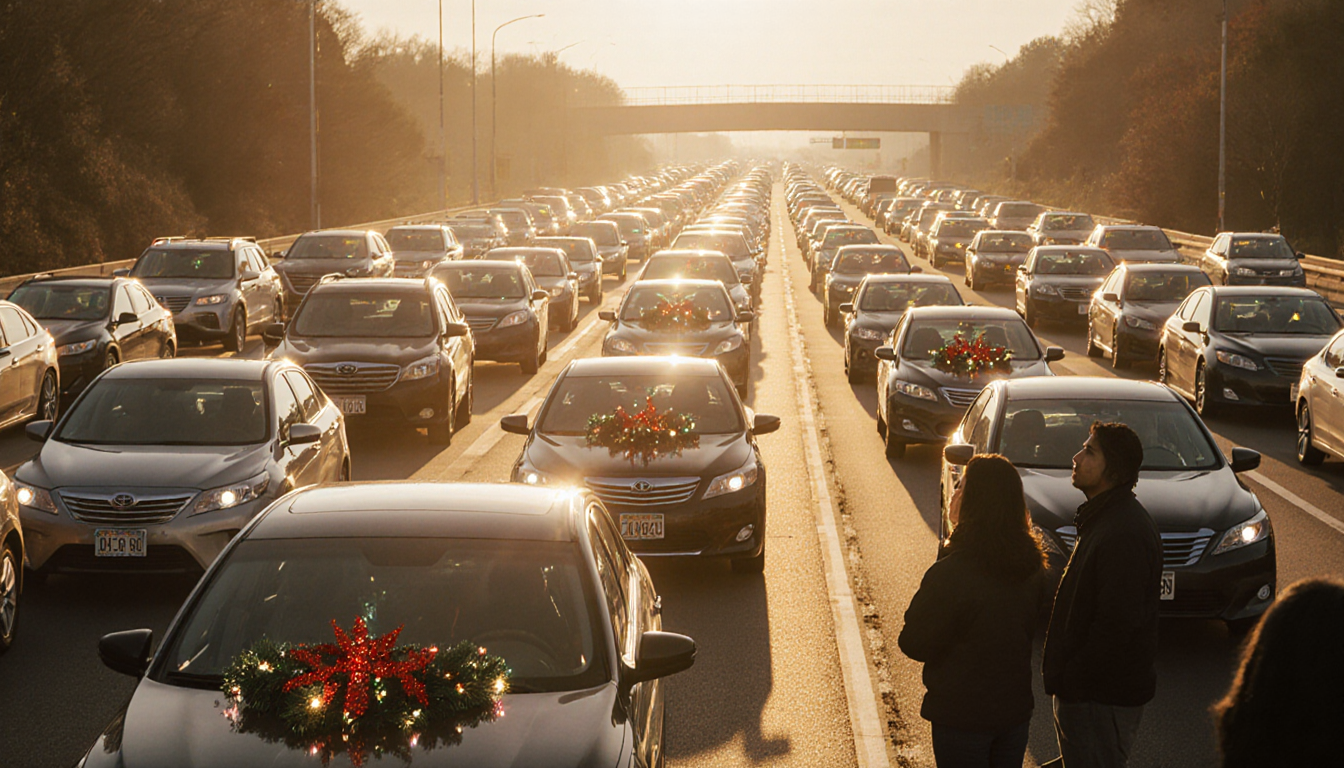

In a season of unprecedented travel, Americans are gearing up to hit the road in record numbers. More than 122 million people are expected to travel during the year‑end period from Dec. 20 to Jan. 1, according to AAA. The association’s forecast of 122.4 million people—looking at travel at least 50 miles from home during the 13‑day stretch—represents a 2.2 % increase from 2024, which held the previous record with 119.7 million travelers.
“Year‑end travel is a mix of family road trips, friend getaways, and tropical vacations,” said Stacey Barber, Vice President of AAA Travel, in a news release published Wednesday. “Holiday celebrations look different for everyone, but a common thread is the desire to travel, whether it’s returning to your hometown or exploring new destinations.”
AAA projects 109.5 million Americans will travel by car for their holiday trips. Drivers can expect lower gas prices, too, with the national average dropping below $3 per gallon this month.
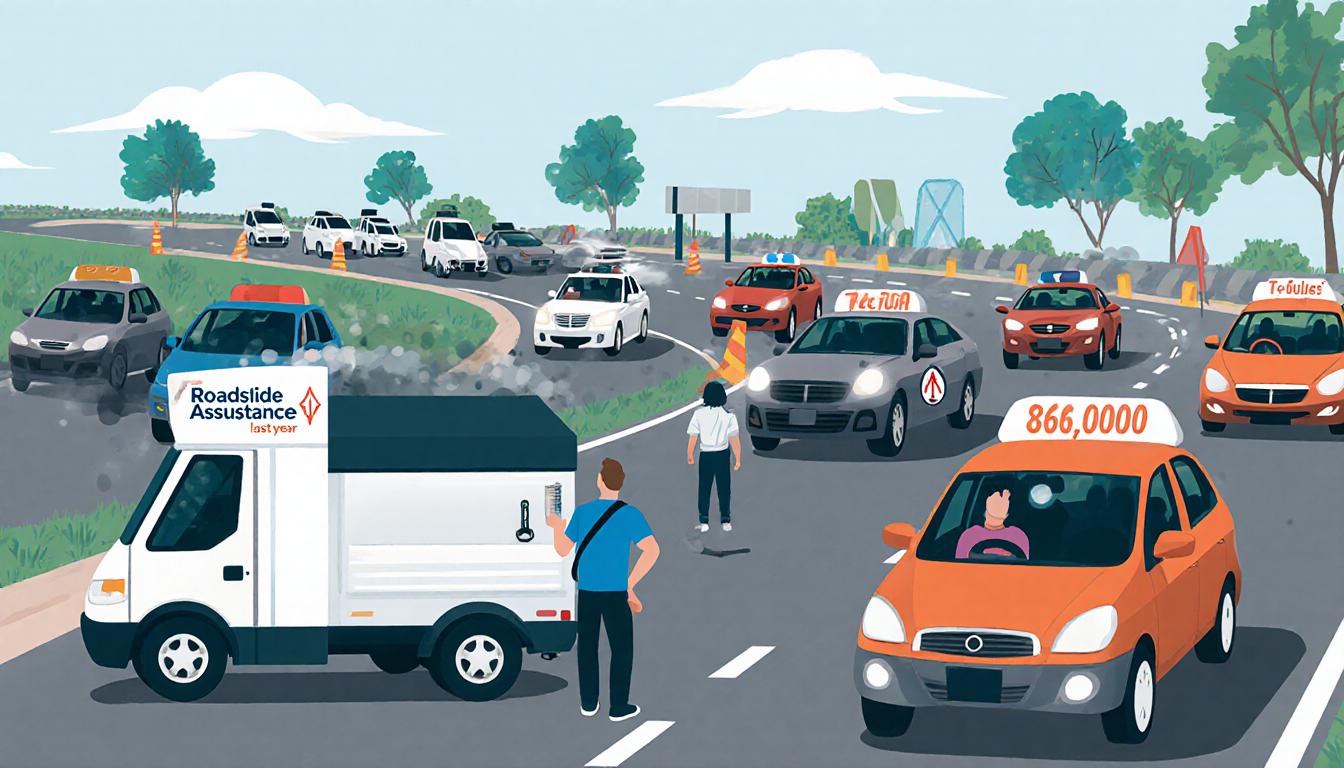
With roads expected to be crowded, AAA is also encouraging drivers to prioritize safety. Last year, the organization responded to more than 860,000 emergency roadside assistance calls during the year‑end holiday period. AAA reminded drivers to slow down and move over when passing stopped vehicles on the side of the road.
As for air travel, AAA projects a record 8.03 million travelers will fly domestically during the year‑end holiday period. It expects the days leading up to Christmas to be the busiest and most expensive at the airport, with Christmas Day being cheaper.
An additional 4.9 million people are expected to take other modes of transportation between Dec. 20 and Jan. 1, including buses, trains and cruises.
Transportation‑data firm INRIX expects Christmas week to have more congested roads than New Year’s week, but both weeks will see days with increased traffic. The weekend before Christmas and Friday, Dec. 26, are expected to be particularly busy, while Christmas Day and New Year’s Day are typically the lightest traffic‑wise.
Here’s a breakdown of the best and worst times to travel by car for the holiday stretch, according to INRIX:
| Date | Worst travel time | Best travel time |
|——|——————-|——————|
| Saturday, Dec. 20 | 1 p.m. – 8 p.m. | After 9 p.m. |
| Sunday, Dec. 21 | 1 p.m. – 7 p.m. | Before 11 a.m. |
| Monday, Dec. 22 | 1 p.m. – 7 p.m. | Before 10 a.m. |
| Tuesday, Dec. 23 | 1 p.m. – 7 p.m. | Before 10 a.m. |
| Wednesday, Dec. 24 | Minimal traffic impact expected | Minimal traffic impact expected |
| Thursday, Dec. 25 | Minimal traffic impact expected | Minimal traffic impact expected |
| Friday, Dec. 26 | 11 a.m. – 8 p.m. | Before 11 a.m. |
| Saturday, Dec. 27 | 11 a.m. – 8 p.m. | Before 11 a.m. |
| Sunday, Dec. 28 | 11 a.m. – 8 p.m. | Before 11 a.m. |
| Monday, Dec. 29 | 12 p.m. – 8 p.m. | Before 10 a.m. |
| Tuesday, Dec. 30 | 12 p.m. – 7 p.m. | Before 10 a.m. |
| Wednesday, Dec. 31 | Minimal traffic impact expected | Minimal traffic impact expected |
| Thursday, Jan. 1 | Minimal traffic impact expected | Minimal traffic impact expected |
People are expected to flock to warmer destinations across the U.S. and abroad this holiday season, according to booking data analyzed by AAA. The top destinations include:
Domestic
- Orlando, Florida
- Fort Lauderdale, Florida
- Miami, Florida
- Tampa, Florida
- New York, New York
International/Caribbean
- Cancun, Mexico
- Punta Cana, Dominican Republic
- Cozumel, Mexico
- Puerto Vallarta, Mexico
- San Juan, Puerto Rico
- Nassau, Bahamas
Other Popular Spots
- Anaheim/Los Angeles, California
- San Jose, Costa Rica
- Honolulu, Hawaii
- Maui, Hawaii
- Rome, Italy
- Dallas/Fort Worth, Texas
- Oranjestad, Aruba
- Las Vegas, Nevada
- Sydney, Australia
Key Takeaways
- 122.4 million Americans are expected to travel at least 50 miles from home during the 13‑day year‑end stretch, a 2.2 % rise from last year’s record.
- 109.5 million will drive, 8.03 million will fly domestically, and 4.9 million will use other transportation modes.
- AAA urges drivers to stay safe on crowded roads, noting more than 860,000 roadside assistance calls were handled last year.
The holiday travel surge underscores how Americans are eager to connect with loved ones, explore new places, and enjoy the season’s festivities—while also reminding them to plan ahead and stay safe on the road.