

At a Glance
- A Germantown house deemed “imminently dangerous” collapsed two days before its repair deadline
- The city lists 170 properties in the most severe risk category, half standing more than a year
- Over 3,300 buildings carry the “unsafe” label, 70 % stuck in that status for at least twelve months
- Why it matters: Neighboring residents fear the next collapse, while owners stall and fines are applied unevenly
Philadelphia’s building-safety crackdown, launched after Mayor Cherelle Parker split the Department of Licenses and Inspections in 2024, has yet to clear a backlog of crumbling properties. News Of Philadelphia‘s review of city records shows that 170 buildings are now classified as “imminently dangerous,” meaning they pose an immediate risk of collapse, and thousands more carry the lower-level “unsafe” designation.
Collapse on Hansberry Street
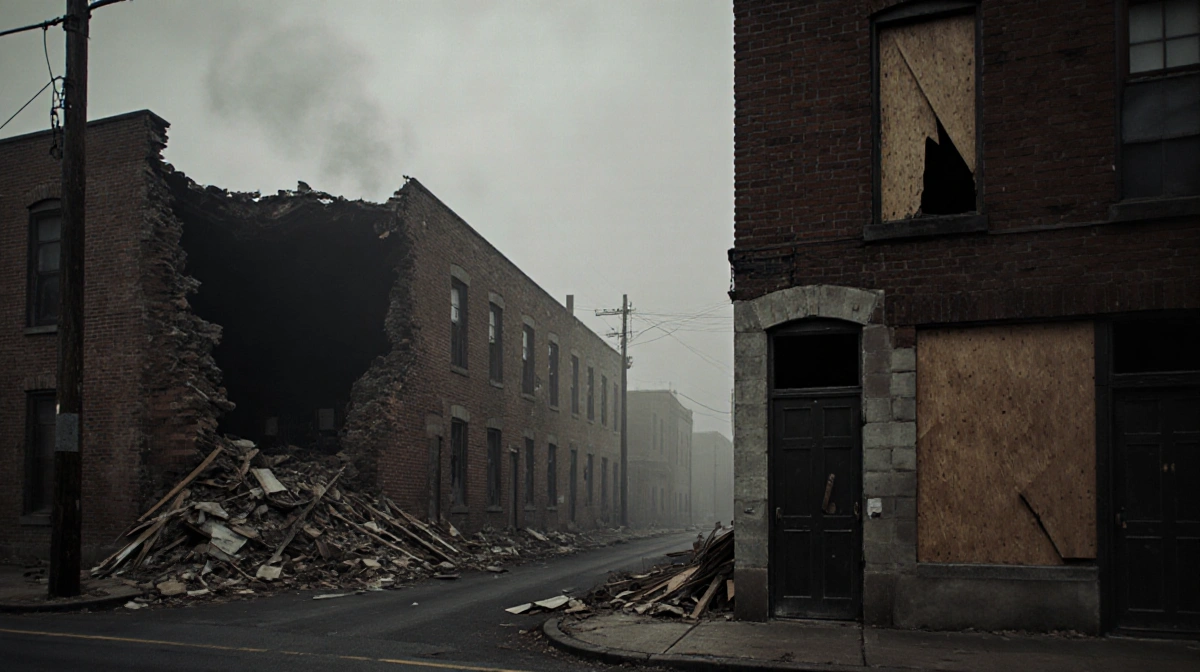
On January 7, the entire façade of a rowhouse on the 200 block of Hansberry Street in Germantown crashed onto the sidewalk and into the street. The incident came just two days before the owner’s deadline to fix outstanding violations.
- L&I first labeled the house unsafe in 2021
- The rating rose to imminently dangerous in December 2024
- Owner had until January 9, 2025, to address the most serious hazards
Brent Boyce, the New York-based owner, told Michael A. Turner the morning after the collapse that he “didn’t know the property had fallen down.” He declined further comment, saying he wished to speak with city officials first.
Growing Inventory of Dangerous Buildings
City code defines an imminently dangerous structure as one with “an immediate risk of failure or collapse.” Yet enforcement lags:
| Status | Count | Time in Status |
|---|---|---|
| Imminently dangerous | 170 | 50 % over one year |
| Unsafe | 3,300+ | 70 % over one year |
The unsafe category covers buildings “dangerous to the life, health, property or safety of the public or the occupants,” according to the code.
West Philly Neighbors Sound Alarm
Brenda Glover, who lives next to an unsafe property on North 60th Street, pointed to a sagging porch roof with a gaping hole.
“This is about ready to come down,” she said. Residents have called 311 for years about the building. Records show:
- L&I declared the home unsafe in 2022
- Four re-inspections have since failed
- 15 violations remain open, including structural-wall and roof issues
“I think it’s horrible,” Glover said. “The city and the mayor and L&I, they need to do their job. I mean, what are you waiting for-for it to collapse?”
Court Action Years in the Making
Basil Merenda, commissioner for inspection, safety and compliance, said L&I is now preparing to seek a court order to dismantle the West Philly porch-nearly three years after the initial unsafe designation.
Reached by phone, the owner said he is “in the process of obtaining permits” for repairs.
Engineering Risks Multiply
Drexel University civil engineering professor Abi Aghayere warned that deferred maintenance accelerates deterioration:
- Water leaks rot wood framing
- Adjacent properties face collateral risk
- “The building is not going to warn us when it’s going to go,” he said
Limited Tools and Resources
Merenda emphasized that owners, not the city, must fix their buildings. L&I’s demolition budget covers only the most dangerous structures, and resources are stretched.
When asked why imminently dangerous buildings stand for years, Merenda requested a list of addresses. News Of Philadelphia provided a link to the department’s own public database; officials have not yet responded.
Fines as a Last Resort
City code lets L&I levy daily fines after violations expire, but Merenda said penalties are applied case by case.
“Does that property owner have the resources to pay those fines and fix the property?” he asked. “You want compliance. You want the property fixed.”
He called sustained owner engagement “the six-million-dollar question,” adding, “That requires resources. It requires policy beyond what L&I has in its repertoire.”
Staffing Push Underway
Merenda said he is working with the mayor’s office to hire additional inspectors to shorten response times and boost compliance citywide.
Key Takeaways
- Half of Philadelphia’s 170 imminently dangerous buildings have waited over a year for action
- Of 3,300+ unsafe buildings, 70 % have carried that label for twelve months or more
- Owners face patchy enforcement: some properties rack up violations while others receive court orders
- L&I says its power is limited to fines and court petitions; it cannot fund repairs or demolish every at-risk structure
- Mayor Parker’s 2024 restructuring created a dedicated compliance unit, but results remain incremental