
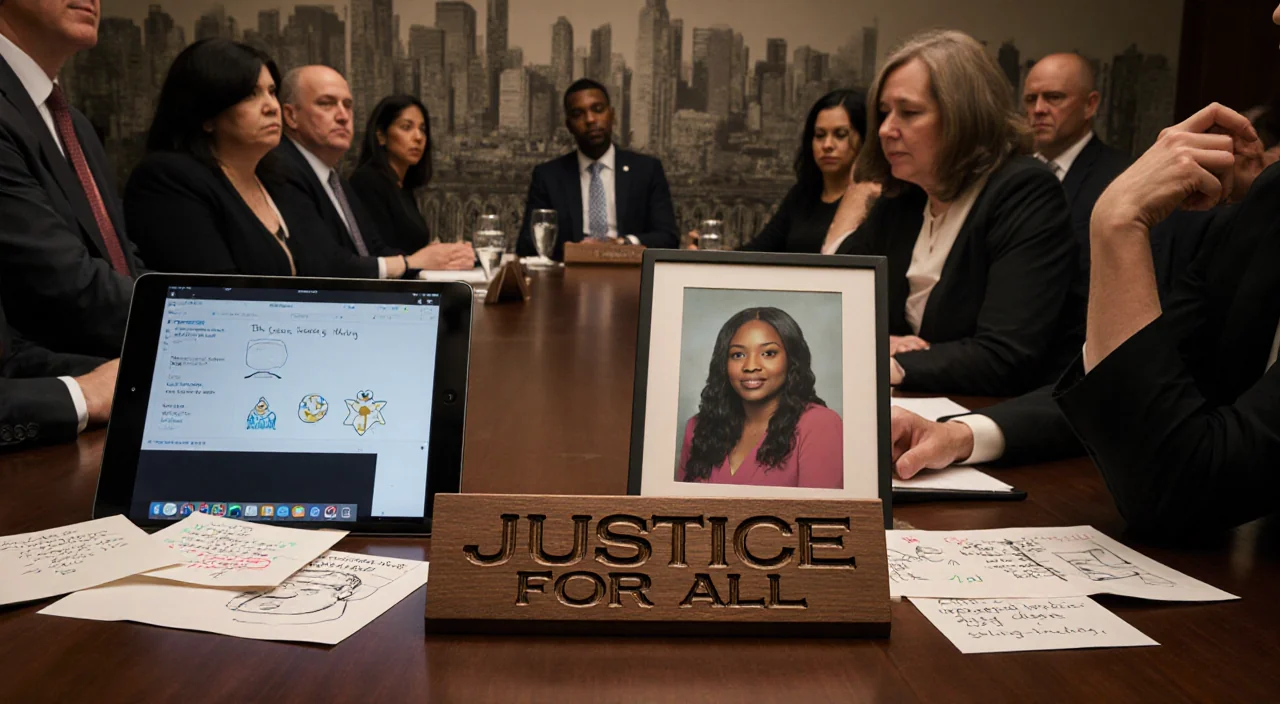
Philadelphia City Council convenes a public safety committee hearing on domestic violence justice reforms following the death of 23‑year‑old Kada Scott.
Background
In October, 23‑year‑old Kada Scott was found dead near a school in the city’s East Germantown neighborhood. Her death came about two weeks after she was kidnapped from her workplace at an assisted living facility in Chestnut Hill. Keon King, who had previously kidnapped and assaulted another woman earlier this year, was arrested and charged in Scott’s slaying. The tragedy prompted Council President Kenyatta Johnson (D‑2nd dist.) to approve a resolution that led to the hearing.

The Hearing
Organizers said the session, held on Tuesday morning, aimed to examine the city’s “strategies, laws, and policies for protecting victims of abuse and domestic violence within the justice system.” Scott’s parents, Kim Matthews and Keith Scott, attended but declined to testify. The hearing was not a vote; it was intended to gather information for possible future legislation.
Statements from City Leaders
Council President Johnson opened by saying, “The criminal justice system is falling short of protecting the people it’s meant to serve. Far too often the individuals who courageously call the police in moments of crisis do not, or cannot, come to court when it’s time to testify. As a result, cases are dismissed or withdrawn.” He added that, despite the high volume of domestic‑violence calls—more than 100,000 each year according to Women Against Abuse—many cases never reach the courtroom, and those that do are often dismissed or withdrawn, leaving victims “without legal resolution or protection.” Johnson’s office released a statement that the hearing is a “crucial step toward filling gaps in the system, improving inter‑agency cooperation, and pushing for policy changes to prevent future tragedies.”
District Attorney’s Perspective
Philadelphia District Attorney Larry Krasner testified about his office’s work to support domestic‑violence victims. He acknowledged that his team can “do better” every day, adding, “Make no mistake, we can do better, every day,” he said. “The question is, not just to do different, the question is ‘how do you do better?’” Krasner described the hearing as a step in the right direction, saying, “Today is not necessarily the day for every nut and every bolt, but we are happy to talk through every nut and every bolt in our office and outside of our office that presents an opportunity to do better.” He also revealed plans to request funding next year to create a specialized domestic‑violence unit in his office.
Key Takeaways
- The hearing was prompted by the death of Kada Scott and aims to address systemic gaps in domestic‑violence justice.
- City officials and the district attorney acknowledge that many domestic‑violence cases are dismissed or withdrawn before trial.
- Future reforms may include a specialized domestic‑violence unit and improved inter‑agency cooperation.
The session underscores Philadelphia’s commitment to revising policies that have historically left victims without protection or legal resolution. While the hearing itself does not enact law, it sets the groundwork for potential legislation that could better safeguard domestic‑violence victims in the city.