
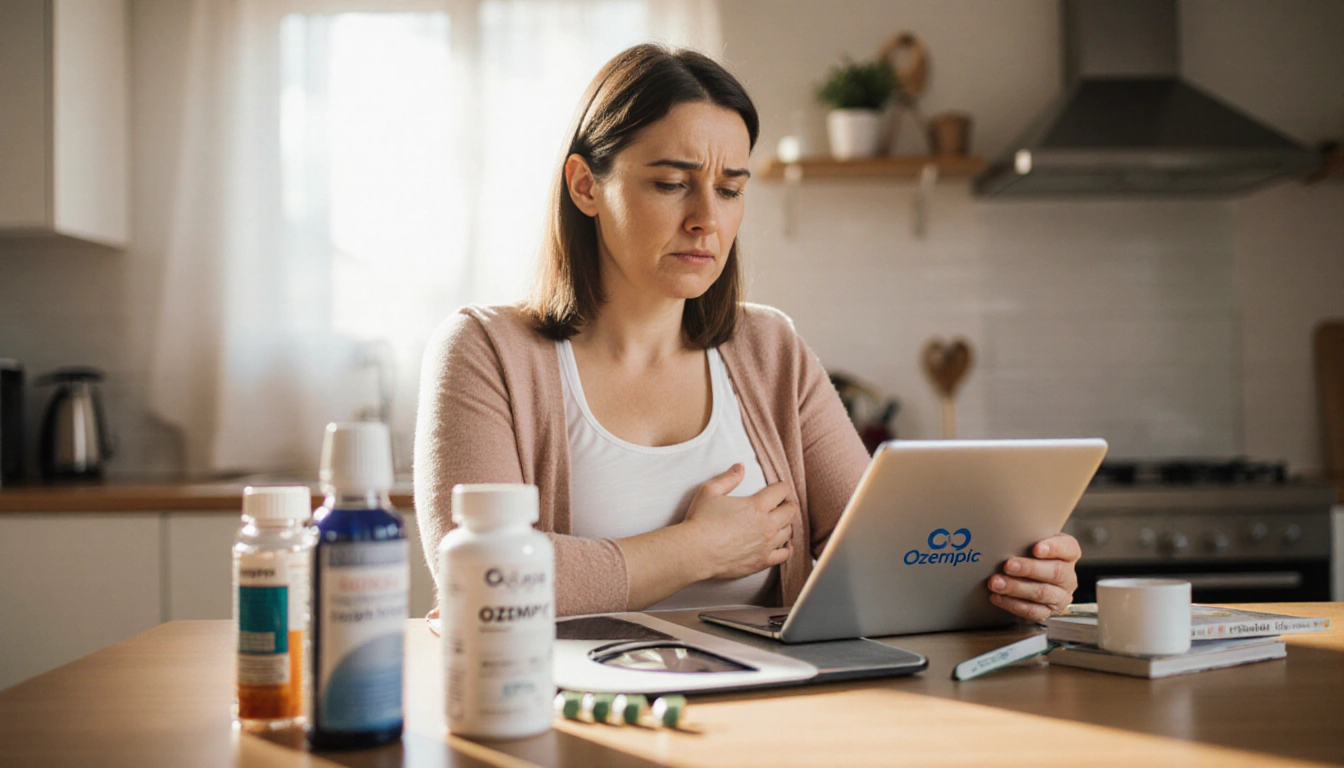

In 2025, a RAND report found that 12 % of Americans have used a GLP-1 drug such as Ozempic or Wegovy for weight loss, while 14 % are interested in trying them. The numbers show a growing appetite for these medications, even though they are not approved for obesity.
GLP-1 Drugs and Their Appeal
Glucagon-like peptide-1 (GLP-1) drugs mimic a gut hormone that signals fullness. The class includes Ozempic, Wegovy, Mounjaro, and Zepbound. Dr. Christopher McGowan, a gastroenterologist in Cary, North Carolina, told TODAY.com that “Most people have understood Ozempic as kind of a catch-all for the GLP-1 class of medications.”
Women are also exploring GLP-1 drugs while breastfeeding, and some patients microdose semaglutide-taking smaller amounts than recommended-to cut costs. However, many doctors warn that microdosing can be unsafe.
Cost, Discounts, and Availability
Ozempic and Wegovy normally carry a list price of about $1,000 per month without insurance. In the fall of 2025, Novo Nordisk announced a steep discount for select doses. The White House also reached a deal to lower costs, and Costco and Sam’s Club now sell the drugs at a discount.
Semaglutide in pill form is in development and may broaden access once approved.
Safety, FDA, and WHO Guidance
In December 2025, the World Health Organization recommended the long-term use of GLP-1 drugs, together with intensive behavioral therapy, for people living with obesity. The recommendation is conditional “due to limited data on their long-term efficacy and safety.”
Novo Nordisk states it backs the safety and efficacy of its GLP-1 medicines when used as indicated and under a licensed professional’s care. The company notes its products have a long history of use: over 19 years for type 2 diabetes and almost 10 years for obesity, with more than 22 million patient years of exposure.
Wegovy vs. Ozempic
Both medications contain the same active ingredient, semaglutide. Dr. Maria Daniela Hurtado Andrade, an endocrinologist at the Mayo Clinic, told TODAY.com that “Technically, they are exactly the same.” She added that “practically, insurance companies will not cover Ozempic for the treatment of overweight or obesity.”
Ozempic is FDA-approved for type 2 diabetes, whereas Wegovy is approved specifically for weight management in people with obesity or overweight with a complication such as high blood pressure. Wegovy’s doses can reach 2.4 mg weekly, compared with a maximum of 2 mg for Ozempic.
Novo Nordisk says the drugs are not interchangeable.
How Semaglutide Works and Its Benefits
Semaglutide is a synthetic version of the hormone GLP-1. It signals the brain that a meal has been consumed, reducing appetite and promoting earlier fullness. The medication also slows stomach emptying.
A peer-reviewed 2024 study funded by Novo Nordisk found that adults with obesity who used Wegovy lost an average of 15 % of their body weight after one year and four months. Four years later, the average weight loss remained 10 %.
Dr. Cecilia Low Wang, an endocrinologist at UCHealth, told TODAY.com: “On average, people lose a significant amount of weight. And along with that, other elements of their health then often get better, too.” She is the chair of the FDA’s Endocrinologic and Metabolic Drugs Advisory Committee.
Hurtado Andrade noted that obesity is a risk factor for type 2 diabetes, high cholesterol, heart disease, cancer, and mental health conditions such as depression and anxiety. “Keeping in mind that obesity is at the core of many of these diseases, treating obesity can truly have a cascade effect of clinical benefits,” she said.
The FDA has approved Wegovy to reduce heart attack and stroke risk. In 2025, the agency also approved it for metabolic-associated steatohepatitis (MASH), a serious liver disease.
A 2025 study found GLP-1 drugs, including semaglutide, “probably have little or no effect” on the risk of obesity-related cancers. Dr. Cho-Han Chiang told NBC News: “It’s not that GLP-1 does not reduce the risk of cancer; I don’t think we can make that conclusion from our study.”
Evidence also suggests GLP-1 drugs may reduce alcohol craving, aiding people with addiction.
Common Side Effects
The manufacturer lists nausea, stomach pain, diarrhea, constipation, and vomiting as the most common side effects. A 2025 RAND survey reported that about half of patients taking a GLP-1 drug experienced nausea, and one-third experienced diarrhea.
Wegovy patients may also experience headache, fatigue, upset stomach, dizziness, bloating, belching, gas, stomach flu, heartburn, runny nose, or sore throat, according to Novo Nordisk.
Serious potential side effects include possible thyroid tumors, pancreatitis, vision changes, low blood sugar, kidney failure, gallbladder problems, and serious allergic reactions. Wegovy patients may also experience an increased heart rate, depression, or thoughts of suicide.
Muscle loss is a concern. Low Wang said that current data on body composition do not show greater lean body mass loss over fat mass loss with semaglutide. Novo Nordisk reports no safety signal for lean mass loss. The company advises that dietary protein should be a priority to preserve muscle mass.
Foods recommended while taking Ozempic include fish, eggs, Greek yogurt, cottage cheese, nuts, and seeds.
Arthritis and Other Specific Risks
A large study published in Nature Medicine in January 2025 found GLP-1 drugs are associated with an 11 % increase in arthritis risk. The study did not specify which GLP-1 medications were included, but Novo Nordisk said it is reasonable to assume semaglutide was among them. The company welcomed independent research into its products’ safety, efficacy, and clinical utility.
In 2024, a Novo Nordisk-funded study in the New England Journal of Medicine found that people with knee osteoarthritis treated with semaglutide for 68 weeks had significantly less knee pain than those receiving placebo. Weight loss from the drug was likely a major contributor.
Semaglutide is not approved in the U.S. for knee osteoarthritis.
Stomach Issues
In 2023, Novo Nordisk was sued by a woman with type 2 diabetes who alleged Ozempic contributed to gastroparesis, or stomach paralysis. The company’s spokesperson noted that gastroparesis is a known risk for people with diabetes and that “patient safety is of utmost importance to Novo Nordisk.”
Gastroparesis is not listed in the prescribing information for Ozempic or Wegovy, but delayed gastric emptying is mentioned. Research published in JAMA in 2023 found that people taking GLP-1 medications may be at an increased risk of severe stomach problems such as gastroparesis. The authors wrote that “these adverse events, although rare, must be considered by patients who are contemplating using the drugs for weight loss.”
Vision Concerns
A June 2025 study of older adults with type 2 diabetes found those who took a GLP-1 drug had a “substantially higher risk” of developing a rare type of age-related macular degeneration (wet AMD) than people with diabetes who didn’t take the medication. The study followed 139,000 Canadians aged 66 and older for three years.
The absolute risk was 0.2 % for GLP-1 users versus 0.1 % for non-users, and the risk was more than three times higher among patients who had been taking a GLP-1 drug the longest. The paper noted an association, not causality.
Andrew Mihalache, a University of Toronto faculty member, told TODAY.com: “We believe these findings should not cause alarm, but they should encourage greater awareness.” He added that GLP-1 drugs offer important benefits for cardiovascular health, kidney health, and weight management, and that patients at higher risk for wet AMD should be aware of the possibility of new visual symptoms.
The study also highlighted a possible mechanism: if blood sugar drops too quickly or sharply, it may affect the retina, which contains GLP-1 receptors.
Dr. Brian VanderBeek, an associate professor of ophthalmology at the Hospital of the University of Pennsylvania, wrote a commentary: “If this risk was carried over millions of users, those affected could end up being a sizable group of patients.” He added that there is no evidence that patients in their 20s, 30s, or 40s should stop taking a GLP-1 drug because of wet AMD risk.
Patients who notice any new changes in vision while taking these medications should promptly inform their doctor or see an eye care specialist.
Nonarteritic Anterior Ischemic Optic Neuropathy (NAION)
In 2025, a small study in JAMA Ophthalmology examined nine people who took GLP-1 antidiabetic drugs, including semaglutide. Four semaglutide patients developed NAION, an optic nerve injury that can cause blindness. The authors said they cannot determine causality without large clinical trials.
The rapid correction of high blood sugar induced by GLP-1 drugs may be a possible mechanism for vision loss, the study noted. NAION is very rare, and it is not listed as an adverse drug reaction on the labels for semaglutide in Ozempic, Rybelsus, or Wegovy, Novo Nordisk said.
Novo Nordisk added that data from clinical trials do not suggest a causal relationship between the drug and NAION. The company stated that the benefit-risk profile of semaglutide remains unchanged.
Dr. Bradley Katz, the lead author of the 2025 study and an ophthalmologist at the University of Utah Health, advised patients who experience sudden vision loss to stop taking the drugs and see a doctor immediately.
Long-Term Use and Chronic Treatment
Obesity is a chronic condition that often requires ongoing treatment. Novo Nordisk says most people “will have difficulty sustaining weight loss” after stopping the medication. Several doctors interviewed by TODAY.com believe semaglutide needs to be taken for years, decades, or possibly life.
Low Wang says obesity is a chronic disease that needs chronic treatment, “just like high blood pressure does.” She added that semaglutide is “likely to be a lifelong medication.”
Hurtado Andrade echoed that perspective: “We’re putting you on a treatment that is treating the biological basis of the disease, and if you stop that medication, then you’re not going to have that effect, and you’re very likely to regain the weight back.”
McGowan said starting semaglutide is a commitment to stay on it long term. “Someone who’s considering taking a GLP-1 medication like semaglutide must plan to take it indefinitely,” he told TODAY.com. “The GLP-1 medications are designed to be used in one way and only one way, which is continuously. That means a long-term, essentially lifelong use once you start it.”
Other doctors say more long-term data is needed before committing patients to life-long use. Dr. Zhaoping Li, professor of medicine at UCLA, told TODAY.com: “I understand there is an argument that obesity is a chronic disease like hypertension, diabetes, and once you need to be on it, you should be on it for lifetime. But I don’t think the data is there for the effectiveness of this class of drug on a long-term basis. There is a potential, but we’re not there.”
Low Wang concluded that with close monitoring, attention to problems, and periodic reassessment, semaglutide can be used safely for weight loss. She added that the long-term safety of GLP-1 drugs isn’t known for sure, but doctors have long-term experience with this class.
Key Takeaways
- 12 % of Americans have used a GLP-1 drug for weight loss, with 14 % interested in trying them.
- Ozempic and Wegovy share the same active ingredient, semaglutide, but differ in dosage, approval, and insurance coverage.
- Recent studies highlight potential vision risks, arthritis risk, and long-term safety concerns, but Novo Nordisk maintains a favorable benefit-risk profile.
The debate over how long patients should stay on semaglutide continues, but many experts feel the medication can be safely used long term with proper monitoring.
Closing
Ozempic and Wegovy remain prominent tools in the fight against obesity, but their use involves a complex balance of benefits, costs, and potential risks. Patients and providers must weigh the evidence carefully and stay informed as new research emerges.