
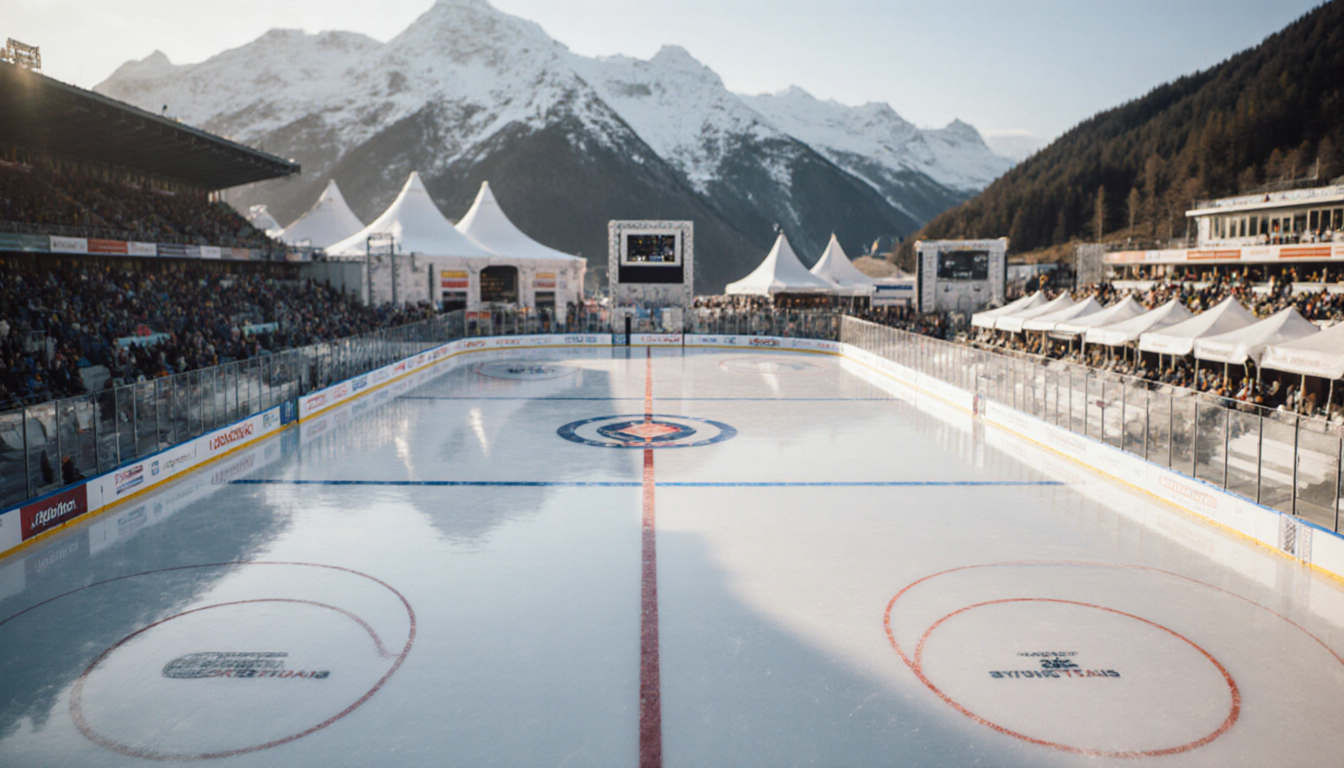

The 2026 Winter Olympics will mark the first return of NHL players to Olympic ice since the 2014 Sochi Games, but the rinks in Milan will be a touch smaller than the arenas NHL teams normally use.
Rink Dimensions and IIHF Approval
The two arenas that will host Olympic hockey games in February are built to a size of 60 meters by 26 meters, or 196.85 by 85.3 feet. By comparison, NHL regulation rinks measure 200 feet by 85 feet, which translates to 60.96 by 25.908 meters. The Olympic rinks are therefore slightly wider and more than three feet shorter than NHL standards.
The International Ice Hockey Federation (IIHF) approved the Milan rinks because they fit one of the federation’s standard sizes. The same dimensions were used by the Pittsburgh Penguins and Nashville Predators for two games in Stockholm in November. The IIHF shifted to NHL dimensions at the Olympics beginning in 2018 and used them again in 2022.
On Monday, the IIHF confirmed that the different size was in place in Milan, but did not provide an explanation. The federation said:
“While these dimensions differ slightly from a typical NHL rink, they are consistent with IIHF regulations, match the rink size used at the Beijing 2022 Olympic Winter Games and are fully consistent with the dimensions the NHL requires as part of its Global Series Game arena specifications,” the federation said. “All involved, the IIHF, the Organizing Committee, NHL, NHLPA, IOC and the relevant venue authorities agree that the differences in rink specifications are insignificant, and should not impact either the safety or quality of game play.”
Olympic Rink History
Olympic hockey has alternated between international and NHL-sized rinks over the years. In 1998, 2006 and 2014, the games were played on international ice measuring 60 by 30 meters (196.85 by 98.4 feet). A slight variation occurred in Salt Lake City in 2002. In 2010, the Vancouver Games used NHL-sized ice because the existing arenas were built to those dimensions.
The 2026 Games in February will feature the same rink size in both the main arena that is still under construction and a smaller temporary venue inside an exhibition center.
Reactions from Hockey Officials and Coaches
Finland men’s hockey general manager Jere Lehtinen told The Associated Press that the rink size is the same for every team and that coaches need to pay attention to it:
“It’s the same for every team, and I think that’s the bottom line,” Lehtinen said. “Our coaches, maybe it’s more interesting and something you need to pay attention more.”
Canada general manager Doug Armstrong first mentioned the ice being slightly off from NHL regulation size on a podcast in early September, and he revisited the topic in October. Assistant coach Peter DeBoer broached the issue on a radio show, raising questions about why the rinks are not NHL-sized.
Auston Matthews, who plays for the Toronto Maple Leafs in the NHL and represents Team USA internationally, is one of the players who will compete on the smaller rinks.
Team USA women’s ice hockey captain Hilary Knight, a 10‑time world champion and four‑time Olympic medalist, has been called the queen of the ice. Knight has spoken about what Team USA needs to improve before the 2026 Winter Olympics.
Construction and Scheduling Challenges
Construction at the Santagiulia Ice Hockey Arena – the new 16,000‑seat venue on the outskirts of Milan – is down to the wire. Organizers told the AP that there was “no plan B.”
A test event had to be moved to the Rho Ice Hockey Arena, and new test events at the main venue are not scheduled until Jan. 9‑11, less than a month before the first puck is dropped. Workers on Friday were still putting the finishing touches to the venue in Rho, just three days before the start of the IIHF Group B Under‑20 World Championship that will serve as a test event.
Canada men’s assistant coach Bruce Cassidy said last week:
“We’re aware that they’re behind schedule a little bit, but we’re all assuming that that’ll all be taken care of.”
NHL Commissioner Gary Bettman has repeatedly raised logistics concerns. At the league’s annual fall Board of Governors meeting in October, he said:
“We are constrained in what we can and can’t do, request and demand and if it reached a certain point, we’ll have to deal with it. But I’m not speculating, and we’ve been constantly assured by the IOC and the IIHF that it will be OK.”
Key Takeaways
- Olympic hockey in 2026 will use rinks that are 60 m × 26 m, slightly wider and more than 3 ft shorter than NHL size.
- The IIHF approved the dimensions, citing consistency with its regulations and with the Beijing 2022 Olympic Games.
- NHL players will return to Olympic play for the first time since 2014, with tournaments scheduled Feb. 5‑19 for women and Feb. 11‑22 for men.
Closing
The 2026 Winter Olympics will bring NHL talent back to the Olympic stage, but on rinks that deviate a few feet from the standard NHL layout. While officials say the differences are insignificant, teams will need to adjust to the slightly larger and shorter surface as they prepare for the games in Milan. The final months of construction and the tight schedule add additional pressure, but all parties involved remain confident that the events will proceed safely and with high quality play.