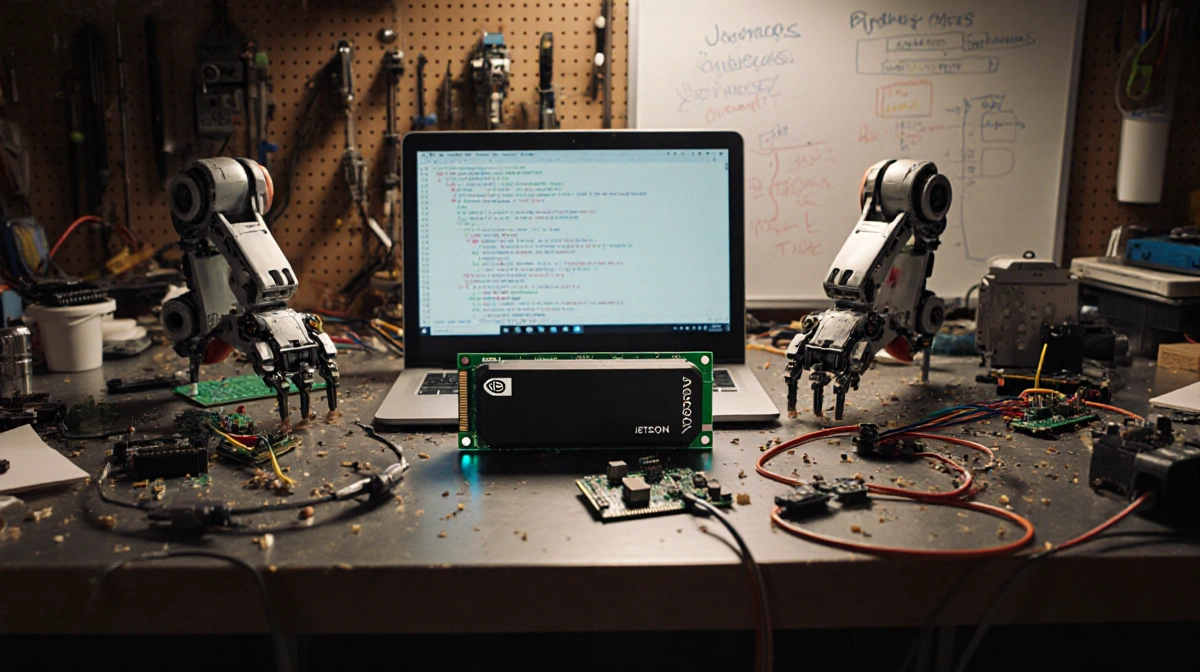

> At a Glance
> – Nvidia unveiled a full-stack robot platform at CES 2026, spanning models, simulation, and edge hardware
> – Open models on Hugging Face let bots reason, plan, and adapt beyond single tasks
> – New Jetson T4000 card delivers 1200 TOPS at 40-70 W, priced for mass-market bots
> – Why it matters: Developers gain a one-stop, cloud-to-edge toolbox that could make Nvidia the default platform for general-purpose robotics
Nvidia’s CES 2026 keynote doubled as a declaration of intent: become the Android of robotics by giving builders everything from foundation models to pocket-sized supercomputers.
The Model Arsenal
Four open models anchor the release, all posted on Hugging Face:
- Cosmos Transfer 2.5 – generates synthetic training scenes
- Cosmos Predict 2.5 – evaluates robot policies inside simulation
- Cosmos Reason 2 – vision-language reasoning engine that lets systems see, understand, and act in the real world
- Isaac GR00T N1.6 – Nvidia’s flagship VLA for humanoids; pairs with Cosmos Reason for whole-body control while grasping objects
Simulation & Workflow Glue
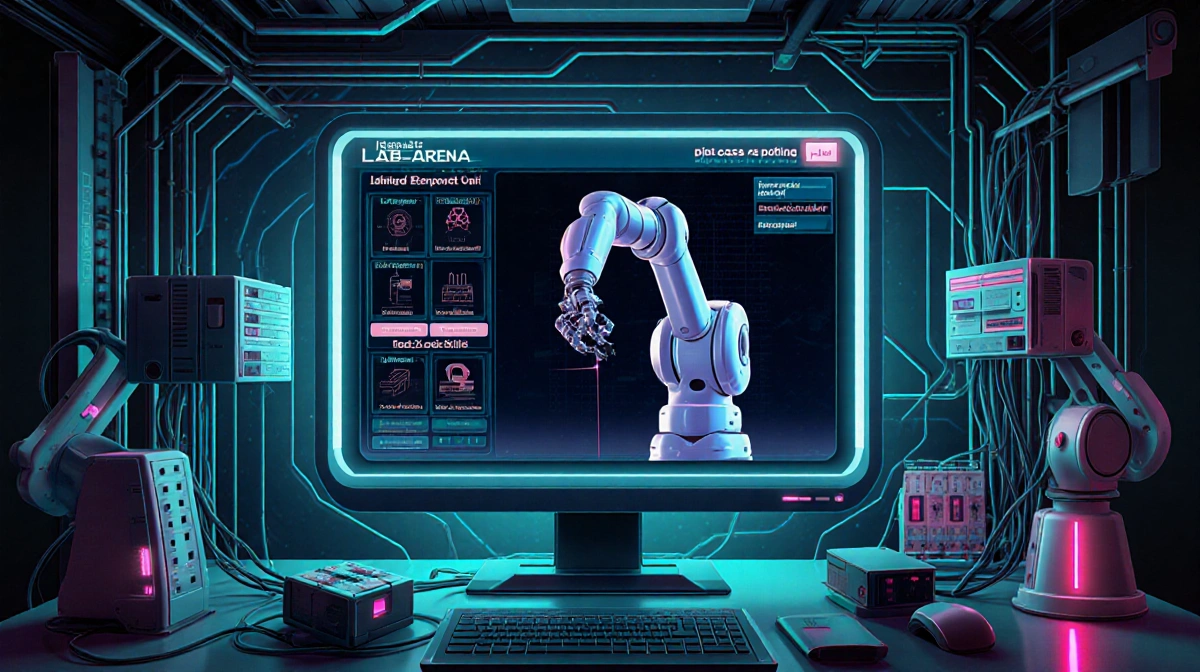
Isaac Lab-Arena, now on GitHub, bundles task suites (Libero, RoboCasa, RoboTwin) so researchers can test complex skills-from cable threading to delicate pick-and-place-without real-world risk.
OSMO, an open-source command center, stitches data generation, training, and deployment across desktop or cloud, removing the typical toolchain patchwork.
Hardware That Fits a Robot’s Power Budget
The Blackwell-based Jetson T4000 slides into the Thor family, pumping out:
- 1200 teraflops of AI compute
- 64 GB unified memory
- 40-70 W power envelope-low enough for mobile manipulators
Hugging Face Marriage
A tighter Hugging Face marriage folds Isaac and GR00T into the LeRobot framework. The upshot:
- 2 million Nvidia robotics devs meet 13 million HF AI builders
- The open-source Reachy 2 humanoid already runs on Jetson Thor, letting users hot-swap models without vendor lock-in
| Hardware/Software | Key Metric | Value |
|---|---|---|
| Jetson T4000 | AI compute | 1200 TOPS |
| Jetson T4000 | Memory | 64 GB |
| Jetson T4000 | Power draw | 40-70 W |
| OSMO | Workflow stages | data → training → cloud/desktop |
| GR00T N1.6 | Control type | whole-body VLA for humanoids |
Early traction looks strong: robotics is the fastest-growing category on Hugging Face, Nvidia says, with its own models topping download charts. Customers span Boston Dynamics, Caterpillar, Franka Robots, and NEURA Robotics.
Key Takeaways
- Nvidia positions itself as the horizontal platform for physical AI, mirroring Android’s smartphone playbook
- Open models plus low-cost inference hardware remove traditional cost and access barriers
- Industry adoption is already visible across heavy industry and humanoid startups
- Developers can prototype high-skill behaviors in simulation before touching real hardware
If the ecosystem sticks, tomorrow’s robots may ship with an “Powered by Nvidia” stamp the same way today’s phones tout Android.