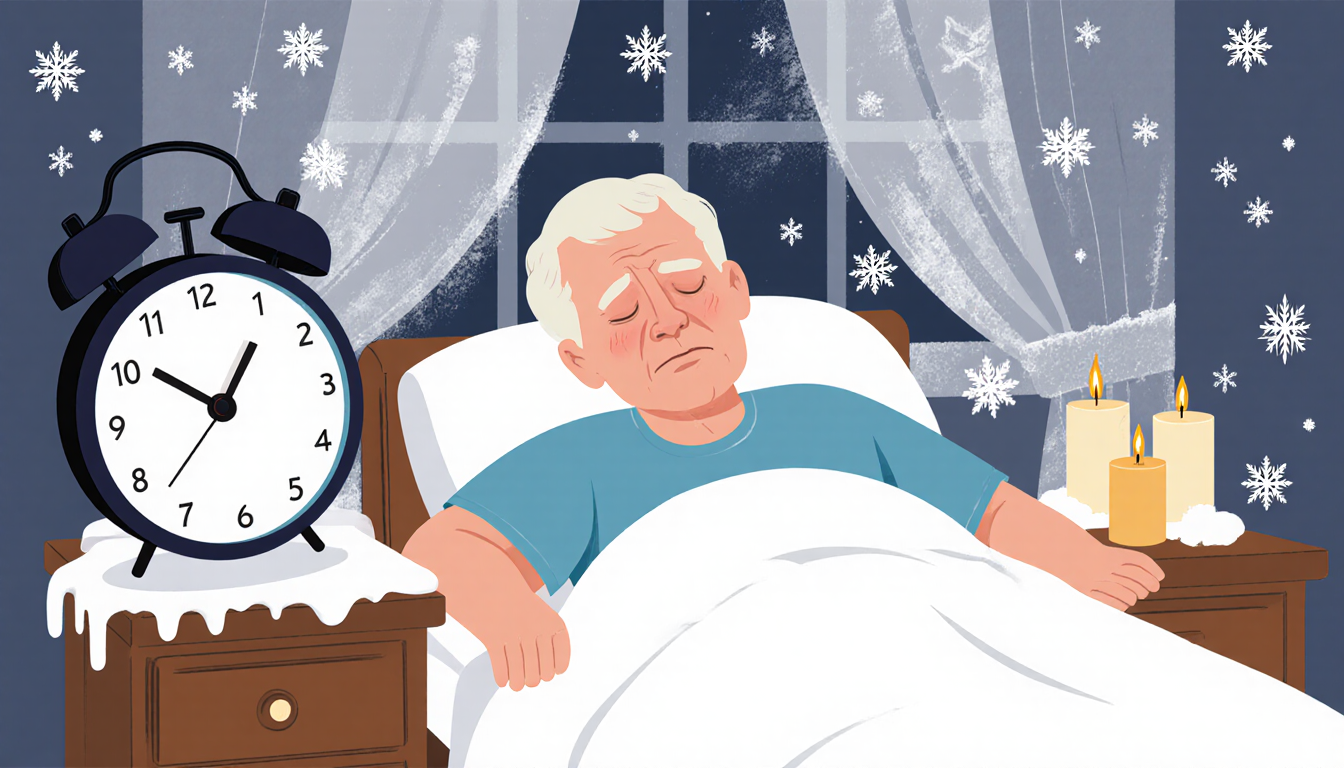

The winter solstice on Dec. 21 marks the shortest day and longest night in the Northern Hemisphere, plunging the Nordic countries into months of darkness and cold.
Winter Blues: When the Sun Fades
The onset of the winter blues can begin as early as October and linger into April for some, the Associated Press notes. Winter’s lack of daylight throws our circadian rhythm off‑balance, leading to disrupted sleep and low mood.
Dr. Partonen on Circadian Chaos
Dr. Timo Partonen, a research professor at the Finnish Institute for Health and Welfare, explains that limited daylight prevents internal body clocks from resetting properly. He says we may sleep longer in winter, yet we “don’t wake up refreshed and can remain tired the rest of the day.”
Dawn Simulators to Ease Awakening
Partonen recommends a dawn simulator—sometimes called a sunrise alarm clock—to gradually light a bedroom and ease the transition to wakefulness. The device mimics a natural sunrise, helping the brain recognize daylight cues.
Social Withdrawal and Exercise
In addition to fatigue, people withdraw socially, become irritable, and are “more prone to fights with friends,” Partonen says. Maintaining relationships and keeping up with exercise are key. He suggests inviting a friend to workout, which can also help prevent the typical 2‑5 kg (4‑11 lb) weight gain fueled by evening carbohydrate cravings.
Light Therapy: A Bright Solution
Millions worldwide suffer from seasonal affective disorder (SAD), a form of depression that starts in the fall and eases in spring or summer. Light therapy, using devices that emit light about 20 times brighter than normal indoor lighting, can help both SAD sufferers and those with milder winter blues.
Blue Light and Mood
Researcher Kathryn Roecklein at the University of Pittsburgh tested people with and without SAD to see how their eyes reacted to blue light. She found that people with SAD were “less sensitive to blue light than others, especially during winter months,” suggesting a biological link to winter depression.
Christian Benedict on Light Therapy
Christian Benedict, a pharmacology professor at Uppsala University, Sweden, says light therapy is a viable option. He states, “It’s not like it’s a fate, an annual or a seasonal fate, and you cannot do anything about it. There are possibilities to affect it.”
Practical Light Therapy Guidelines
Research supports using a light that’s about 10,000 lux for 30 minutes every morning. Special lights range from $70 to $400, though some marketed for SAD are not bright enough. Insurance may cover part of the cost if SAD is diagnosed.
Combining Dawn Simulators and Light Therapy
Partonen recommends using both a dawn simulator and a light therapy device each day before noon. Yale has tested products and offers a list of recommendations, and the nonprofit Center for Environmental Therapeutics provides a consumer guide.
Positive Outlook as a Survival Strategy
Ida Solhaug, an associate professor in psychology at the University of Tromsø (Arctic University of Norway), urges people to “prioritize a positive outlook as a survival strategy and learn to appreciate the change in seasons.” She notes it’s “part of the culture” and can make all the difference when daylight is scarce.
Hygge, Fika, and Cold Plunges
Solhaug also encourages outdoor and indoor hobbies. Inside, she recommends channeling hygge—cozying up with blankets and a movie. Afterward, she suggests heading outside with a thermos for fika, the Swedish coffee break, and even a quick walk in fresh air. For the brave, a cold plunge is a common Nordic practice.
Solhaug’s Weekly Water Challenge
Solhaug tries to jump into frigid waters off the coast of Tromsø, an island 350 km north of the Arctic Circle, at least once a week. She says it “makes her feel revitalized during the long winter” and adds, “Challenge yourself to look for light in the darkness.”
Finland’s President Offers a Ritual
Finland’s President Alexander Stubb shared a specific routine in an interview with the Associated Press. He advises, “Take an ice bath and then followed up by a sauna and do one more ice bath, one more sauna, then a shower and go out there. You’ll manage.”
Key Takeaways
- Dawn simulators and 10,000‑lux light therapy can reset circadian rhythms and boost serotonin.
- Maintaining social ties, regular exercise, and a positive outlook are essential to counter winter blues.
- Cultural habits like hygge, fika, and cold plunges provide additional mental and physical benefits.
Closing
The Nordic experience shows that with the right blend of light, movement, social connection, and cultural practices, the darkest months can be navigated successfully. Experts across Norway, Sweden, and Finland emphasize that while winter may bring challenges, proactive strategies can transform the season into an opportunity for resilience and renewal.