
At a Glance
- NASA lost contact with the MAVEN Mars orbiter on Dec 6 after a fragment suggested spinning.
- The probe appears to be spinning unexpectedly.
- Next chance to attempt contact is Jan 16 due to Earth-Mars geometry.
- Why it matters: MAVEN has been key to studying Mars’ atmosphere and relaying rover communications; its loss threatens ongoing science.
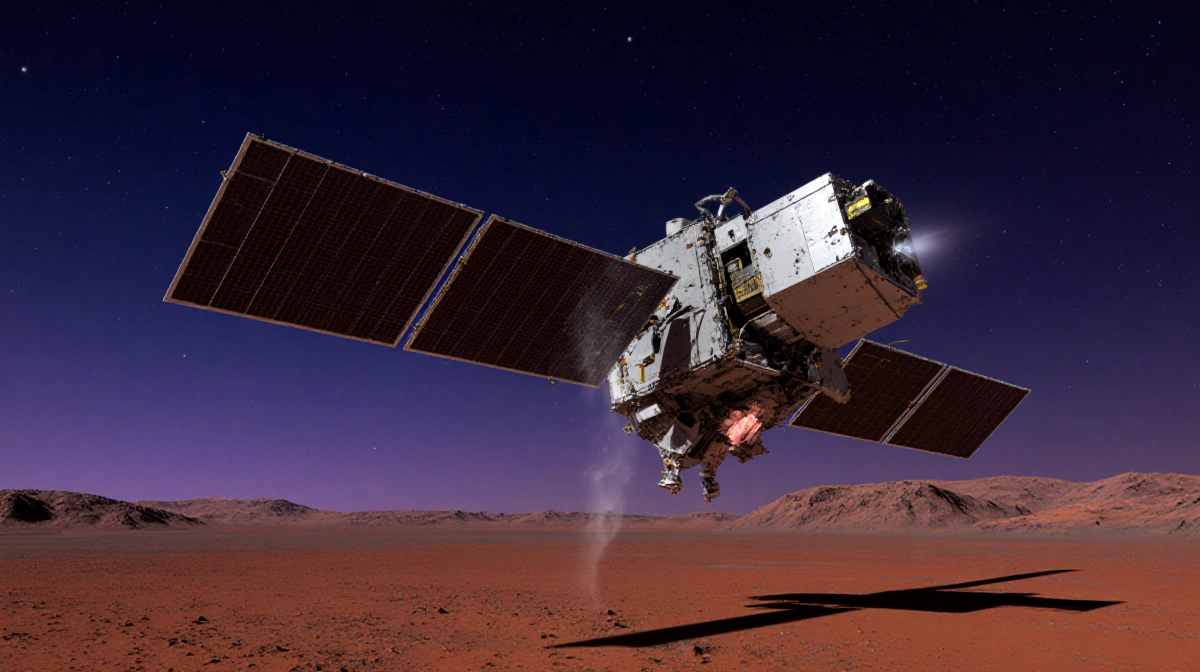
NASA has been unable to reestablish contact with the MAVEN spacecraft orbiting Mars since Dec 6, after a brief data fragment suggested the probe was spinning unexpectedly. The agency can only try again on Jan 16 because Earth and Mars are on opposite sides of the Sun. MAVEN has been a workhorse mission since 2014, studying the planet’s upper atmosphere and enabling rover communications.
What Happened
On Dec 6, MAVEN passed behind Mars and was expected to lose signal temporarily. When it emerged, no signals were received. A fragment of tracking data recovered on Dec 6 shows unexpected rotation.
- All subsystems were working before the spacecraft passed behind Mars.
- NASA is investigating the anomaly.
- The loss occurred during a routine Earth-blocking maneuver.
NASA’s Response
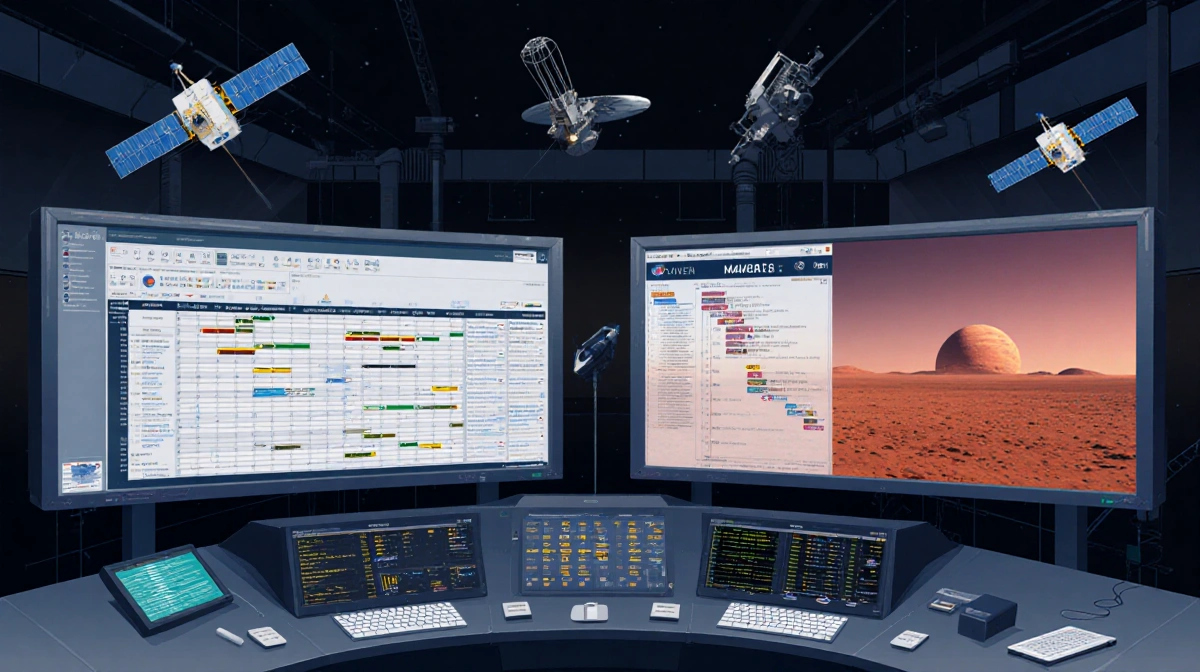
NASA has been using the Deep Space Network to send commands and monitor for incoming signals. On Dec 16 and Dec 20, the agency attempted to image MAVEN from the Curiosity rover, and on Dec 23 it began piecing together a timeline of events. The next attempt to contact the probe will be on Jan 16.
| Date | Event |
|---|---|
| Dec 6 | Loss of signal; fragment indicates spinning |
| Dec 9 | NASA says investigating anomaly |
| Dec 16 | Attempt to image from Curiosity |
| Dec 20 | Second imaging attempt |
| Dec 23 | Timeline reconstruction |
| Jan 16 | Next contact attempt |
The agency is waiting for a favorable Earth-Mars alignment to resume communication.
MAVEN’s Legacy
MAVEN entered orbit around Mars in 2014. The mission was originally planned for 2 years but has operated for over 10 years, celebrating its 10th anniversary in 2024. It has studied the planet’s upper atmosphere, the ionosphere, and how Mars has lost its atmosphere over billions of years. The probe also relayed communications between the Curiosity and Perseverance rovers and Earth.
Other Mars Orbiters
NASA also operates the Mars Reconnaissance Orbiter (launched 2005) and Mars Odyssey (launched 2001).
Additional Research
A new study in Nature Communications shows that the red color of Mars comes from a water-rich mineral called ferrihydrite.
Key Takeaways
- MAVEN lost contact on Dec 6 after a fragment suggested spinning.
- The agency will not attempt to reestablish contact until Jan 16.
- MAVEN has been a key asset for Mars science and rover communications for over a decade.
The loss of MAVEN is a setback for Mars research, and the agency will resume attempts next month.