
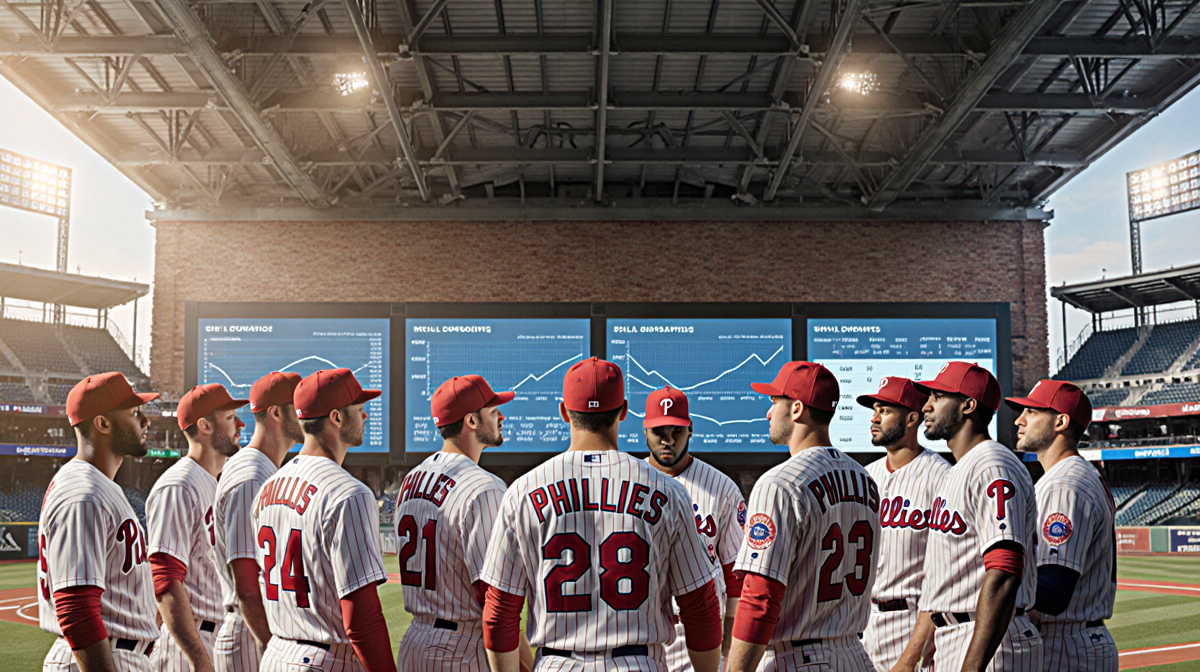

At a Glance
- Major League Baseball will launch an automated ball-strike challenge system in 2025, allowing two challenges per game.
- The system was tested in the Minors and in Spring Training last year.
- Players and umpires are divided on its impact, but most see it as a fair addition.
Major League Baseball (MLB) will launch an automated ball-strike challenge system in 2025, allowing two challenges per game. The technology, which has been in the Minor League for years and debuted in Spring Training last year, is expected to speed up play and reduce umpire error. The league is watching closely how teams, players, and umpires adapt to the new format.
In 2020, MLB introduced a three-batter minimum for relievers to keep pitchers on the mound longer and added an automatic runner in extra innings to increase scoring chances. These changes aimed to make games more competitive and maintain fan interest during the pandemic-affected season. They also set a precedent for future rule adjustments.
Rule changes in MLB are often judged in hindsight, with praise following success and criticism after failure. The league’s intent has remained consistent: get the calls right and keep the game engaging for fans. Each new rule is tested in the minors before being adopted at the major-league level, and the recent wave of changes included:
- Pitch clock to limit pitcher downtime.
- Limit on pickoff attempts to protect baserunners.
- Restrictions on defensive shifts to restore balance.
Technology has become a key tool in MLB’s pursuit of accuracy and speed. From instant replay to automated strike zones, the league has embraced digital solutions to aid umpires and players alike. The upcoming ABS system represents the latest step in this evolution.
The automated ball-strike challenge system (ABS) uses high-speed cameras and algorithms to determine whether a pitch was a ball or a strike. Each team is allowed two challenges per game, initiated by the hitter, pitcher, or catcher. Challenges are immediate and binary-either the call is overturned or it isn’t-keeping the pace intact.
The cameras track the ball’s trajectory from the pitcher’s hand to the catcher’s mitt, calculating its position relative to the strike zone in real time. The system’s algorithm has been refined through extensive testing in the Minor League, where thousands of pitches were analyzed for accuracy. The goal is to reduce human error while maintaining the traditional flow of the game.
Players and umpires have expressed mixed feelings about the new technology. Some worry that it could diminish the value of pitch framing, while others see it as a fair tool that ensures correct calls. The balance between human judgment and machine precision is a central theme in the debate.
MLB will use the new technology during select 2025 Spring Training games to gather real-time results and feedback. In just under two months, the automated ball-strike challenge system will officially become part of regular-season Major League games. In 2026, it becomes real, meaning the system will be fully integrated across all stadiums.
‘I think it’s great,’ Thomson said. ‘When we tried it in spring training last year, a lot of the guys liked it – not everybody – but most did. And I think the umpires liked it as well. As long as somebody doesn’t get embarrassed, I like it. And if the players like it, I think it’s fair for everybody.’ Thomson, the Phillies manager, emphasized the importance of player buy-in for the system’s success.
‘They talk about whether it’s going to make receiving less important,’ he said. ‘That’s not really true, because you only get two challenges. Framing still comes into play.’ Thomson, a former catcher, clarified that the limited number of challenges preserves the relevance of pitch framing.
‘I know J.T. was excited about it,’ Banks said. ‘There were times in spring when he’d catch a pitch and immediately know it was a strike. You see guys like Bryce [Harper] or Kyle [Schwarber] get rung up on pitches that are balls – the hitter knows the zone better than anybody.’ Banks highlighted how a skilled catcher can still influence the outcome of a call.
‘There’s a human element pitchers like with umpires,’ he said. ‘Maybe you steal something because the catcher does a great job. But at the end of the day, you want consistency. The umpires I’ve talked to are for it if it helps make the right call. It’s not a jab at anyone – it’s a matter of game integrity.’ Banks noted that consistency remains paramount for pitchers.
‘It changes the game and you have to adjust,’ Sánchez said through an interpreter. ‘There are a few things that I don’t necessarily like or agree with, but I just try to adapt and keep going.’ Sánchez’s perspective reflects the need for players to adapt to new rules.
MLB’s rollout schedule begins with select Spring Training games in early 2025. These games provide a controlled environment for teams to test the system and for officials to calibrate the technology. Feedback from these sessions will shape the final implementation strategy, taking into account factors such as:
- Hitter stance variations
- Pitcher release point differences
- Stadium lighting and camera angles
In just under two months, the automated ball-strike challenge system will officially become part of regular-season Major League games. The transition will involve updating all stadiums with the necessary camera and data infrastructure. Teams will receive training on how to initiate and respond to challenges, ensuring consistent usage.

In 2026, the system will become fully integrated across all 30 stadiums, ensuring consistent application of the strike zone. MLB will continue to monitor accuracy and make adjustments as needed. The long-term goal is to maintain a fair and efficient game for fans and players alike.
| Phase | Date | Key Actions |
|---|---|---|
| Spring Training Test | Early 2025 | Select games, camera installation, data collection, umpire training |
| Regular-Season Rollout | Mid-2025 | Update stadium infrastructure, team training, challenge initiation protocols |
| Full Integration | 2026 | 30-stadium rollout, continuous monitoring, strategic adjustments |
Accuracy remains a big question. Strike zones differ by hitter stance, height, and approach, and every ballpark presents its own quirks. Whether ABS can apply that consistently across 30 stadiums is something the league will continue monitoring, taking into account factors such as:
- Hitter stance variations
- Pitcher release point differences
- Stadium lighting and camera angles
Pitch framing still matters, even with the ABS system. Teams with strong framers can influence the number of challenges they receive, affecting strategic decisions such as:
- Choosing when to pitch inside/outside
- Timing of challenge usage
- Managing pitcher fatigue
The system’s binary nature keeps the pace intact, but the introduction of technology may alter how fans perceive umpire authority. Some fans appreciate the transparency, while others prefer the traditional human element. Fan reactions to the system may include:
- Appreciation for transparency
- Preference for traditional human element
- Discussions on how technology changes the narrative of the game
After initial skepticism, the ABS system is expected to normalize over the course of the season. As teams become accustomed to the challenges, the frequency of overturned calls should stabilize. MLB’s historical experience with new rules suggests a gradual adjustment period, and potential future developments may include:
- Real-time pitch analysis tools for coaches
- Expanded use of instant replay for other decisions
- Further integration of data analytics into umpiring
Major League Baseball’s introduction of the automated ball-strike challenge system signals a significant technological milestone. Players, managers, and umpires must navigate the balance between human judgment and machine precision. The system’s success hinges on accurate implementation and widespread buy-in.
With two challenges per game and full integration expected by 2026, teams will need to adapt strategies around framing and challenge usage. MLB’s commitment to accuracy and speed remains central to the sport’s future. Fans can anticipate a faster, fairer game as the league continues to innovate.