

At a Glance
- Mikie Sherrill, a four-term congresswoman and former Navy helicopter pilot, became New Jersey’s 57th governor.
- She is the first major-party candidate to win a third straight term in over six decades.
- Sherrill immediately signed executive orders to freeze utility rates and expand solar and nuclear power.
Why it matters: The election marks a historic shift in New Jersey politics, with a woman leading the state and a record-breaking third term for a major-party candidate.
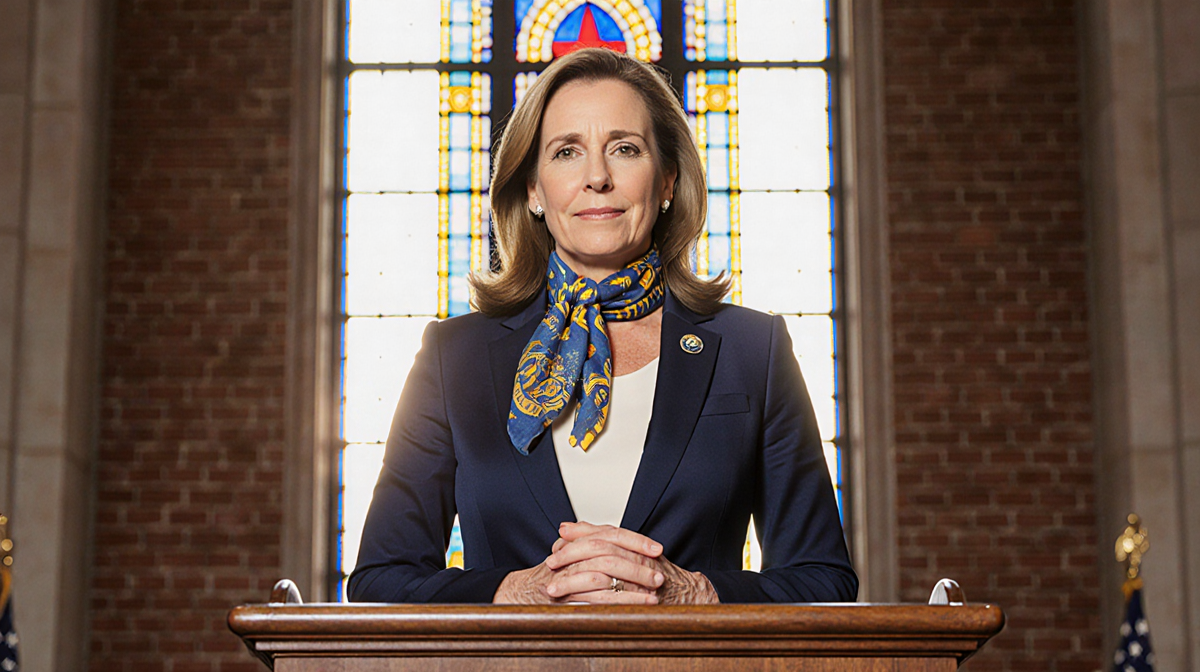
Mikie Sherrill was sworn in as New Jersey’s 57th governor on a Tuesday morning, becoming the state’s second woman to hold the office and the first from a major party to secure a third consecutive term in more than sixty years. The 54-year-old former Navy helicopter pilot and four-term congresswoman took her oath on a bound copy of the state Constitution held by her husband, Jason Hedberg.
The inauguration took place in Newark, the state’s largest city, and differed from past ceremonies that featured artillery salutes along the Delaware River outside the Trenton State House. Sherrill’s choice of venue underscored her focus on the city’s voters, who were a key part of her winning coalition.
During her address, Sherrill thanked family, supporters, and fellow legislators. She highlighted her work in Congress on health care, education, and job creation. “America is lucky to have you fighting for her,” she said, acknowledging the broader impact of her legislative efforts.
Sherrill’s campaign framed her victory as a rejection of President Donald Trump’s policies. She blamed high costs on the president’s tariffs and pledged to order a freeze on skyrocketing utility rates as her first action in office.
She also announced two executive orders. The first declared a freeze on utility rates, addressing the sharp rise in energy costs that has affected residents across the state. The second aimed to establish new sources of electricity production, including solar and nuclear power, signaling a shift toward diversified energy strategies.
“We see a president illegally usurping power, unconstitutionally enacting a tariff regime to make billions for himself and his family while everyone else sees their costs go higher,” Sherrill said. “Here, we demand people in public service actually serve the public instead of buying themselves planes and cars and extorting money.”
Sherrill succeeded Phil Murphy, a former Obama administration ambassador and Wall Street finance executive. Murphy had served two terms and focused on progressive initiatives such as raising taxes on incomes over $1 million, boosting the minimum wage, expanding early childhood education, and fully funding the state workers’ pension.
In his final news conference, Murphy reflected on his tenure: “We were who we said would be,” he said. “We didn’t campaign on my thesis and pull a fast one.”
Murphy also handed over a state budget that had grown over the years, raising concerns about potential shortfalls if revenues dipped. He continued a property-tax relief program begun in his second term, an unfunded promise that may strain future budgets.
Sherrill will work with a Democrat-led legislature, one of more than a dozen states where the party controls both the governorship and the legislature. The bipartisan balance of power will shape the pace of her agenda.
The state’s population stands at approximately 9.5 million people, making Sherrill’s historic election a significant moment for New Jersey’s political landscape.
Sherrill’s inauguration also highlighted her commitment to the founding principles of the state. She praised the Constitution’s emphasis on opportunity and the rights of individuals, drawing parallels between the state’s origins and her election against a backdrop of perceived executive overreach.
Her inaugural remarks celebrated the nation’s democratic roots, citing Thomas Jefferson’s Declaration of Independence and the universal rights it proclaimed. Sherrill’s message resonated with voters who saw her victory as a continuation of the founding fathers’ fight against monarchy and unconstitutional power.
The ceremony marked a departure from tradition, with Sherrill’s choice of a quiet oath-taking over the ceremonial artillery. The event reflected her focus on policy and governance rather than pageantry.
As the new governor, Sherrill’s first priorities include addressing the rising cost of utilities, expanding renewable and nuclear energy, and ensuring that state government serves the public interest.
Her administration will also need to navigate the challenges posed by a growing budget deficit and the need to balance progressive policies with fiscal responsibility.

Sherrill’s historic inauguration sets the stage for a new era in New Jersey politics, with a woman at the helm and a record-breaking third term for a major-party candidate.
Key Takeaways
- Sherrill’s inauguration marks a historic first for New Jersey, combining gender milestones with a record-breaking third term for a major-party candidate.
- Immediate executive actions focus on utility rate freezes and diversified energy production.
- The transition from Murphy introduces both continuity in progressive initiatives and new fiscal challenges.
- The governor’s emphasis on constitutional principles signals a commitment to democratic governance and public service.