At a Glance
- Nicolás Maduro captured Saturday during a U.S. attack on Caracas.
- President Donald Trump announced the capture; Vice President Delcy Rodríguez said the president and his wife remain missing.
- Maduro and his wife Cilia Flores face charges after indictment in New York.
- Why it matters: The event signals a dramatic shift in Venezuela’s political crisis.

In a move that stunned observers, Nicolás Maduro was seized by U.S. forces on Saturday during an assault on Caracas, the capital of Venezuela. President Donald Trump posted the news on social media, while Vice President Delcy Rodríguez later said the president and his wife remain missing. The capture could lead to criminal charges in New York, according to U.S. Attorney General Pam Bondi.
Capture and Immediate Aftermath
Maduro’s fall followed months of intensified U.S. pressure on multiple fronts.
The U.S. had warned that it might invade Venezuela to end the socialist revolution Chávez began in 1999.
Maduro, like Chávez, portrayed the United States as the greatest threat to Venezuela.
- U.S. sanctions freeze Venezuelan assets.
- Indictment filed in New York.
- Military buildup in the Caribbean.
Political Background
Maduro’s rise began in 1986 when he traveled to Cuba for ideological training, after only completing high school.
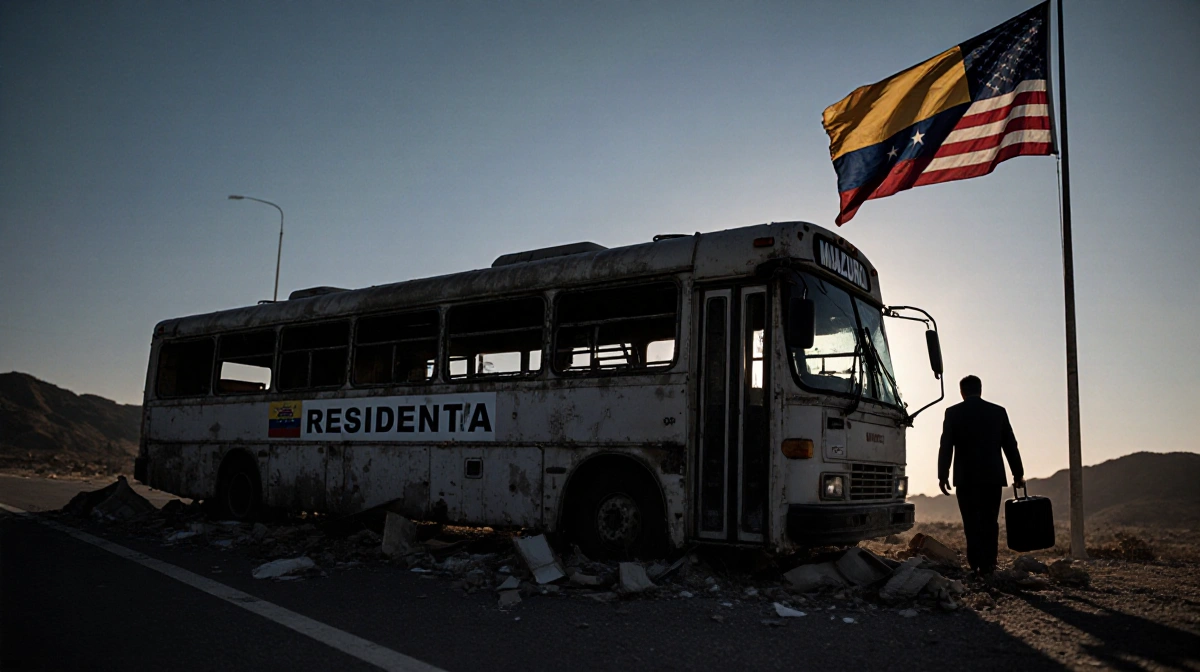
He returned to work as a bus driver for the Caracas subway, quickly becoming a union leader.
In the 1990s, intelligence agencies labeled him a leftist radical with ties to Cuba.
After a 1994 pardon for leading a failed coup, he joined Chávez’s movement and climbed the ranks.
He served as a lawmaker, National Assembly president, foreign minister, and briefly as vice president before being named Chávez’s successor.
In 2013 he won a narrow presidential victory and married Cilia Flores, whom he called the ‘first combatant’.
Economic Collapse
Maduro’s presidency saw hyperinflation reach 130,000%, food and medicine shortages, and widespread poverty.
The economy shrank 71% between 2012 and 2020, and oil production fell below 400,000 barrels per day.
U.S. sanctions froze Venezuelan assets and barred U.S. citizens from doing business with state entities, including PDVSA.
In 2021, he implemented measures that ended hyperinflation and negotiated with U.S.-backed opposition, hoping for a free election in 2024.
| Year | Event |
|---|---|
| 2013 | Maduro elected president |
| 2015 | Assembly lost to opposition |
| 2017 | Constituent Assembly formed |
| 2018 | Drone attack on Maduro |
| 2021 | Economic reforms, hyperinflation ended |
| 2023 | Machado banned |
| 2024 | Contested election, Maduro declared winner |
| 2025 | Third term sworn in |
International Response
Trump’s return to the White House in 2025 pressured Maduro to accept deportation flights and prompted a military buildup in the Caribbean.
The U.S. has also labeled the situation a narco-terrorism threat.
Key Takeaways
- Maduro’s capture marks a turning point in a decade-long crisis.
- The event could reshape U.S. foreign policy in the region.
- Economic collapse and political repression have driven millions to leave Venezuela.
The capture of Nicolás Maduro may alter the trajectory of Venezuela’s turbulent history and has far-reaching implications for regional stability and U.S. strategy.