
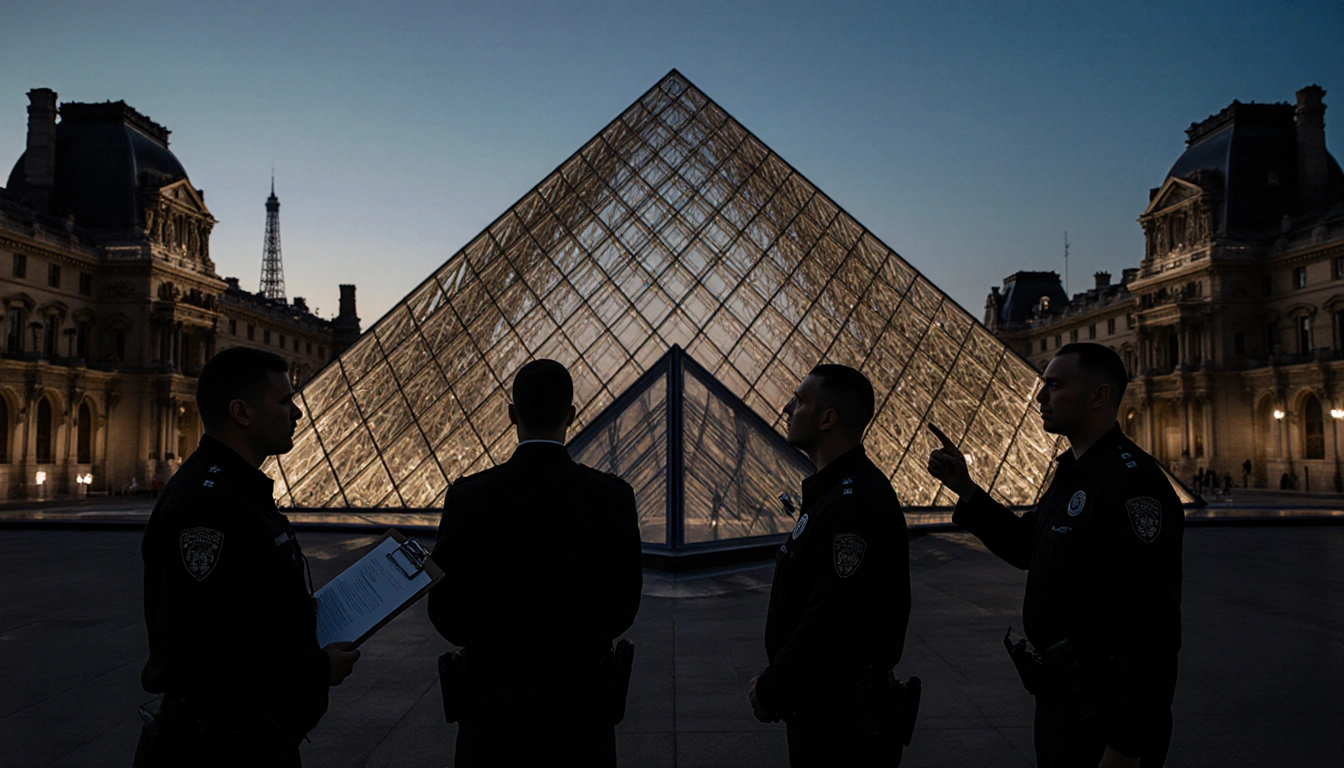

In a moment that could have been a fleeting crime scene, the Louvre’s glass pyramid turned into a silent witness to a 30‑second theft, and the museum’s 400‑strong strike erupted into a national debate over security, staffing and aging infrastructure.
The Spark of the Strike
A wildcat strike in June abruptly shut the museum, leaving visitors stranded beneath I.M. Pei’s glass pyramid. Weeks later, the Louvre announced the closure of offices and a public gallery because weakened floor beams threatened safety. The decision deepened worries about neglect across the aging former palace.
The Heist and Its Fallout
On Oct. 19, thieves stole crown jewels valued at more than $100 million, escaping with barely 30 seconds to spare. A parliamentary inquiry described the theft as a result of cascading failures: only one of two cameras covering the break‑in point was functioning, and security staff lacked enough screens to monitor footage in real time. When the alarm finally sounded, police were initially sent to the wrong location, a delay that proved decisive.
Building in Decline
The daylight robbery sharpened attention on the Louvre’s physical condition. Parts of the vast complex were closed after officials discovered structural weaknesses, including nine rooms in the Campana Gallery devoted to ancient Greek ceramics. Technical reports cited “particular fragility” in supporting beams, forcing staff relocations and closures until further notice.
Water Leak and Historic Books
Unions say sections of the centuries‑old building are in “very poor condition,” pointing to a November water leak that damaged hundreds of historic books as signs of broader neglect. The incident underscored the urgency of addressing the museum’s aging infrastructure.
Government Response and Union Demands
Culture Ministry officials proposed canceling a planned 2026 funding cut, hiring additional guards and visitor‑services staff, and raising pay. Unions rejected the measures as inadequate, signaling that trust had frayed beyond quick fixes. The CFDT union announced that 400 workers had voted to strike over chronic understaffing, deteriorating buildings and management decisions.
Extended Strike and Restricted Operations
Workers voted on Wednesday to extend the action, forcing the Louvre to operate on a restricted footing. The museum partially reopened a limited “masterpiece route,” granting access to the “Mona Lisa,” the Venus de Milo and a handful of galleries. The stopgap allowed visitors inside while highlighting how far normal operations have slipped.
Emergency Measures and New Leadership
Pressure shifted squarely onto Louvre President Laurence des Cars. The ministry announced emergency anti‑intrusion measures and appointed Philippe Jost, who oversaw the restoration of Notre Dame Cathedral, to help reorganize the museum. The appointment is widely read as a sign that confidence in existing governance has been shaken.
Macron’s “New Renaissance” Plan
President Emmanuel Macron’s “New Renaissance” renovation plan, launched in early 2025, aims to modernize the Louvre and manage overcrowding. The plan includes expanded entrances and major upgrades, but critics say it has moved too slowly and focused too heavily on headline projects. A court audit flagged considerable delays in deploying modern security equipment and found that only a fraction of allocated funds had been spent on safety.
Mona Lisa Room Proposal
A proposal to give Leonardo da Vinci’s “Mona Lisa” a dedicated room with its own entrance was intended to ease crushing crowds. Backed by Macron, the plan would separate the painting from the Salle des États to improve visitor flow. Supporters say it reflects the reality of mass tourism, with most visitors coming primarily to see the “Mona Lisa.”
Union Critique of the Plan
Unions counter that the project highlights a fixation on blockbuster attractions while staffing shortages, infrastructure decay and security gaps persist. They argue that money earmarked for redesign would be better spent on repairs, surveillance upgrades and front‑line staffing. Some fear the move could open the door to tiered access or higher prices.
Former Director’s Defense
Former Louvre director Jean‑Luc Martinez told senators this week that he believed the museum’s security plan was sufficient, stopping short of accepting personal responsibility for failures exposed by the heist. Martinez, who led the Louvre from 2013 to 2021, said he was “struck, shaken and wounded” by the robbery and insisted security had been a priority during his tenure. Lawmakers pressed him on why vulnerabilities identified in earlier audits, including a 2019 review of the Galerie d’Apollon, were not addressed.
Security Overhaul Delays
Martinez acknowledged delays to a broader 54‑million‑euro security overhaul, with contracts “supposed to be launched in 2022.” When told his successor later judged the plan incomplete, Martinez replied: “I thought this plan was sufficient.” The audit recommendations from 2017 and 2019 had flagged vulnerabilities later exploited in the heist, but recommended fixes were never fully implemented.
Arrests and Missing Jewels
All four suspected robbers have been arrested, but the jewels remain missing. Interpol has listed the pieces in its database of stolen art amid fears they could be broken up or smuggled abroad. The Senate findings confirmed what staff had warned for years: that the museum’s defenses were thin, its warnings unheeded, and its margin for error measured in seconds.
Workers’ Perspective on Safety
For staff now on strike, the Senate findings confirmed their long‑held concerns about the museum’s security and infrastructure. The findings underscored the urgency of addressing understaffing, building decay and security gaps that had been ignored for years.
Key Takeaways
- The Louvre’s 400‑strong strike has become a national reckoning over security, staffing and aging infrastructure.
- A 30‑second theft of $102 million worth crown jewels exposed cascading security failures and highlighted the museum’s physical decline.
- Government and museum leaders have responded with emergency measures, new appointments and proposed reforms, but unions insist deeper investment in repairs and staffing is essential.
The crisis at the Louvre now tests the resilience of the world’s most visited museum, forcing a reckoning that spans labor relations, structural integrity and national security.