


In the world of body art, removing a tattoo is a journey far more complex and painful than getting one.
The Long History of Tattoos and Their Erasure
The oldest known tattoos were discovered on the remains of a Neolithic man who lived in the Italian Alps around 3,000 B.C. Mummies from ancient Egypt and other cultures also bear evidence of ink. While the practice of inking dates back millennia, the idea of erasing it is almost as old. Early removal methods involved scraping the skin to pull pigments out, a painful and ineffective approach. In the 1960s, dermatologist Leon Goldman introduced a “hot vapor burst” laser technique that marked the beginning of modern tattoo removal.
Why People Choose to Remove Ink
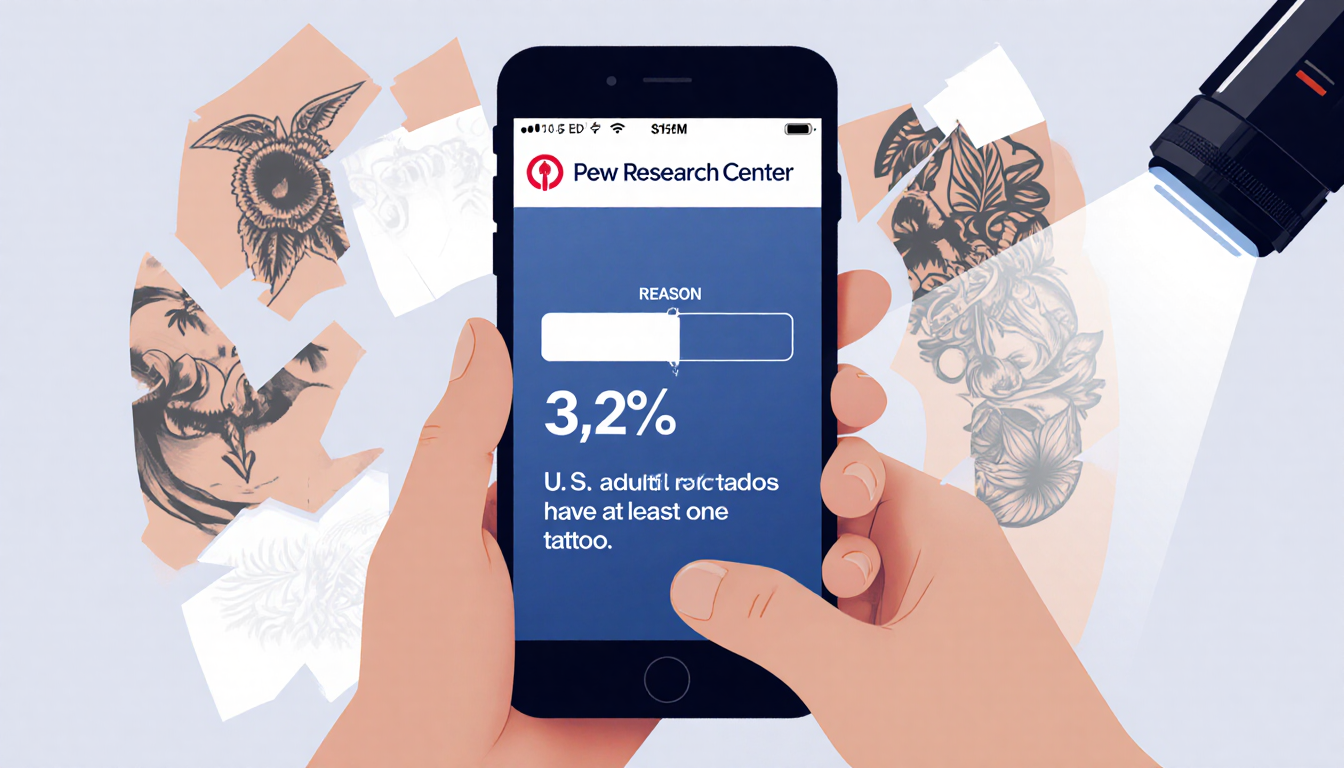
A 2023 Pew Research Center survey found that 32 % of U.S. adults have at least one tattoo, 22 % have more than one, and 24 % regret their decision. Many get tattoos to honor someone or something, but the reasons for removal vary just as widely. “A lot of people, when they get a new tattoo that makes some of their old tattoos look bad, they get the older ones removed or reworked,” says Ryan Wright, owner of Ink Blasters Precision Laser Tattoo Removal.
Boredom also plays a role. Chroma owner Jaime Howard explains, “They got a tattoo off a whim and they’re like ‘hey, I’m really bored with this. I don’t want this anymore,’” Howard says. “It’s not about hating their tattoo, it’s about change for yourself.”
The Science Behind Laser Tattoo Removal
Laser removal uses a Q‑switching laser that concentrates light into short, intense pulses. “Light heat from the laser breaks the ink into particles small enough to be absorbed by the body and later excreted as waste,” the technology works. The process is not a one‑and‑done; it typically requires eight to twelve treatments or more. A new tattoo can be placed over the old once the skin has healed.
“It’s very painful. Nine out of 10,” Wright says. “It kind of feels like a rubber band being snapped on your skin with hot bacon grease.” Howard, who has had her own tattoos removed, adds, “But you get through it. A couple of days later you’re still feeling the sunburn, but it’s OK. If you want it bad enough, you’ll take it off because that’s what you want.”
Real Stories from the Frontlines
Tracy Herrmann, 54, of Plymouth, Michigan, has eight tattoos and is in the process of removing four phrases—including “One step at a time,” “Surrender,” and “Through it all”—from her feet and arms. She started inking about six years ago and says she doesn’t regret getting tattoos.
After her fourth removal session at Chroma Tattoo Studio & Laser Tattoo Removal in Brighton, Michigan, Herrmann said, “Maybe a different choice, maybe.” She added, “There was a period in my life that I felt I needed some extra reminder.” She continued, “I thought I would just embrace the period in my life, so that helped and then just to surrender and give it over to God. So, half of them were really, really pivotal to getting me over a hump in my life.”
“Now, I just want to move forward and go back to the original skin I was born with,” she said. “But the other four I’m going to keep. They still mean a lot to me, but they’re more hidden.”
During a session, Herrmann winced as the laser flashed. “Oh gosh, it’s a 10 when you’re getting it done,” she said of the pain. “It’s pretty intense. It’s doable. I know price is sometimes an issue, but it’s worth it.”
Paris Jackson, 25, used Cover FX to conceal her 80+ tattoos at the 2024 Grammy Awards. She told Access Hollywood’s Scott Evans on the red carpet that the product helped her achieve a new look for the event.
Costs, Risks, and What to Expect
Howard says the minimum she charges is $100 per session. Wright notes that on a typical day he performs about a dozen treatments, and the cost depends on the square‑inch size of the tattoo. “The cost is really the technology in the laser,” Wright says. “It’s not like a time thing. Most treatments are under a minute. You’re paying for the technology and the person who knows how to use it. You can damage the skin if you don’t know what you’re doing.”
Laser removal carries risks. The U.S. Food and Drug Administration warns that skin may become lighter than surrounding areas, and temporary scarring, infection, redness, or soreness can occur. Before treatment, clients must sign a waiver acknowledging potential complications. Wright advises people with uncontrolled diabetes, autoimmune disease, immune deficiencies, or those on blood thinners to avoid the procedure.
Key Takeaways
- Laser tattoo removal is a multi‑session process that can be extremely painful and costly.
- Reasons for removal range from regret to boredom to aesthetic mismatches with new ink.
- The procedure breaks ink into tiny particles that the body can absorb, but it also carries risks such as skin lightening and scarring.
- Health conditions like diabetes, autoimmune disorders, and blood thinners can contraindicate laser removal.
Final Thoughts
From ancient Neolithic carvings to modern celebrity make‑overs, the desire to alter one’s skin has persisted for millennia. Yet, the journey to erase a tattoo is far from simple. It demands time, money, and a willingness to endure significant discomfort. Whether driven by personal change or the desire for a fresh canvas, those who choose laser removal must be prepared for a rigorous process that respects both the art and the science behind it.