
At a Glance
- George Kittle tore his right Achilles during the NFC Wild Card Game against the Eagles
- Injury occurred on a 6-yard reception late in the second quarter
- Coach Kyle Shanahan confirmed the diagnosis immediately after the game
- Why it matters: The star tight end now faces a long rehab timeline that could affect his 2025 season availability
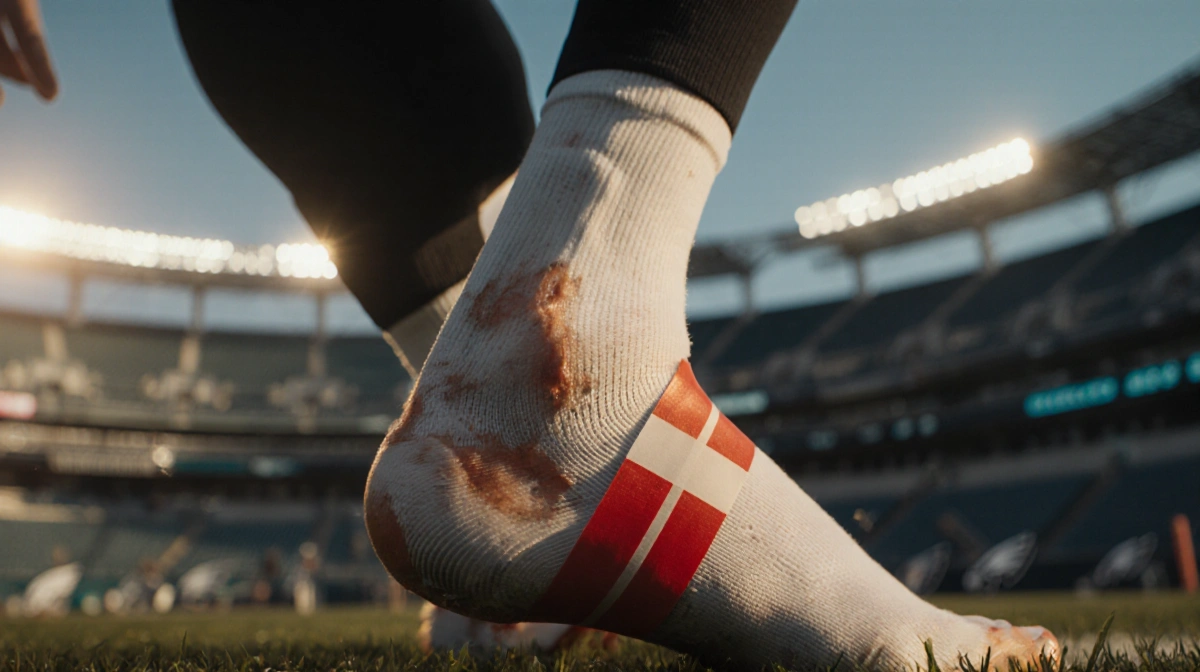
The San Francisco 49ers lost more than a playoff game on Sunday. Star tight end George Kittle sustained a torn right Achilles in the second quarter of the NFC Wild Card matchup against the Philadelphia Eagles, an injury that will require surgery and months of rehabilitation.
Play That Changed Everything
Kittle caught a 6-yard pass from quarterback Brock Purdy midway through the second quarter at Lincoln Financial Field. As he was tackled by Eagles defenders, his right leg twisted awkwardly underneath him. The 30-year-old immediately grabbed his lower leg and remained on the turf while medical staff rushed onto the field.
Television replays showed Kittle’s foot pointing in an unnatural direction as trainers stabilized the leg. Within minutes, the cart came out to transport him to the locker room. The stadium crowd fell silent as teammates gathered around the injured Pro Bowler.
Immediate Diagnosis
The 49ers ruled Kittle out just before halftime. Coach Kyle Shanahan confirmed the severity moments after the game ended.
“The trainers knew before the cart came out and got word to me in the headset,” Shanahan told reporters. “Yes, a torn Achilles.”
The injury ends Kittle’s season and casts doubt on his availability for the start of the 2025 campaign. Recovery from a torn Achilles typically requires 9-12 months of rehabilitation, though elite athletes sometimes return in 8 months with intensive therapy.
Injury-Plagued Season
This marks the third significant injury Kittle has dealt with during the 2024 season. He previously missed games due to separate hamstring and left ankle issues, though those ailments proved minor compared to Sunday’s catastrophic setback.

The tight end finished the regular season with 65 receptions for 755 yards and 6 touchdowns in 14 games. He earned his fifth Pro Bowl selection despite the various ailments that limited his practice time throughout the year.
Impact on 49ers Offense
Kittle’s absence fundamentally alters San Francisco’s offensive approach. The two-time All-Pro serves as both a dominant blocker and dynamic receiver, creating mismatches that defensive coordinators struggle to solve.
Without him on Sunday, the 49ers managed just 23 total yards in the second half. Quarterback Brock Purdy faced constant pressure as Philadelphia’s defense stacked the box against the run, knowing San Francisco lacked its most reliable short-area target.
The tight end position has become increasingly vital in modern NFL offenses. Teams with elite players at the position averaged 27.3 points per game during the regular season, while those without top-tier tight ends scored just 21.8 points weekly.
Playoff History Cut Short
Kittle’s postseason résumé includes 23 career playoff receptions for 327 yards and 2 touchdowns across six previous games. He established himself as one of the league’s most clutch performers, with 8 receptions for 108 yards in the 49ers’ 2020 Super Bowl appearance.
Sunday’s injury occurred during his seventh career playoff contest. The reception that caused the injury moved him past Vernon Davis for most postseason catches by a 49ers tight end, a bittersweet milestone given the circumstances.
Road to Recovery
Athletes typically undergo surgery within days of the injury to repair the torn tendon. The procedure involves stitching the Achilles back together, followed by weeks of immobilization. Physical therapy begins gradually, focusing first on range of motion before progressing to strength training.
Modern recovery protocols have improved outcomes significantly. Where players once faced career-threatening implications, approximately 85 percent of NFL athletes return to play after Achilles tears. However, performance often diminishes in the first season back.
Running backs and wide receivers historically struggle most with the injury, while tight ends show slightly better recovery rates due to the position’s dual blocking-receiving demands. The 49ers will monitor Kittle’s progress closely given his importance to their offensive scheme.
Contract Implications
Kittle signed a 5-year, $75 million extension in 2020 that runs through the 2025 season. The deal includes $40 million guaranteed, meaning San Francisco remains financially committed regardless of his recovery timeline.
The injury won’t affect his 2025 salary cap hit of $17.9 million, though the team could restructure the deal next offseason if recovery progresses slower than expected. Such restructures typically convert base salary to signing bonus, spreading cap impact across remaining years.
Historical Context
Achilles tears have ended careers throughout NFL history, though modern medicine has changed outcomes dramatically. Dan Marino suffered the injury in 1993 but returned to play six more seasons. More recently, players like Cam Akers and Terrell Suggs returned to Pro Bowl form after similar setbacks.
The 49ers have experienced this injury before. Linebacker NaVorro Bowman tore his Achilles in 2016 and never regained his All-Pro form, retiring three years later. Cornerback Richard Sherman suffered the same injury in 2017 but made a comeback with the 49ers, earning Pro Bowl honors in 2019.
Key Takeaways
- George Kittle tore his right Achilles on a 6-yard catch in the second quarter
- Coach Kyle Shanahan confirmed the diagnosis immediately postgame
- Recovery timeline of 9-12 months puts his 2025 season opener in jeopardy
- The injury compounds an already injury-riddled season for the star tight end
- San Francisco must now plan its offensive future without its most dynamic weapon