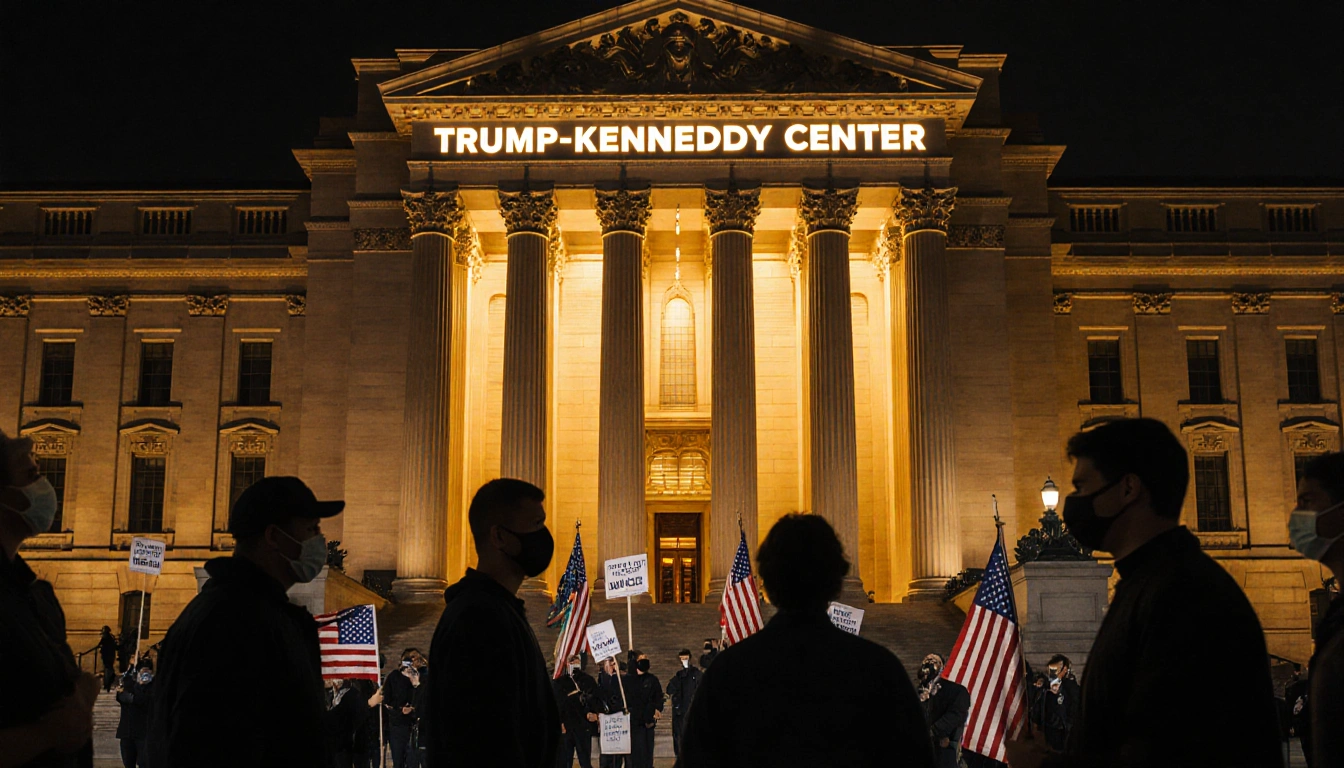
On Thursday, December 18, 2025, the White House announced that the John F. Kennedy Center for the Performing Arts would be renamed the Trump‑Kennedy Center after a unanimous board vote. The announcement was made by White House Press Secretary Karoline Leavitt on the social media platform X. Leavitt said the change honors President Donald Trump’s work to improve the institution. She highlighted his efforts over the past year in saving the building. The move has already sparked intense debate across political and cultural circles.
Board Decision and Announcement
Leavitt posted, “I have just been informed that the highly respected Board of the Kennedy Center, some of the most successful people from all parts of the world, have just voted unanimously to rename the Kennedy Center to the Trump‑Kennedy Center, because of the unbelievable work President Trump has done over the last year in saving the building,”. She added that the board’s decision was unanimous. Leavitt emphasized the board’s high standing and global reach. The post was shared widely on X. It quickly attracted attention from media outlets worldwide.
Leavitt continued, “Not only from the standpoint of its reconstruction, but also financially, and its reputation. Congratulations to President Donald J. Trump, and likewise, congratulations to President Kennedy, because this will be a truly great team long into the future! The building will no doubt attain new levels of success and grandeur,”. She praised the financial improvements made under Trump’s leadership. Leavitt also highlighted the center’s reputation boost. Her comments framed the renaming as a partnership between two presidents. The post was accompanied by a photo of the Kennedy Center’s façade.
Legal and Legislative Hurdles
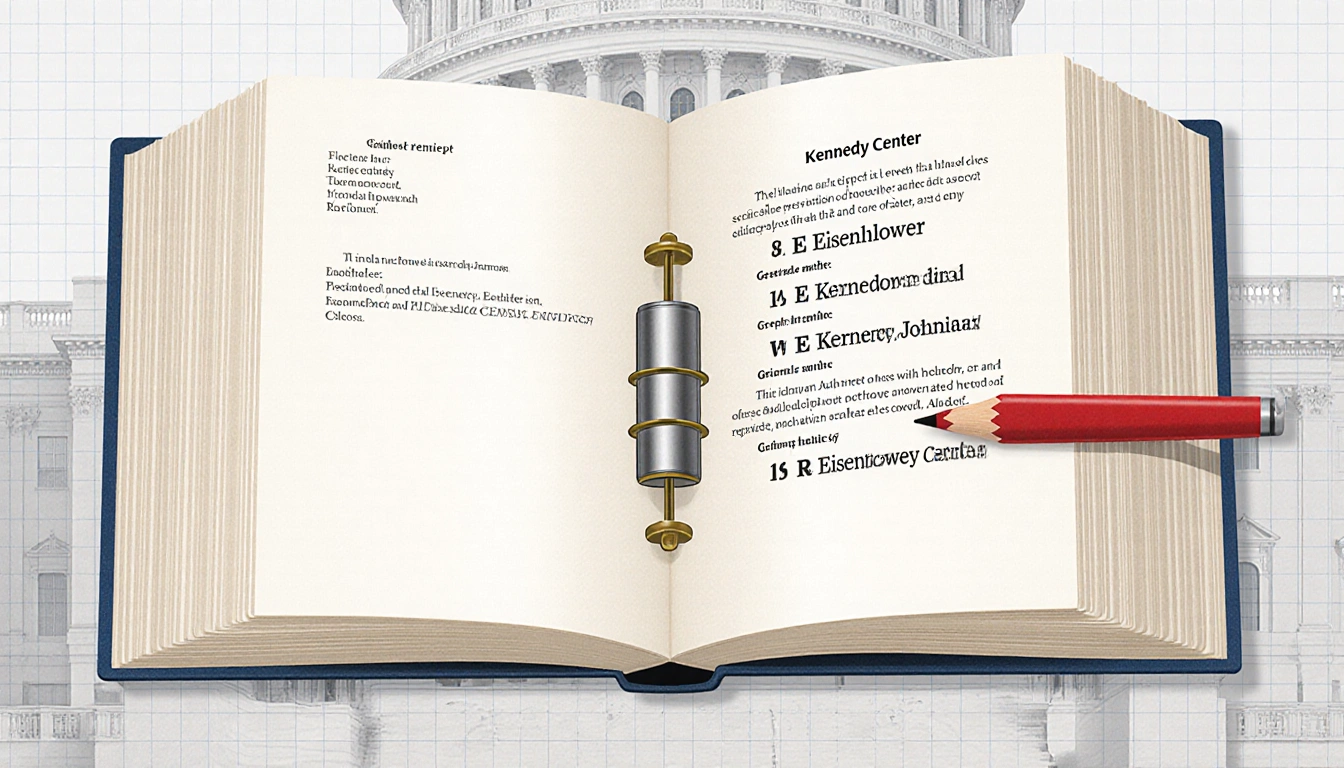
The Kennedy Center was named by Congress and its founding statutes were enacted during the Eisenhower, Kennedy, and Johnson administrations. Those laws specifically prohibit the renaming of the building. The statutes make the name a permanent fixture tied to the institution’s mission. Consequently, any change would require a new act of Congress. The legal challenge adds complexity to the renaming proposal.
An act of Congress would be necessary to amend the original statutes. This process would involve drafting legislation and securing bipartisan support. The political feasibility of such an act remains uncertain given the center’s historic designation.
Congressional Efforts and Reactions
In July, GOP Rep. Mike Simpson of Idaho introduced an amendment to rename the building after first lady Melania Trump. He said the amendment had not been communicated to her prior to its public introduction. Simpson’s proposal was part of a broader effort by Republican lawmakers to rename the center in honor of the president or the first lady. The amendment drew criticism from some lawmakers and the public. It also highlighted the political stakes surrounding the center’s name.
Simpson stated that Melania Trump was unaware of his efforts before the amendment was introduced. He emphasized that the proposal was made in good faith. The comment was made during a press briefing. It underscored the surprise element of the amendment.
Trump’s Statements and Actions
On December 7, while walking the red carpet for the Kennedy Center Honors program, Trump was asked whether he would rename the venue after himself. Trump replied that such a decision would be up to the board. He emphasized the board’s authority over the center’s name. The question highlighted the tension between presidential influence and institutional autonomy. The response was noted by several media outlets.
Earlier this month, Trump mentioned a “big event on Friday at the Trump Kennedy Center” before correcting himself to “at the Kennedy Center.” He was referring to the FIFA World Cup soccer draw for 2026, in which he participated. The slip of the tongue drew laughter from the audience. Trump’s comments illustrated his casual approach to the renaming discussion. The incident was shared on social media.
Family Reaction
Maria Shriver, a niece of John F. Kennedy, reacted to the proposed rebranding in July. She described the legislation as “insane” in a social media post. Shriver criticized the move as petty and small‑minded. She also questioned the motives behind the renaming. Her comments added a familial perspective to the debate.
Shriver wrote, “It makes my blood boil. It’s so ridiculous, so petty, so small minded.” She added, “Truly, what is this about? It’s always about something. ‘Let’s get rid of the Rose Garden. Let’s rename the Kennedy Center.’ What’s next?” Her post went viral among Kennedy supporters. It intensified the backlash against the renaming proposal.
Changes to the Rose Garden
Earlier this year, Trump turned the Kennedy-era Rose Garden at the White House into a patio by removing the lawn and laying down paving stones. The change was part of a broader effort to redesign the White House grounds. It drew criticism from preservationists. The move was seen as a symbolic shift in the treatment of historic spaces. It mirrored similar actions at the Kennedy Center.
Leadership Overhaul at the Kennedy Center
In his second term, Trump quickly changed the Kennedy Center after returning to Washington in late January. Within a month, he ousted the institution’s leadership. He filled the board of trustees with his supporters and announced he had been elected the board’s chair. The overhaul was described as a rapid restructuring. It marked a significant shift in the center’s governance.
Trump’s appointment to the chair position consolidated his influence over the center’s operations. The board’s composition now reflects a strong Republican presence. The move was welcomed by supporters who favored a more conservative direction. Critics, however, warned of potential politicization. The change has become a focal point for debates about the center’s future.
Criticisms and Renovations
Trump and his aides criticized the Kennedy Center’s programming as “woke” and accused the previous leadership of financial mismanagement. They alleged that the center had neglected the building and misused funds. The criticism was part of a broader cultural debate. It also fueled protests among artists and patrons. The accusations have been widely debated.
Some renovations have been underway, including using white paint over columns that were previously gold. The change was part of a broader aesthetic overhaul. Critics argue that the new look undermines the center’s historic character. Supporters claim it modernizes the space. The debate over the paint choice illustrates the clash of visions.
Financial Management Claims
Deborah Rutter, who was fired as the Kennedy Center’s president, said in a May statement that allegations of poor financial management were “false” and insisted that when she left, “the Kennedy Center was fiscally sound.” She challenged the claims made by Trump and his aides. Rutter’s statement was widely circulated. It added a counterpoint to the financial criticism. The controversy continues to unfold.
Artist Withdrawals and Public Sentiment
Prominent musicians such as “Hamilton” canceled performances amid the controversy. Actor Issa Rae and author Louise Penny also withdrew from appearances. Consultants such as musician Ben Folds and singer Renée Fleming resigned. Some artists expressed a sense of sadness at the changes. Jane Alexander, an actor and former chair of the National Endowment for the Arts, told The Associated Press, “It was always a joy to be asked to perform at the Kennedy Center.”
Key Takeaways
- The Kennedy Center has been renamed the Trump‑Kennedy Center following a unanimous board vote.
- Legal hurdles exist because the original statutes prohibit renaming without a new act of Congress.
- The change has sparked strong reactions from family members, artists, and critics.
The renaming of the Kennedy Center represents a significant shift in the institution’s identity and governance. While supporters celebrate the partnership between two presidents, opponents raise concerns about legality, tradition, and artistic freedom. The debate over the Trump‑Kennedy Center will likely continue as lawmakers and the public weigh the implications.