
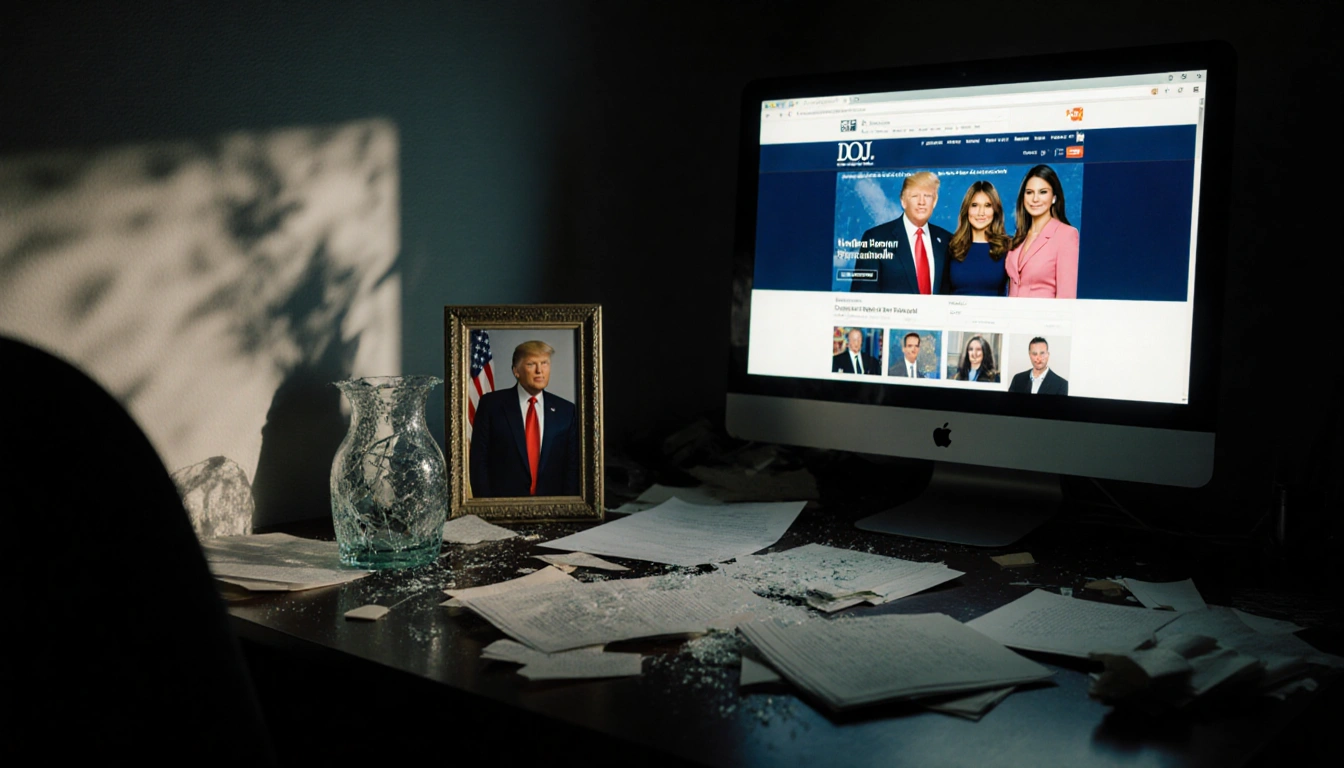
On Friday, 16 files that had been posted on the Justice Department’s public webpage for documents related to Jeffrey Epstein vanished by Saturday, including a photograph that shows President Donald Trump alongside Epstein, Melania Trump and Ghislaine Maxwell.
The Vanishing Files
The missing files were available Friday and no longer accessible by Saturday. They included images of paintings depicting nude women and a photo of a series of photographs along a credenza and in drawers. In that image, a photograph of Trump was inside a drawer among other photos.
Missing Key Records
The Justice Department did not say why the files were removed or whether the disappearance was intentional. A spokesperson for the department did not immediately respond to a request for comment.
Online Speculation
Online speculation about what was taken down and why the public was not notified fueled intrigue about Epstein and the powerful figures who surrounded him. Democrats on the House Oversight Committee posted on X: “What else is being covered up? We need transparency for the American public.”
Deepened Concerns
The episode deepened concerns that had already emerged from the Justice Department’s much-anticipated document release. Tens of thousands of pages offered little new insight into Epstein’s crimes or the prosecutorial decisions that allowed him to avoid serious federal charges for years, while omitting some of the most closely watched materials, including FBI interviews with survivors and internal Justice Department memos on charging decisions.
Missing Interviews and Memos
The missing FBI interviews with survivors and internal DOJ memos examining charging decisions could have helped explain how investigators viewed the case and why Epstein was allowed in 2008 to plead guilty to a relatively minor state-level prostitution charge. The gaps also extend to references to powerful figures long associated with Epstein, such as Britain’s former Prince Andrew, raising questions about who was scrutinized and how much the disclosures advance public accountability.
Fresh Nuggets
Among the fresh nuggets were insight into the Justice Department’s decision to abandon an investigation into Epstein in the 2000s, which enabled him to plead guilty to that state-level charge, and a previously unseen 1996 complaint accusing Epstein of stealing photographs of children.
Heavy on Homes and Celebrities
The releases so far have been heavy on images of Epstein’s homes in New York City and the U.S. Virgin Islands, with some photos of celebrities and politicians. A series of never-before-seen photos of former President Bill Clinton appeared, but only a few of Trump. Both men have disowned the friendships and neither has been accused of wrongdoing in connection with Epstein, and there was no indication the photos played a role in the criminal cases.
Rolling Release Plan
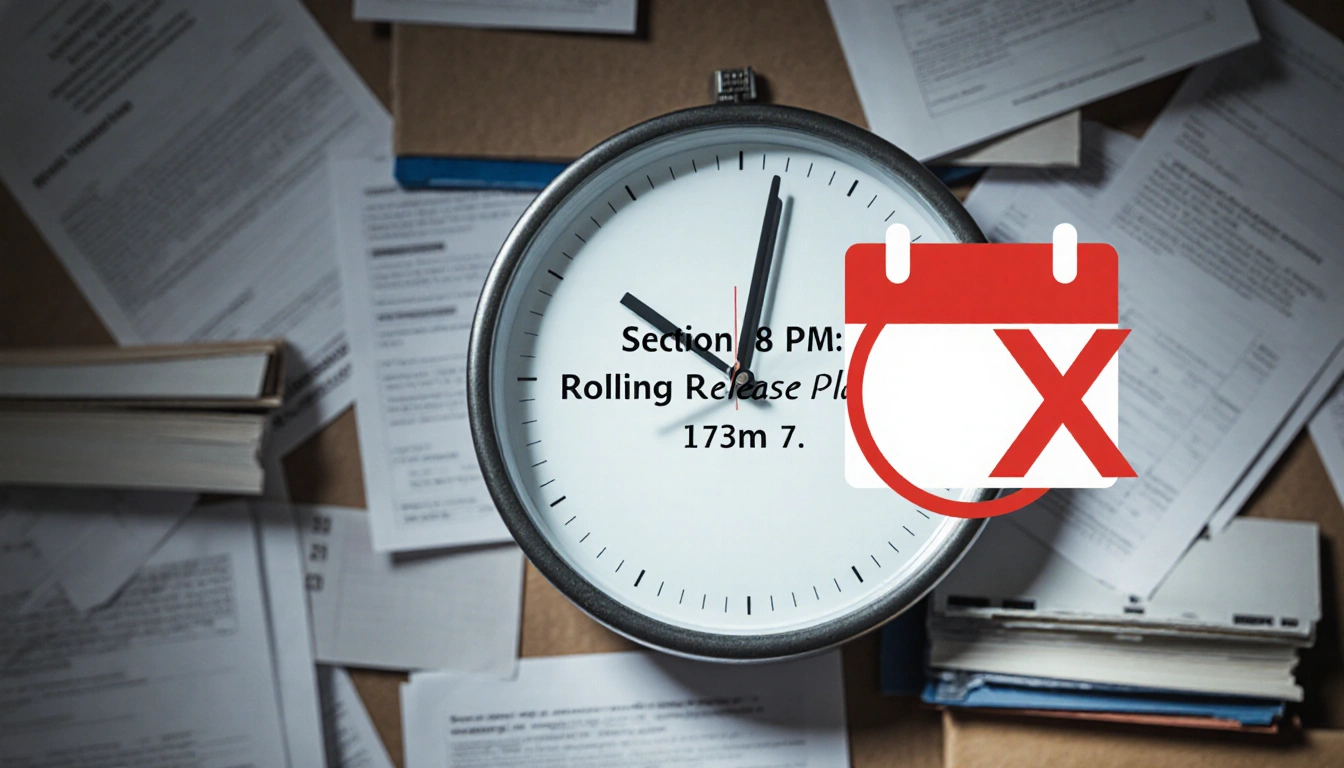
Despite a Friday deadline set by Congress to make everything public, the Justice Department said it plans to release records on a rolling basis. It blamed the delay on the time-consuming process of obscuring survivors’ names and other identifying information. The department has not given any notice when more records might arrive. That approach angered some Epstein accusers and members of Congress who fought to pass the law, turning the document release into an indefinite wait for a complete picture of Epstein’s crimes and the steps taken to investigate them.
Marina Lacerda’s Statement
“I feel like again the DOJ, the justice system is failing us,” said Marina Lacerda, who alleges Epstein started sexually abusing her at his New York City mansion when she was 14.
Redactions and Context
Many of the long-anticipated records were redacted or lacked context. Federal prosecutors in New York brought sex trafficking charges against Epstein in 2019, but he killed himself in jail after his arrest. The documents just made public were a sliver of potentially millions of pages records in the department’s possession. In one example, Deputy Attorney General Todd Blanche said Manhattan federal prosecutors had more than 3.6 million records from sex trafficking investigations into Epstein and Maxwell, though many duplicated material already turned over by the FBI. Many records released so far had been made public in court filings, congressional releases or freedom of information requests, but for the first time they were all in one place and available for the public to search for free. New ones often lacked necessary context or were heavily blacked out. A 119-page document marked “Grand Jury-NY,” likely from one of the federal sex trafficking investigations that led to the charges against Epstein in 2019 or Maxwell in 2021, was entirely blacked out.
Celebrity Photos and Lack of Captions
Trump’s Republican allies seized on the Clinton images, including photos of the Democrat with singers Michael Jackson and Diana Ross. There were also photos of Epstein with actors Chris Tucker and Kevin Spacey, and even Epstein with TV newscaster Walter Cronkite. But none of the photos had captions and no explanation was given for why any of them were together. The meatiest records released so far showed that federal prosecutors had what appeared to be a strong case against Epstein in 2007 yet never charged him. Transcripts of grand jury proceedings, released publicly for the first time, included testimony from FBI agents who described interviews they had with several girls and young women who described being paid to perform sex acts for Epstein. The youngest was 14 and in ninth grade. One had told investigators about being sexually assaulted by Epstein when she initially resisted his advances during a massage. Another, then 21, testified before the grand jury about how Epstein had hired her when she was 16 to perform a sexual massage and how she had gone on to recruit other girls to do the same. “For every girl that I brought to the table he would give me $200,” she said. She said they were mostly people she knew from high school. “I also told them that if they are under age, just lie about it and tell him that you are 18.” The documents also contain a transcript of an interview Justice Department lawyers did more than a decade later with the U.S. attorney who oversaw the case, Alexander Acosta, about his ultimate decision not to bring federal charges. Acosta, who was labor secretary during Trump’s first term, cited concerns about whether a jury would believe Epstein’s accusers. He also said the Justice Department might have been more reluctant to make a federal prosecution out of a case that straddled the legal border between sex trafficking and soliciting prostitution, something more commonly handled by state prosecutors. “I’m not saying it was the right view,” Acosta added. He also said that the public today would likely view survivors differently. “There’s been a lot of changes in victim shaming,” Acosta said.
Key Takeaways
- 16 files, including a photo of Trump, vanished from the Justice Department’s public webpage within a day.
- The released documents omit key FBI interviews and DOJ memos, leaving gaps about why Epstein avoided serious federal charges.
- The Justice Department plans a rolling release of records, citing the need to obscure identifying information, but has not set a timeline for further disclosures.
The episode underscores the challenges of achieving full transparency in the Epstein case. While the Justice Department has released a vast trove of documents, significant gaps remain, and the disappearance of files containing a Trump photo has reignited calls for a more thorough and timely disclosure of all relevant records.