
A Manhattan judge has cleared the way for the public to see the long‑suppressed grand jury transcripts from Jeffrey Epstein’s 2019 sex‑trafficking case.
The Unsealing Ruling
U.S. District Judge Richard M. Berman reversed his earlier decision to keep the material under wraps, citing a new law that requires the government to open its files on Epstein and his longtime confidant Ghislaine Maxwell. The judge previously cautioned that the 70 or so pages of grand jury materials slated for release are hardly revelatory and “merely a hearsay snippet” of Epstein’s conduct. Berman wrote that the law “unequivocally intends to make public Epstein grand jury materials and discovery materials” that had previously been covered by secrecy orders. The law “supersedes the otherwise secret grand jury materials,” he wrote.
Berman implored the Justice Department to carefully follow the law’s privacy provisions to ensure that victims’ names and identifying information are redacted, or blacked out. Victim safety and privacy “are paramount,” he wrote.
The New Transparency Law
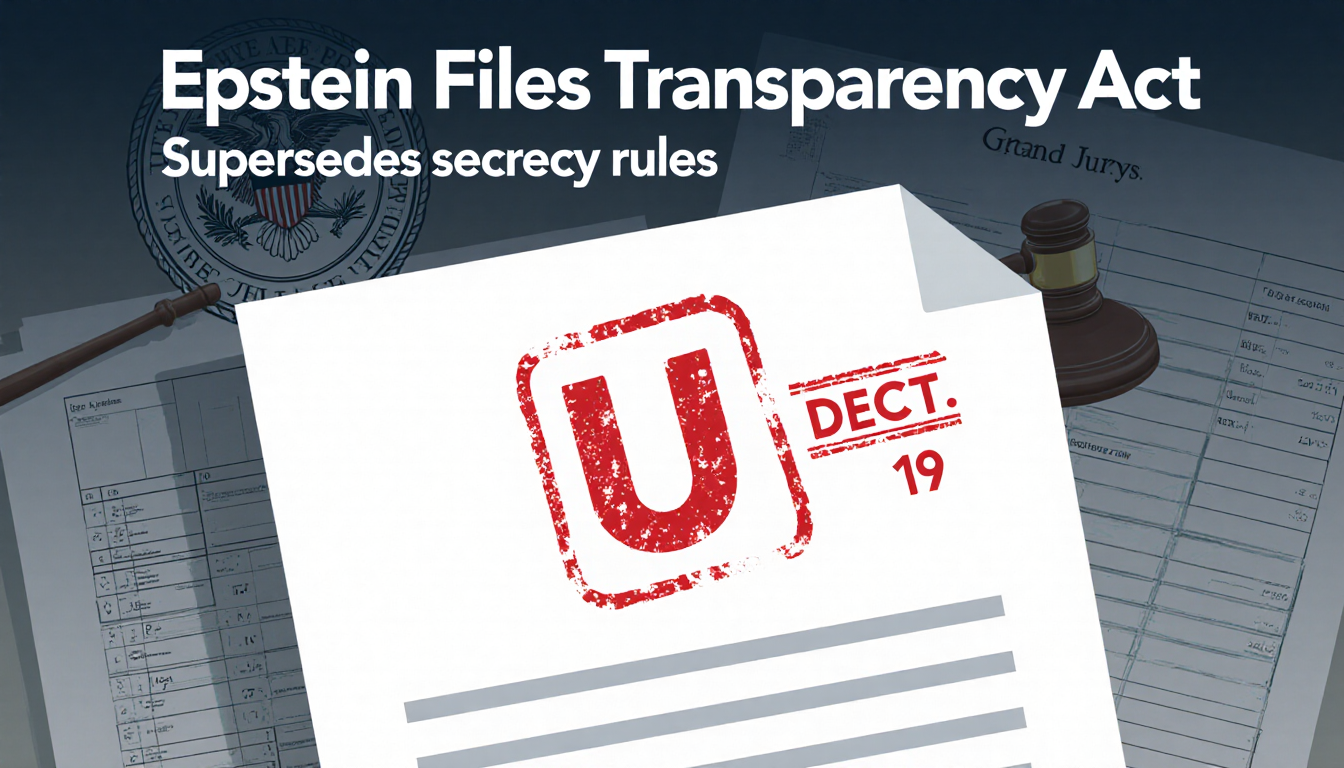
The Justice Department asked the judges to lift secrecy orders after the Epstein Files Transparency Act, passed by Congress and signed into law by President Donald Trump last month, created a narrow exception to rules that normally keep grand jury proceedings confidential. The law requires that the Justice Department disclose Epstein‑related records to the public by Dec. 19. Berman’s ruling confirms that the law “unequivocally intends to make public Epstein grand jury materials and discovery materials” and that it “supersedes the otherwise secret grand jury materials.”
What the Grand Jury Records Contain
In court filings, the Justice Department informed Berman that the only witness to testify before the Epstein grand jury was an FBI agent who, the judge noted, “had no direct knowledge of the facts of the case and whose testimony was mostly hearsay.” The agent testified over two days, on June 18, 2019, and July 2, 2019. The rest of the grand jury presentation consisted of a PowerPoint slideshow and a call log. The July 2 session ended with grand jurors voting to indict Epstein.
Epstein, a millionaire money manager known for socializing with celebrities, politicians, billionaires and the academic elite, killed himself in jail a month after his 2019 arrest. Maxwell was convicted in 2021 by a federal jury of sex trafficking for helping recruit some of Epstein’s underage victims and participating in some of the abuse. She is serving a 20‑year prison sentence.
Impact on Maxwell and the DOJ
Maxwell’s lawyer told a judge last week that unsealing records from her case could spoil her plans to file a habeas petition, a legal filing seeking to overturn her conviction. The Supreme Court in October declined to hear Maxwell’s appeal. Lawyers for Epstein’s estate told Berman last week that the estate took no position on the Justice Department’s unsealing request.
On Tuesday, a different Manhattan federal judge ordered the release of records from Maxwell’s 2021 sex‑trafficking case. Last week, a judge in Florida approved the unsealing of transcripts from an abandoned Epstein federal grand jury investigation in the 2000s. The Justice Department’s request aligns with the new transparency law’s mandate to make these records public.
Legal and Political Context
Questions about the government’s Epstein files have dominated the first year of Trump’s second term, with pressure on the Republican intensifying after he reneged on a campaign promise to release the files. His administration released some material, most of it already public, disappointing critics and some allies.
Congress will pass the bill to force the DOJ to release its files on Jeffrey Epstein. By unanimous consent, meaning there were no objections, the Senate agreed to pass the Epstein bill and send it to President Trump’s desk. Earlier in the week, Trump indicated he would sign it. NBC New York’s Chris Glorioso reports.
Key Takeaways
- Judge Richard M. Berman has ordered the release of 70‑plus pages of Epstein’s 2019 grand jury transcripts, following the Epstein Files Transparency Act.
- The law requires the Justice Department to disclose Epstein‑related records by Dec. 19 and supersedes prior secrecy orders.
- The grand jury record contains testimony from an FBI agent, a PowerPoint slideshow, a call log, and an indictment vote, but no direct witness testimony about Epstein’s conduct.
The ruling marks a significant step toward transparency in the Epstein investigations, while the Justice Department and courts balance public access with the privacy and safety of victims. The release of these documents will likely fuel further scrutiny of Epstein’s network and the legal processes that followed his death.