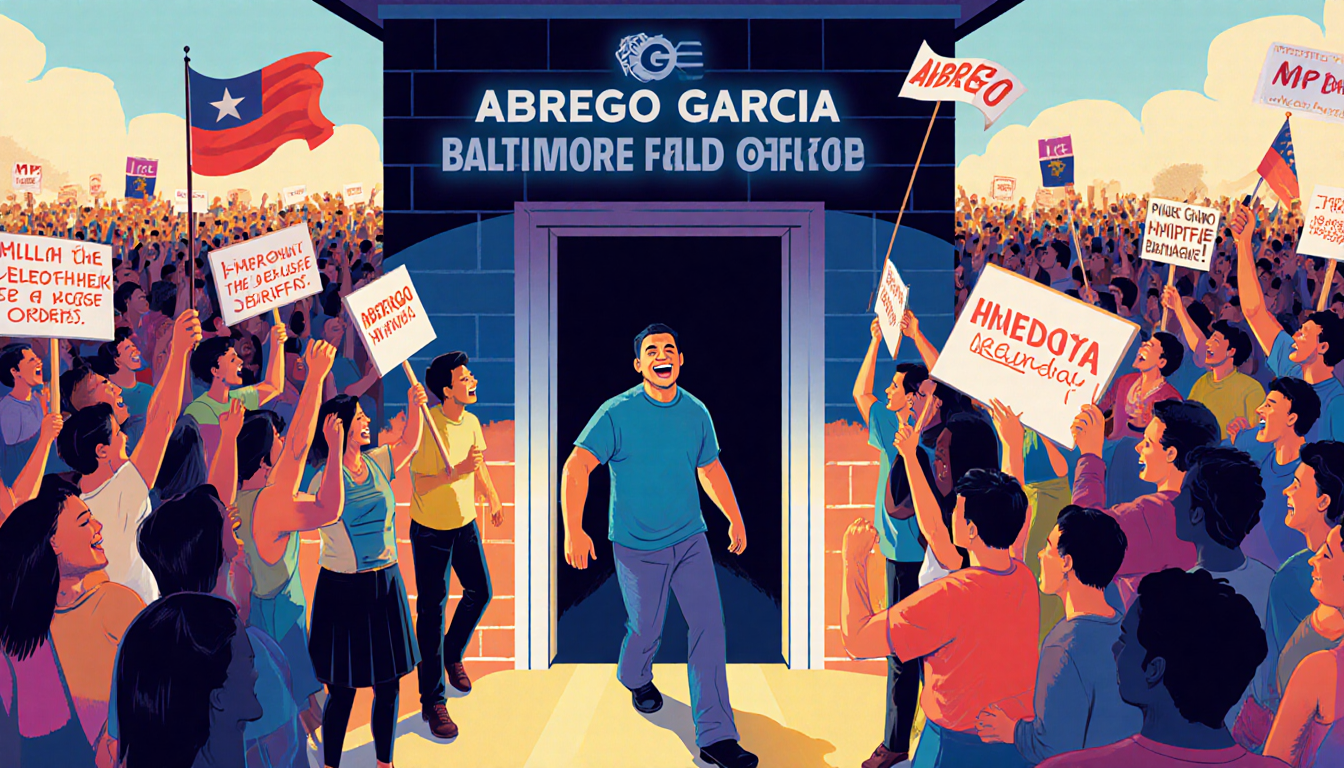
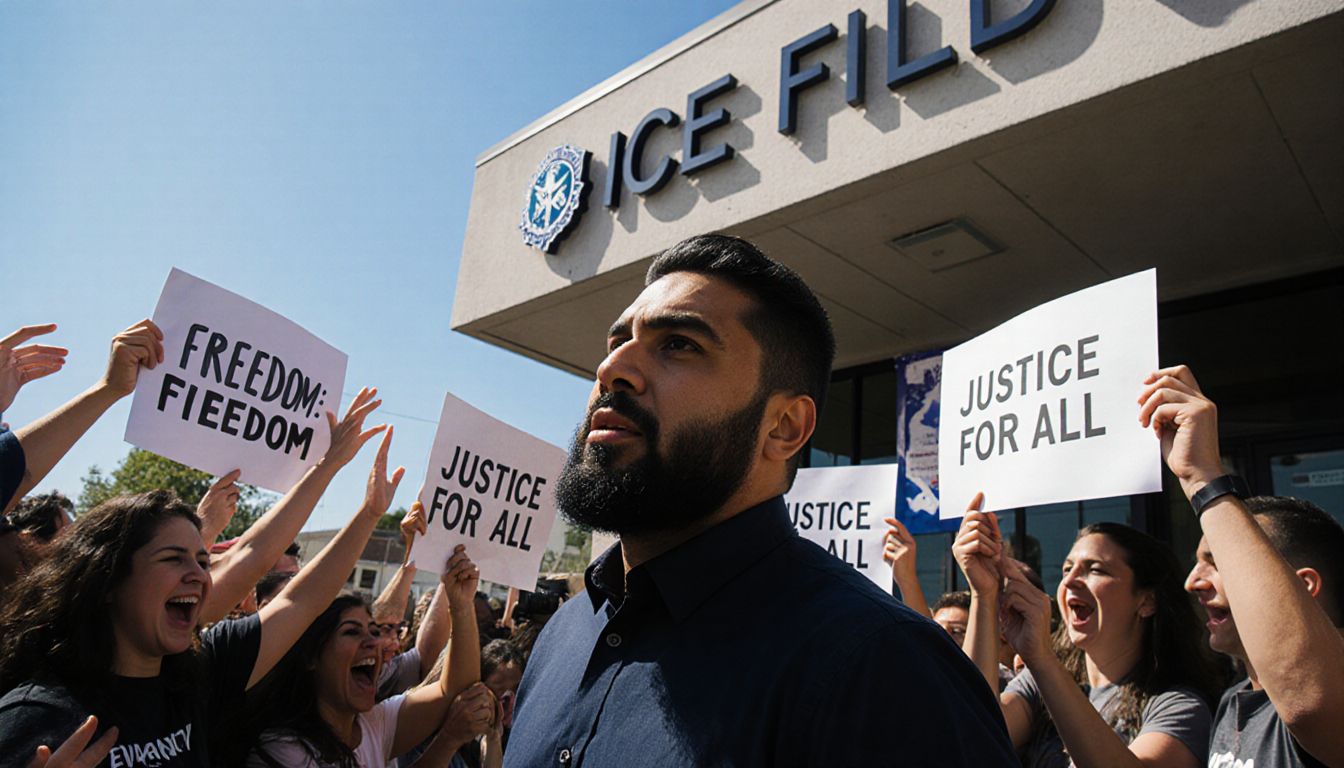
After a judge ruled that immigration officials could not detain him, Kilmar Abrego Garcia walked out of an ICE field office to cheers, sparking a legal showdown over a wrongful deportation that has rattled the Trump administration.
Background of the Legal Battle
Kilmar Abrego Garcia, a Salvadoran citizen with an American wife and child, has lived in Maryland for years. In 2019, an immigration judge granted him protection from deportation back to El Salvador, where he faced danger from a gang that targeted his family. While allowed to live and work in the U.S. under ICE supervision, he was never granted residency status.
Earlier this year, Abrego Garcia was mistakenly deported and held in a notorious brutal Salvadoran prison despite having no criminal record. The error prompted mounting public pressure and a court order, leading the Trump administration to bring him back to the U.S. in June. The return was preceded by an arrest warrant on human‑smuggling charges in Tennessee, which Abrego has pleaded not guilty to and has asked a federal judge to dismiss.
The 2019 settlement recognized his “well‑founded fear” of danger in El Salvador if deported. Instead of returning him there, ICE sought to deport him to a series of African countries. Abrego sued, alleging the Trump administration was using the removal process to punish him for the public embarrassment caused by his wrongful deportation.
The Friday Check‑In and Public Response
Abrego Garcia arrived Friday morning at the ICE Baltimore field office for a scheduled check‑in, some 14 hours after his release from detention on a judge’s orders. He appeared for the appointment surrounded by cheering supporters, then walked out of the building without commenting.
During a brief news conference outside the building, escorted by a group of supporters chanting “We are all Kilmar!”, Abrego said through a translator: “I stand before you a free man and I want you to remember me this way, with my head held up high.” He added, “I come here today with so much hope and I thank God who has been with me since the start with my family.”
He urged people to keep fighting: “I stand here today with my head held high and I will continue to fight and stand firm against all of the injustices this government has done upon me. Regardless of this administration, I believe this is a country of laws and I believe that this injustice will come to an end.”
After speaking, he went through security at the field office, escorted by supporters. His attorney, Simon Sandoval‑Moshenberg, announced to the crowd that his client would walk back out the field office’s doors again, stressing that the legal fight was not over.
Current Court Orders and Future Proceedings
U.S. District Judge Paula Xinis in Maryland ordered that immigration officials could not detain Abrego Garcia again. She wrote that Abrego is likely to succeed on the merits of any further request for relief from ICE detention. “For the public to have any faith in the orderly administration of justice, the Court’s narrowly crafted remedy cannot be so quickly and easily upended without further briefing and consideration,” Xinis said.
Officials cannot re‑detain him until the court conducts a hearing on the motion for the temporary restraining order. The agency freed him just before 5 p.m. Thursday in response to a ruling from Xinis, who wrote that federal authorities detained him after his return to the United States without any legal basis.
Xinis also rejected the government’s argument that she lacked jurisdiction to intervene on a final removal order for Abrego, because she found no final order had been filed. She noted that federal authorities “did not just stonewall” the court and “they affirmatively misled the tribunal.”
The Department of Homeland Security sharply criticized Xinis’s order and vowed to appeal, calling the ruling “naked judicial activism” by a judge appointed during the Obama administration. Assistant Secretary Tricia McLaughlin said, “This order lacks any valid legal basis, and we will continue to fight this tooth and nail in the courts.”
Broader Implications and Next Steps
Abrego Garcia’s attorney said the government still has plenty of tools in its toolbox and “plenty of tricks up their sleeve.” He added that he fully expects the government to again take steps to deport his client and that they will be there to fight for a fair trial.
The case highlights how check‑ins—used to track people released by the government to pursue asylum or other immigration cases—have become points of detention since the start of President Donald Trump’s second term. Abrego has applied for asylum in U.S. immigration court.
Charges in Tennessee stem from a 2022 traffic stop for speeding. Body‑camera footage shows a calm exchange with Abrego. Nine passengers were in the car, and officers discussed suspicions of smuggling. Abrego was allowed to continue driving with only a warning. A DHS agent testified that the investigation began only after the Supreme Court said in April that the Trump administration must work to bring Abrego back to the United States.
ICE freed Abrego Garcia from Moshannon Valley Processing Center, about 115 miles (185 kilometers) northeast of Pittsburgh, on Thursday just before the deadline Xinis gave the government to provide an update on his release. He returned home to Maryland a few hours later.
Key Takeaways
- Judge Paula Xinis has ordered ICE cannot detain Kilmar Abrego Garcia again, citing lack of legal basis for his detention.
- Abrego’s case stems from a wrongful deportation to a brutal Salvadoran prison and ongoing human‑smuggling charges in Tennessee.
- The Department of Homeland Security plans to appeal Xinis’s ruling, calling it “naked judicial activism.”
Kilmar Abrego Garcia’s walk from the ICE field office marks a temporary victory in a protracted legal battle that continues to test the limits of immigration enforcement and judicial oversight. The next court hearing will determine whether the temporary restraining order can be upheld and whether ICE can re‑detain him, but for now, the Salvadoran‑born Maryland resident remains free.