


At a Glance
- A turboprop ATR 42-500 carrying 11 people lost contact Saturday while approaching South Sulawesi
- The aircraft was on a flight from Yogyakarta to Sultan Hasanuddin International Airport
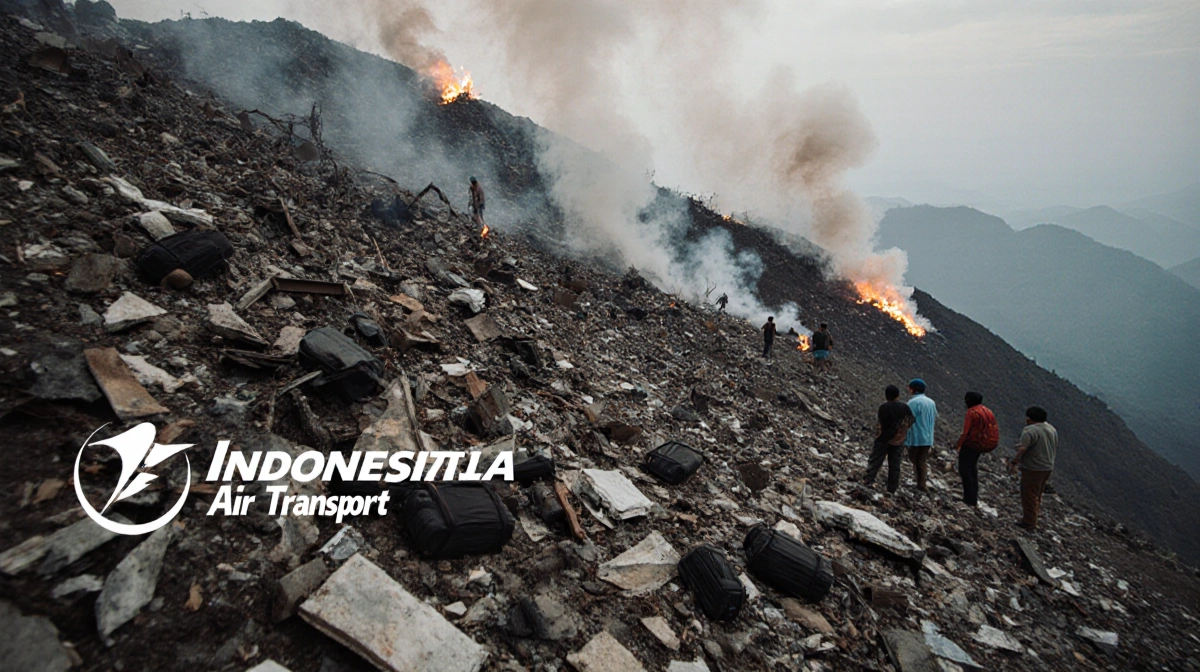
- Hikers on Mount Bulusaraung reported seeing debris and small fires at the suspected crash site
- Search teams, including air force helicopters and drones, are battling steep terrain to reach the area
- Why it matters: The incident highlights ongoing aviation safety challenges in Indonesia, where air transport is vital across 17,000-plus islands
A passenger aircraft carrying 11 people disappeared from radar Saturday afternoon while approaching a mountainous region between Java and Sulawesi islands, prompting a large-scale search and rescue operation.
The turboprop ATR 42-500, operated by Indonesia Air Transport, was completing a domestic flight from Yogyakarta to the South Sulawesi capital when it vanished, according to Endah Purnama Sari, spokesperson for Indonesia’s Transportation Ministry.
Last Contact and Radar Loss
Controllers lost contact with the plane at 01:17 p.m. local time (0517 GMT) as it flew over the Leang-Leang area of Maros, a mountainous district in South Sulawesi province. The aircraft had just received instructions from air traffic control to adjust its approach alignment to Sultan Hasanuddin International Airport.
“After the last ATC instructions, radio contact was lost and controllers declared the emergency distress phase,” Sari said in a statement released Saturday evening.
The aircraft carried eight crew members and three passengers, all employees of Indonesia’s Marine Affairs and Fisheries Ministry. The trio were traveling as part of an airborne maritime surveillance mission supporting national fisheries management operations, Minister Sakti Wahyu Trenggono confirmed during a late-night news conference.
Debris Sightings Raise Hopes
Breakthrough reports came from hikers on Mount Bulusaraung, who told local authorities they spotted scattered debris, a logo matching Indonesia Air Transport markings, and small fires still burning on the slopes. The mountain sits within Bulusaraung National Park, which straddles the Maros and Pangkep districts.
“The sightings were reported to authorities and are being verified by rescue teams attempting to reach the area,” said Maj. Gen. Bangun Nawoko, commander of the South Sulawesi-based Hasanuddin military command.
Multiple search and rescue units have deployed to the region, including:
- Air force helicopters equipped for high-altitude operations
- Fixed-wing drones for aerial mapping
- Ground search teams with climbing specialists
- Local police and military personnel familiar with the terrain
Weather at the time of disappearance showed clouds and 8-kilometer visibility, Sari noted, conditions that aviation officials do not consider extreme.
Treacherous Terrain Slows Response
Steep, forested slopes inside the national park have complicated efforts to reach the coordinates provided by the hikers. Roads end several kilometers from the reported site, forcing rescuers to continue on foot while carrying heavy equipment.
Nawoko said the terrain is “among the most challenging” in the province, with sheer cliffs and dense vegetation that can obscure wreckage from the air. Helicopters have begun winching teams closer to the location, but dusk and unpredictable mountain weather have limited flying time.
Indonesia Air Transport, the charter carrier operating the missing ATR 42-500, has not released a public statement on the incident. Company officials have, however, shared the passenger manifest with investigators and are cooperating with the search, according to the Transportation Ministry.
Aviation Safety Under Scrutiny
The archipelago nation of more than 280 million people depends heavily on both aviation and maritime transport to connect more than 17,000 islands. Domestic turboprop flights like Saturday’s route serve as lifelines for remote communities, government agencies, and industry.
Indonesia has suffered a series of transportation accidents on land, sea, and in the air in recent years, incidents often attributed to aging infrastructure and inconsistent enforcement of safety standards. International regulators have repeatedly urged Jakarta to strengthen oversight of smaller carriers and improve pilot training protocols.
Saturday’s flight was a routine positioning trip for the Fisheries Ministry, which charters aircraft to monitor illegal fishing across the sprawling archipelago. The three passengers were senior staff tasked with aerial surveys designed to protect Indonesian waters from encroachment, Minister Trenggono said.
What Happens Next
Investigators from the National Transportation Safety Committee have assembled in Makassar, the provincial capital, and will begin a formal inquiry once the wreckage is confirmed and secured. The team will examine:
- Radar transcripts from the final minutes of flight
- Weather data and forecasts for the route
- Maintenance logs for the 11-year-old ATR 42-500
- Pilot training records and duty-time compliance
- Air traffic control procedures at Sultan Hasanuddin International Airport
Rescue crews plan to resume helicopter operations at first light Sunday, while ground teams will attempt to establish a base camp closer to the suspected debris field. Additional climbing specialists have been requested from the national search and rescue agency, Basarnas.
Families of the eight crew and three fisheries employees have been notified and are receiving assistance at crisis centers set up at the airport and at Indonesia Air Transport’s Jakarta offices, Sari said.
Key Takeaways
- Contact was lost minutes after air traffic control instructed the crew to adjust approach alignment
- Hikers’ reports of debris and fires on Mount Bulusaraung have focused search efforts
- The aircraft carried government surveillance personnel on a routine fisheries patrol
- Steep national-park terrain is hampering access, forcing rescuers to proceed on foot or by winch
- Indonesia’s safety record faces renewed scrutiny as investigators prepare a formal inquiry