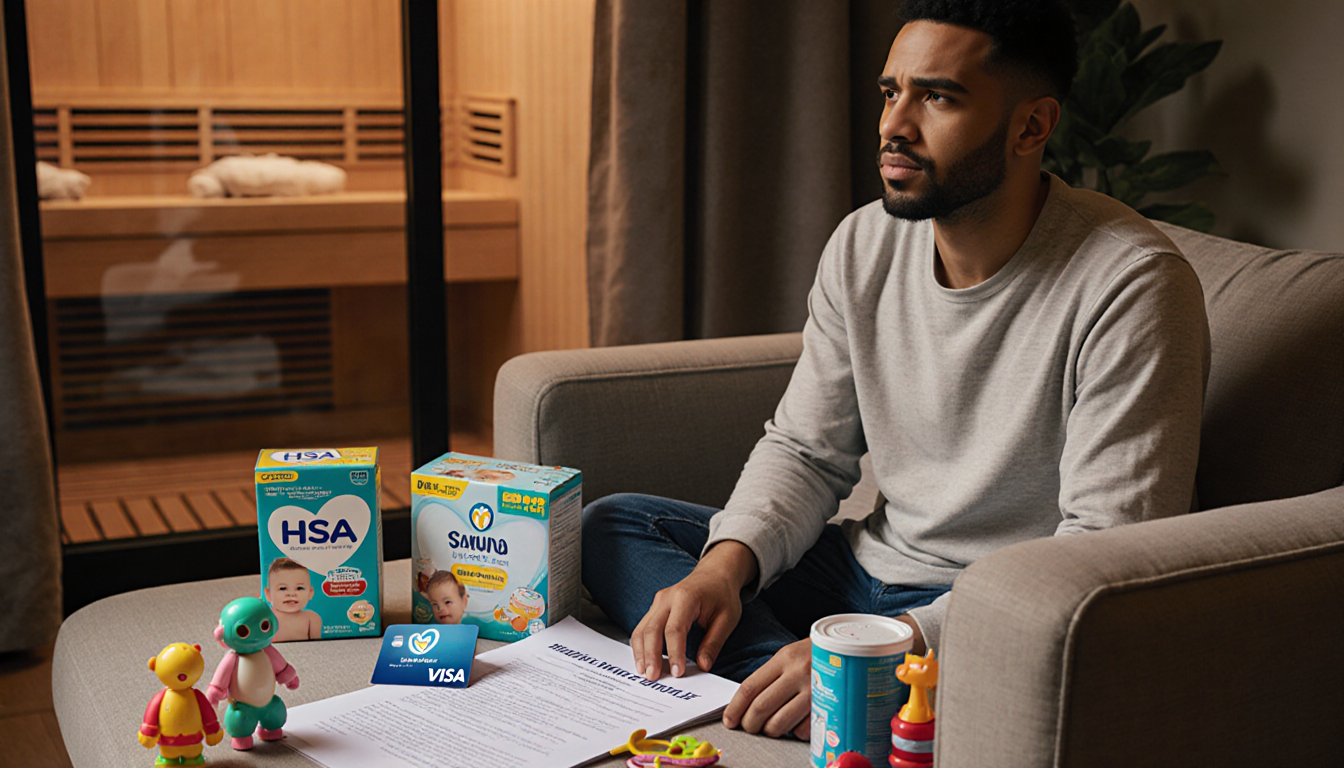
A $1,700 baby bassinet and a $300 online parenting workshop can be paid for with tax‑free health savings account (HSA) dollars, but the same funds cannot cover most baby formula, toothbrushes, or insurance premiums. That distinction is at the heart of a new Republican push to use HSAs as a substitute for the enhanced federal subsidies that have kept health‑insurance premiums lower for most Affordable Care Act (ACA) enrollees.
Health Savings Accounts: How They Work
HSAs let people who pay high out‑of‑pocket costs set aside money—tax‑free—to cover medical expenses. They are usually managed by banks or insurance companies and are only available to those with the highest‑deductible plans on the ACA marketplace, namely the bronze and catastrophic tiers. In 2026, the IRS will allow $4,400 to be deposited into an HSA for a single person and $8,750 for a family. Flexible spending accounts (FSAs) are similar but have lower limits and cannot be rolled over year to year.
The law that created HSAs explicitly forbids using the accounts to pay insurance premiums. Because of that restriction, the GOP’s proposal to funnel federal dollars into HSAs would not directly address the rising premium costs that many ACA enrollees face.
Republican Proposals and the One Big Beautiful Bill Act
The White House has announced a change that will make millions more ACA enrollees eligible for HSAs, a move that is already part of the One Big Beautiful Bill Act. Starting January 1, 2026, people enrolled in Obamacare’s cheapest coverage could open and contribute to an HSA.
Sen. Bill Cassidy of Louisiana, who chairs the Senate Health, Education, Labor, and Pensions Committee, has championed a plan to deposit federal dollars directly into HSAs for some ACA enrollees. “The American people want something to pass, so let’s find something to pass,” Cassidy said on December 3, pitching his plan again. “Let’s give power to the patient, not profit to the insurance company.” He has promised a deal can be struck in time for 2026 coverage.
Republicans argue that giving people money to cover health costs—specifically through HSA deposits—would be a better alternative to the pandemic‑era enhanced subsidies. The enhanced subsidies expire at the end of the year, and the GOP is still debating whether to simply extend them.
Congressional Debate and Expert Opinions
Douglas Holtz‑Eakin, president of the American Action Forum, warned senators on November 19 that “the plans have been designed. The premiums have been set. Many people have already enrolled and made their selections.” He added that “there’s very little that this Congress can do to change the outlook.”
Sen. Ron Wyden of Oregon, the top Democrat on the Senate Finance Committee, said HSAs “can be a useful tool for very wealthy people,” but he did not see them as a comprehensive health‑insurance solution.
Tom Buchmueller, an economics professor at the University of Michigan who worked in the Biden administration, noted that without an overhaul, the GOP’s proposals are unlikely to relieve the problem at hand: skyrocketing premium payments. He said, “For people who stay in the marketplace, they’re going to be paying a lot more money every month. It doesn’t help them pay that monthly premium.” He also warned that some might be pushed into skimpier coverage, as bronze plans carry the highest out‑of‑pocket costs.
Industry Impact and HHS Officials
The expansion of HSA eligibility is already attracting major retailers. Amazon, Walmart, and Target have opened online storefronts dedicated to devices, medications, and supplies that can be purchased with HSA funds. Startups like Truemed—co‑founded in 2022 by Calley Means, a close ally of Health and Human Services Secretary Robert F. Kennedy Jr.—have become major players in the niche space.
Truemed offers a range of items, from a $9,000 red cedar ice bath to a $2,000 hemlock sauna, and even a $1,700 bassinet that automatically responds to a newborn’s cries. The company’s most popular products are smaller‑dollar fitness items such as kettlebells, supplements, treadmills, and gym memberships.
Justin Mares, CEO of Truemed, told KFF Health News, “What we’ve seen at Truemed is that, when given the choice, Americans choose to invest their health care dollars in these kinds of proven lifestyle interventions.”
Calley Means left Truemed in August after being hired by HHS as a senior advisor supporting food and nutrition policy. HHS spokeswoman Emily Hilliard said in a statement that “Calley Means will not personally benefit financially from this proposal as he will be divesting from his company since he has been hired at HHS as a senior advisor supporting food and nutrition policy.” Truemed remains privately held, and the details of Means’ divestiture have not been disclosed.
Key Takeaways
- HSAs can cover items like eyeglasses, medical exams, and a $1,700 baby bassinet, but not most baby formula, toothbrushes, or insurance premiums.
- The One Big Beautiful Bill Act will allow millions more ACA enrollees to open HSAs starting January 1, 2026.
- Republican proposals to deposit federal dollars into HSAs face legal limits that prevent them from easing premium costs, a concern echoed by economists and lawmakers.
- Major retailers and startups are capitalizing on the growing HSA market, offering a wide array of health‑related products that can be purchased with tax‑free dollars.
Conclusion
The debate over whether health savings accounts can replace the enhanced ACA subsidies underscores a broader clash over how best to manage rising health‑insurance costs. While the GOP sees HSAs as a way to give patients more power, critics point to legal restrictions and the potential for higher out‑of‑pocket payments that could leave many low‑income Americans worse off. The outcome of this policy shift will hinge on Congress’s ability to reconcile these competing priorities before the end of the year.