
At a Glance
- Coco Gauff fell 6-1, 6-2 to Elina Svitolina in a 59-minute quarterfinal.
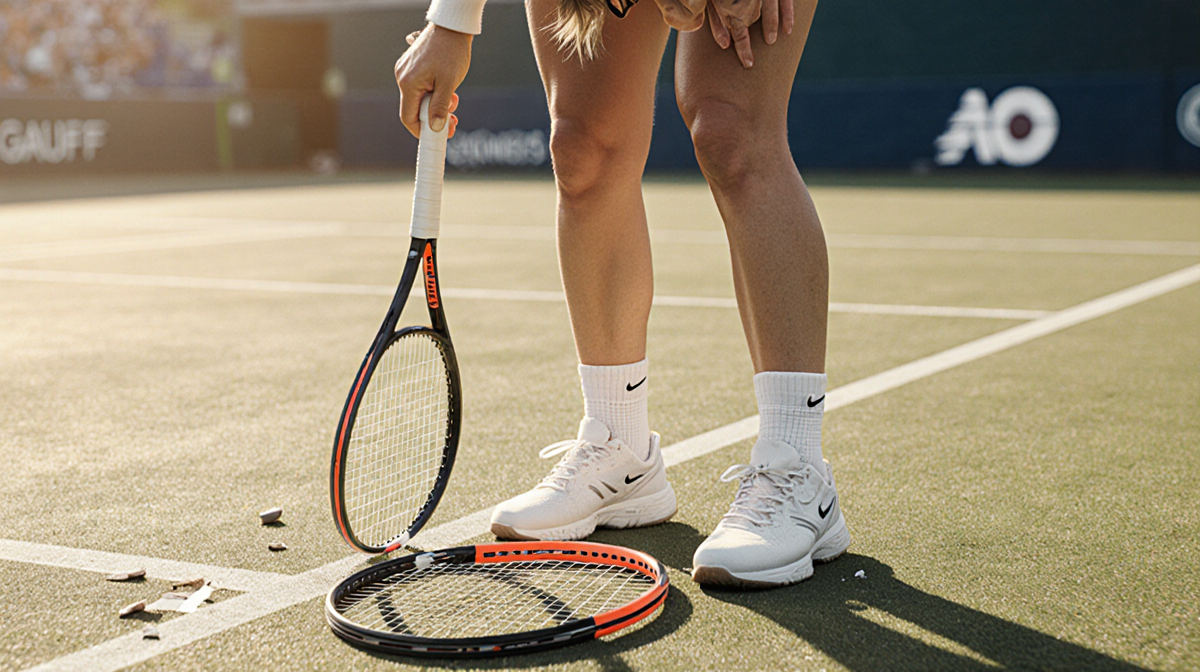
- She smashed her racket seven times after the loss.
- Winner prize money tops $4.15 million, runner-up $2.15 million.
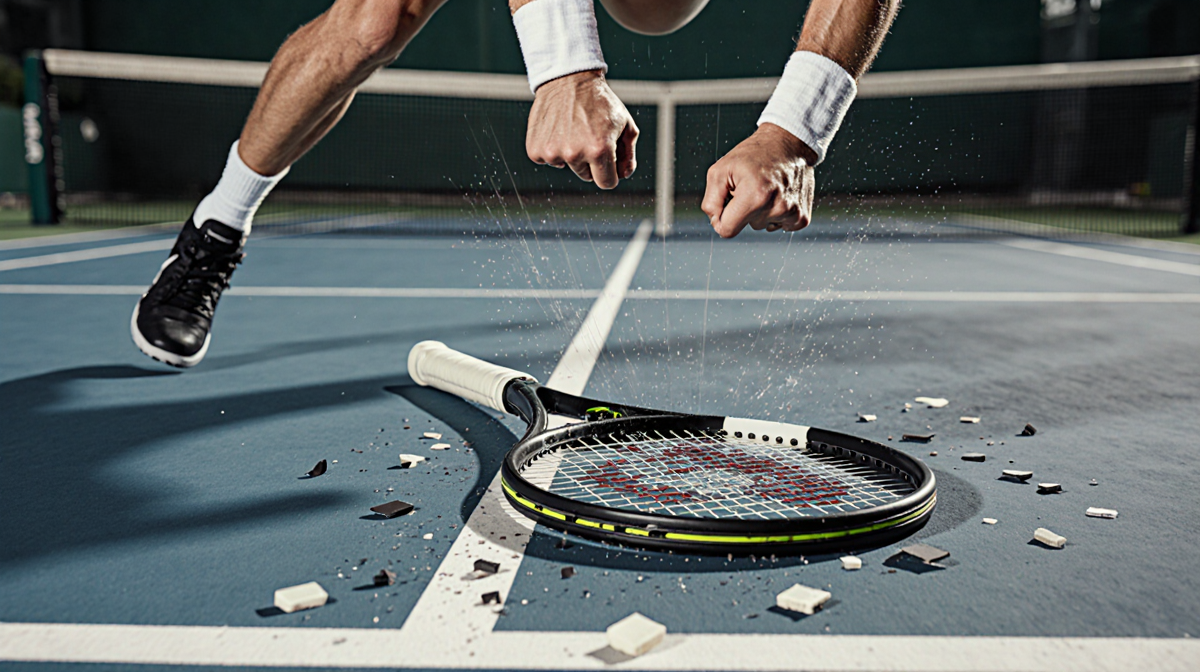
Coco Gauff lost her Australian Open quarterfinal to Elina Svitolina after a tough 59-minute match that saw her struggle with serve and break points. The two-time major champion, now 21, expressed frustration by smashing her racket on the concrete floor outside the center court.
Match Overview
The match began with Gauff’s serve faltering; she recorded five double-faults in the first set and was broken four times. Svitolina capitalized on those mistakes, taking the set 6-1. In the second set, Gauff managed only one break and was broken again, leading to a 6-2 loss.
Key Statistics
- First-serve percentage: 74%
- First-serve points won: 41%
- Second-serve points won: 2 of 11
- Unforced errors: 26
- Clean winners: 3
The statistics show a day where Gauff’s service game was a liability, with a high number of double faults and a low conversion rate on her first serve.
Post-Match Reaction
After the final point, Gauff walked to the locker-room area and repeatedly struck her racket against a concrete ramp. She explained that she had tried to find a place without cameras to vent her frustration.
“Certain moments – the same thing happened to Aryna (Sabalenka) after I played her in the final of the U.S. Open – I feel like they don’t need to broadcast,” Gauff said in her post-match news conference. “I tried to go somewhere where I thought there wasn’t a camera because I don’t necessarily like breaking rackets.”
She continued, “I broke one racket (at the) French Open, I think, and I said I would never do it again on court because I don’t feel like that’s a good representation. So, yeah, maybe some conversations can be had.”
Emotional Context
Gauff noted that she prefers to channel her emotions outside the court, away from fans and cameras. She said, “They’re good people. They don’t deserve that, and I know I’m emotional,” adding, “So, yeah, I just took the minute to go and do that.”
“I don’t think it’s a bad thing. Like I said, I don’t try to do it on court in front of kids and things like that, but I do know I need to let out that emotion,” she added.
Prize Money and Record
The winner of the Australian Open will receive $4.15 million, while the runner-up earns $2.15 million. All singles and doubles players will receive a minimum of a 10% increase from last year, making the total prize pool the largest in the tournament’s history.
| Position | Prize Money |
|---|---|
| Winner | $4.15 million |
| Runner-up | $2.15 million |
| Minimum increase | 10% |
The record-breaking prize pool reflects the growing popularity and commercial success of the sport.
Takeaways
- Gauff’s serve was a major weakness in the match, leading to multiple breaks.
- Emotional frustration manifested in a public racket-smashing incident.
- The Australian Open’s prize money continues to set new records for tennis players worldwide.
Why it matters
The incident highlights the pressure elite athletes face and the growing financial stakes in professional tennis. It also underscores the importance of mental resilience in high-level competition.