
Franklin Mall, a 137‑acre retail complex off Roosevelt Boulevard in Northeast Philadelphia, is now on the market as its owners seek a new buyer.
The announcement came from Jones Lang LaSalle Americas, Inc., which currently manages the property.
The mall’s sale marks a significant shift for the region’s retail landscape.
Investors and developers are watching closely for the next chapter.
The mall sits on a sprawling 137 acres of land, a size that offers substantial flexibility for future projects.
Its location off Roosevelt Boulevard places it within easy reach of major traffic arteries.
The property spans more than 1.5 million square feet of retail space.
The acreage itself is a key selling point for potential redevelopment.
Franklin Mall opened its doors in 1989 as an outlet mall, drawing shoppers from across the area.
The original name was Philadelphia Mills, a brand that resonated with many locals.
Over the decades, the mall has undergone several renovations to keep pace with changing consumer habits.
Each renovation aimed to refresh the mall’s appeal and maintain its relevance.
The mall has experienced multiple name changes throughout its history, reflecting shifts in ownership and branding strategies.
While some visitors still refer to it as Franklin Mills, the official name remains Franklin Mall.
These name changes are part of a broader trend in the retail sector.
They also signal attempts to reposition the mall in a competitive market.
Ownership of Franklin Mall has shifted several times since its opening.
The property has been managed by various real estate firms over the years.
Each transition brought new strategies for tenant mix and marketing.
The changes have also influenced the mall’s financial outlook.
Currently, Jones Lang LaSalle and the Namdar Realty Group jointly own the mall.
Their partnership reflects a shared interest in maximizing the property’s potential.
Together, they oversee leasing, maintenance, and future development plans.
Their involvement underscores the mall’s importance to the local economy.
Key tenants at the mall include ‘Saks Fifth Avenue OFF 5TH’, ‘Polo Ralph Lauren Factory Store’, and ‘Reclectic’.
These brands contribute to the mall’s upscale retail profile.
Their presence attracts shoppers seeking premium and specialty products.
The tenant mix also affects the mall’s overall occupancy rate.
At present, Franklin Mall is 68% occupied by retailers and other businesses.
This occupancy level reflects the challenges facing traditional shopping centers.
The vacancy of certain spaces highlights opportunities for new tenants.
Maintaining or improving occupancy remains a priority for the owners.
The mall was last appraised at a value of $76 million.
This appraisal provides a benchmark for potential buyers and investors.
It also reflects the mall’s current market position.
The valuation is a key factor in the sale process.
In the sales listing, Jones Lang LaSalle describes the site as a strong candidate for redevelopment into a modern industrial facility.
The description emphasizes the mall’s size and location advantages.
The listing highlights the property’s potential for high‑density development.
This vision aligns with broader trends in mixed‑use projects.
Redevelopment into an industrial complex could transform the mall into a logistics or manufacturing hub.
Such a transition would capitalize on the property’s proximity to major highways.
The change would also diversify the local economy.
It is one of several possibilities considered by potential buyers.
The mall’s close proximity to major highways is a strategic asset for any redevelopment plan.
Access to transportation routes is crucial for industrial and commercial projects.
The location off Roosevelt Boulevard offers easy connectivity.
This advantage is highlighted by the listing as a selling point.
Social media has become a platform for shoppers to express their feelings about the mall.
Many users share videos and photos that capture the mall’s current state.
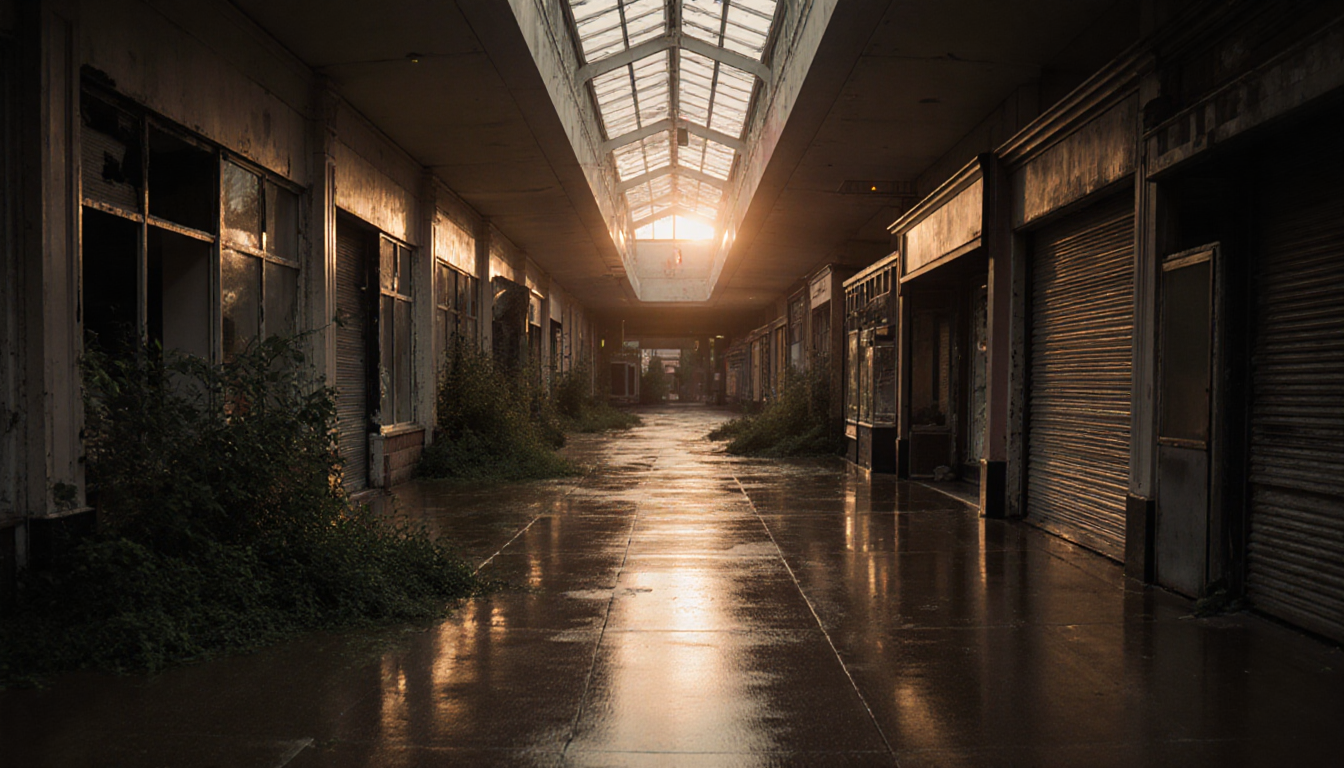
The content often highlights empty storefronts and quiet food courts.
It reflects a broader sense of nostalgia and loss among visitors.
TikTok creators have posted videos walking through vacant spaces within the mall.
These clips showcase the stark contrast between the mall’s past vibrancy and its present emptiness.
The videos have gained attention from a wide audience.
They serve as visual documentation of the mall’s decline.
YouTube videos also feature tours of the mall, focusing on its quiet corridors and abandoned shops.
These longer formats provide a more in‑depth look at the mall’s interior.
Viewers can see the scale of the vacant areas.
The content underscores the mall’s current challenges.
Shoppers who have visited recently report a feeling of emptiness and quietness.
The lack of activity is evident in the empty food courts and deserted retail spaces.
Many comment on the difference from the mall’s earlier days.
Their reactions highlight the emotional impact of the mall’s decline.
The mall’s current state has earned it a reputation for being empty.
The absence of regular foot traffic is noticeable.
This emptiness has become a topic of discussion among local residents.
It also affects the perception of the mall’s viability.
What the mall will become in the future remains a mystery.
No definitive plan has been announced by the owners or potential buyers.
The uncertainty fuels speculation among the community.
The outcome will shape the mall’s legacy.
Potential buyers include developers interested in industrial or mixed‑use projects.
The sale has attracted attention from firms seeking large parcels of land.
Interest is driven by the mall’s size and location.
The transaction could bring significant change to the area.
The sale of Franklin Mall fits into a larger trend of repurposing large retail spaces.
Similar projects have emerged across the country.
The trend reflects shifts in consumer behavior and real estate demand.
It underscores the need for adaptive reuse.
Local residents are concerned about the mall’s future and its impact on the community.
The mall has historically provided jobs and a shopping destination.
Its potential redevelopment could alter the local economy.
Community members are watching the process closely.
The mall’s economic significance extends beyond retail.
It contributes to the region’s tax base and employment opportunities.
The sale could influence future investment decisions.
The outcome will have lasting effects on the area’s prosperity.
Franklin Mall remains the second‑largest mall in the Philadelphia area, behind King of Prussia Mall.
This ranking highlights its importance in the regional retail hierarchy.
The comparison underscores the mall’s scale and influence.
It also frames the potential impact of its sale.
The sale process is expected to take several months.
Potential buyers will conduct due diligence before making offers.
The owners will review proposals and negotiate terms.
Once a deal is reached, the mall will transition to new ownership.
Franklin Mall’s sale marks a turning point for Northeast Philadelphia’s retail landscape.
The outcome will determine whether the mall continues as a shopping destination or transforms into an industrial hub.
The community, investors, and developers will watch closely.
The next chapter will shape the mall’s legacy for years to come.