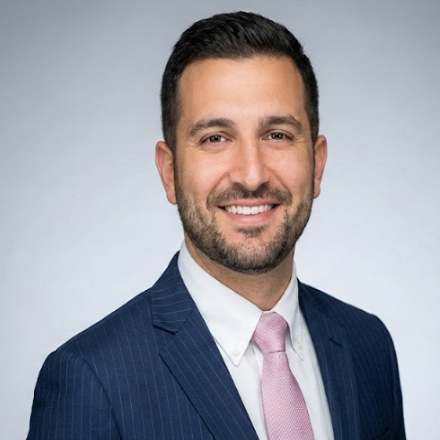
On Dec. 11, former NBA player Jason Collins made a startling announcement on ESPN’s website, revealing he had been diagnosed with Stage 4 glioblastoma. The former pro, who first drew national attention in 2013 when he became the first active NBA player to come out as gay, said the news was “simple, but intentionally vague” when his family released an initial statement.
Diagnosis Announcement
Collins explained that his family’s brief notice was meant to protect his privacy while he was “mentally unable to speak for myself and my loved ones were trying to understand what we were dealing with.” He added that it was time for the public to hear directly from him: “I have Stage 4 glioblastoma, one of the deadliest forms of brain cancer. It came on incredibly fast.”
Understanding Glioblastoma
Collins described glioblastoma as an aggressive cancer that “grows within a very finite, contained space—the skull—and it’s very aggressive and can expand.” He noted that the tumor’s location “surrounded by the brain and is encroaching upon the frontal lobe—which is what makes you, ‘you.’” The cancer is described as “multiforme,” with a “monster with tentacles spreading across the underside of my brain the width of a baseball.”
A biopsy revealed the tumor’s growth factor was “30%.” Collins explained that this meant “within a matter of weeks, if nothing were to be done, the tumor would run out of room and I’d probably be dead within six weeks to three months.” He added that his cancer was a “wild type” containing “mutations that make it even more deadly and difficult to treat,” likening it to the mythical Hydra.
Early Symptoms and Detection
Collins and his husband, Brunson Green, first noticed something was off when they had to skip their annual flight to see the US Open because he “couldn’t stay focused” enough to pack his bags. He had been experiencing “weird symptoms” for a week or two but thought, “unless something is really wrong, I’m going to push through” because he was “an athlete.”
Early signs of glioblastoma can include:
- Headaches
- Confusion
- Memory loss
- Personality changes
- Speech difficulties
- Vision changes
After missing the flight, Collins went to UCLA for a CT scan. Within five minutes in the machine, a technician pulled him out and said they were going to arrange for him to see a specialist. Collins, who had undergone multiple CT scans in his life, knew it was a “bad” sign.
Hospital Experience
Collins recounted that his family saw his mental clarity, short‑term memory and comprehension disappear “in hours,” turning him into an NBA player’s version of “Dory” from “Finding Nemo.” Over the next few weeks they would find out just how bad it was.
In the hospital, he behaved strangely with his mind in a “fog.” Brunson said he lost the desire to watch tennis, was unable to move, and took a liking to calm, quiet Korean soap operas in Korean. Brunson also took away Collins’ phone after discovering he was sending “very weird text messages” and “watching mindless TikToks for hours.”
Treatment Journey
After leaving the hospital, Collins began taking Avastin, which he called “my best chance of stopping the growth of the tumor and regaining any quality of life back.” He also received radiation treatments, which helped improve some symptoms.
Within days, he said, “I started coming out of my fog.” He was wheeled into his first radiation treatment, and by the third one he could walk. By the middle of October, he could take short walks around his neighborhood. “My husband even gave me back my phone,” he said.
Current Treatment in Singapore
Collins is now receiving treatment at a clinic in Singapore that offers targeted chemotherapy using EDVs. This delivery mechanism acts as a Trojan horse, seeking out proteins only found in glioblastomas to deliver its toxic payload past the blood‑brain barrier and straight into his tumors.
The goal, he said, “is to keep fighting the progress of the tumors long enough for a personalized immunotherapy to be made for me, and to keep me healthy enough to receive that immunotherapy once it’s ready.”
Future Plans and Hope
Collins said his plan is to continue to “hit” his cancer “in ways it’s never been hit: with radiation and chemotherapy and immunotherapy that’s still being studied but offers the most promising frontier of cancer treatment for this type of cancer.” He added that he is “fortunate” to be in a financial position to “go wherever in the world I need to go to get treatment.”
He concluded, “So if what I’m doing doesn’t save me, I feel good thinking that it might help someone else who gets a diagnosis like this one day.”
Key Takeaways
- Jason Collins publicly announced his Stage 4 glioblastoma diagnosis on Dec. 11 via ESPN.
- The aggressive tumor grew rapidly, encroaching the frontal lobe and was described as multiforme with a 30% growth factor.
- Collins is undergoing Avastin, radiation, targeted chemotherapy with EDVs in Singapore, and plans to pursue personalized immunotherapy.
The story first appeared on TODAY.com.
Closing
Collins’ candid disclosure of his battle with one of the deadliest forms of brain cancer brings renewed attention to glioblastoma’s rapid progression and the urgent need for effective treatments. His openness about the symptoms, treatment journey, and hope for future therapies may inspire others facing similar diagnoses.