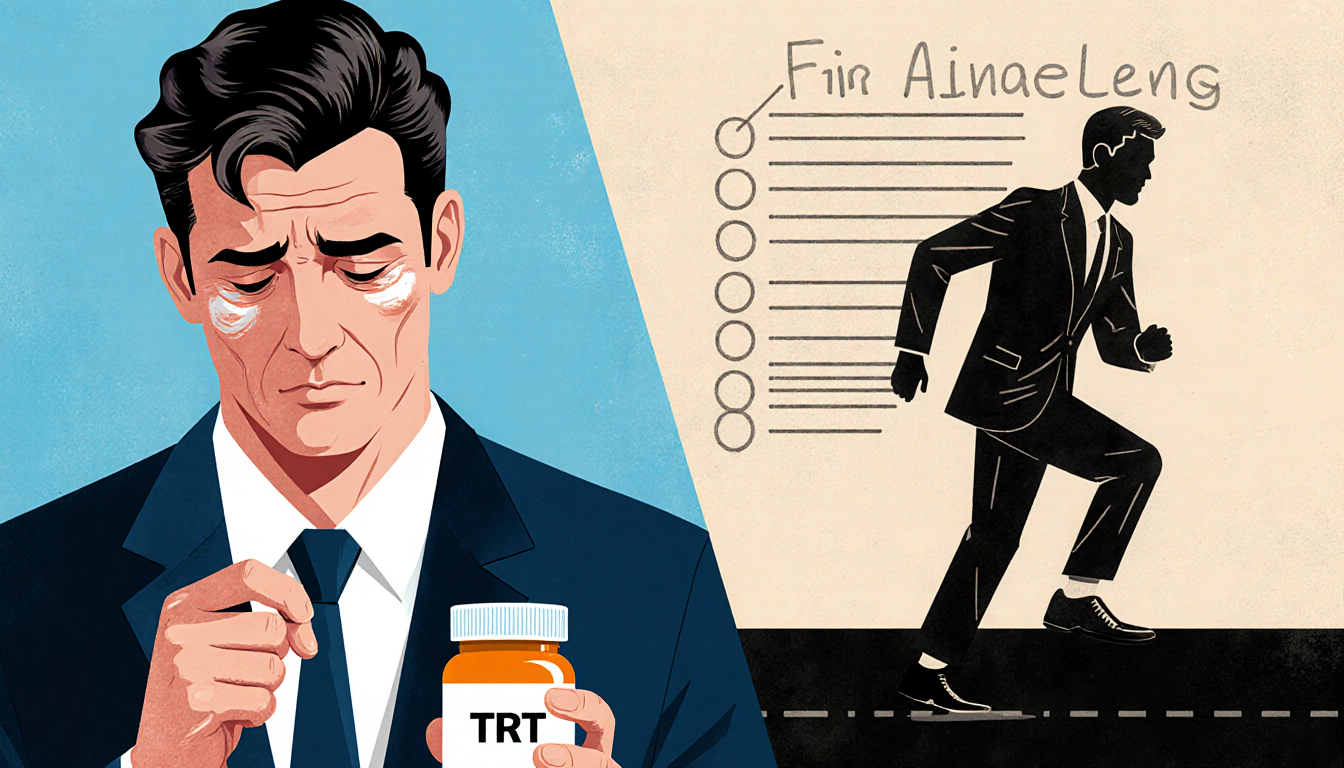


On Wednesday, a 13‑member FDA panel urged the agency to strip testosterone of its controlled‑substance status and broaden labeling, a move that could open the door for thousands of men with low hormone levels.
Panel Overview and Endorsement
The panel, composed mainly of urologists and federal health officials, gave a strong endorsement of testosterone replacement therapy (TRT) for men whose bodies do not produce enough of the hormone. The experts said the therapy, known informally as TRT, has been underutilized because of outdated concerns about prostate cancer, stroke and heart disease.
Dr. Helen Bernie, an associate professor of urology at Indiana University School of Medicine and one of the panelists, noted: ”Testosterone is still regulated as if it were a dangerous, performance‑enhancing drug from the athletic doping scandals of the 1980s. And because of this outdated classification, many physicians fear prescribing it or even screening for it.”
Proposed Regulatory Changes
During the discussion, panelists urged the FDA to expand the approval of TRT drugs to include men with low testosterone levels and any related symptoms, following guidelines from the American Urological Association. At present, the FDA has only approved TRT forms—gels, pills, patches and injections—for men who have both low testosterone and an associated medical condition, such as a genetic disorder that prevents the testicles from producing the hormone.
Dr. John Mulhall, a panelist and urologic surgeon at Memorial Sloan Kettering Cancer Center, said: ”Given the label restriction, one can make the argument that thousands of patients in need of testosterone therapy have been and are being deprived of it.”
The panel also called for the Drug Enforcement Administration to remove testosterone’s designation as a Schedule 3 drug, the same category that ketamine occupies. Dr. Landon Trost, director of the Male Fertility and Peyronie’s Clinic in Orem, Utah, explained: ”Because prescriptions for Schedule 3 drugs must be carefully tracked, physicians may be hesitant to give them and some pharmacies may choose not to carry the drugs or limit their volume.” He added, ”Because of that, you get these pop‑up T clinics and other things that will fill that gap, whereas normally the patient would be going to their primary care physician, their urologist, their endocrinologist.”
Popularity, Demand and Safety Concerns
Testosterone therapy has risen sharply in the last five years, especially among young men seeking unapproved uses such as increased muscle mass. The medication is widely promoted on social media for this purpose. Dr. Bobby Najari, a urologist at NYU Langone Health who was not part of the panel, commented: ”It’s not that there is an increase in the prevalence of testosterone deficiency,” he said. ”I think it’s an increase in the demand for a drug that can make it easier to have physiques that we see in superhero movies.”
Wellness clinics and so‑called longevity centers also offer TRT as a purported way to slow aging, though the FDA has not approved it for that purpose. In February, the agency warned that the safety and benefits of that use have not been established.
The panel touched briefly on TRT’s drawbacks. Risks such as elevated blood clots and the shutdown of sperm production—making it unsuitable for men who wish to conceive—were mentioned. Dr. Marc Goldstein, surgeon‑in‑chief of male reproductive medicine and surgery at Weill Cornell Medicine and not on the panel, stated: ”If they take it long enough, and they’re rendered infertile, it may not be reversible.”
Not all cases of low testosterone require TRT; weight loss or surgery to remove varicoceles can address some symptoms. Najari emphasized managing expectations: ”A small group of men don’t feel any change at all,” he said. ”On the other end of that curve, a small group of men say, ‘I feel so much better. This really changed my life.’ And then the majority of men say, ‘I feel a little bit better.”
FDA’s Broader Goals and Criticisms
The FDA says the purpose of these panels is to ”modernize regulatory oversight.” However, some public‑health experts have criticized them for lacking diverse viewpoints and for not thoroughly screening panelists for conflicts of interest. They worry the format may replace a more formal review process and that panelists are chosen to support changes favored by Health Secretary Robert F. Kennedy Jr. The American College of Obstetricians and Gynecologists described a panel on antidepressant use during pregnancy as ”alarmingly unbalanced.”
FDA Commissioner Marty Makary rebutted those concerns, saying: ”The FDA today is making it clear that we want to learn more about this topic. We don’t have preconceived ideas. We are not promoting any medical recommendation or any product.”
Evidence and Recent FDA Actions
Doctors’ understanding of testosterone therapy has evolved over decades. While earlier reports linked the hormone to strokes and heart attacks, a large clinical trial launched in 2018 found no such risks. In February, the FDA removed a warning about increased cardiovascular risk from testosterone products but added a warning about increased blood pressure based on other safety studies.
The panel’s recommendations come after a similar discussion on hormone replacement therapy for menopausal women, after which the FDA removed a black‑box warning from those medications.
Key Takeaways
- The FDA panel seeks to reclassify testosterone as a non‑controlled substance and broaden labeling to include all men with low levels.
- The panel argues that current restrictions deprive thousands of patients of needed therapy.
- Safety concerns remain, and the FDA has recently updated warnings while acknowledging new evidence.
The panel’s proposals could reshape how testosterone replacement therapy is prescribed, potentially making it more accessible for men who could benefit from it. The FDA will need to weigh the panel’s recommendations against safety data and broader public‑health considerations before any regulatory changes are finalized.