
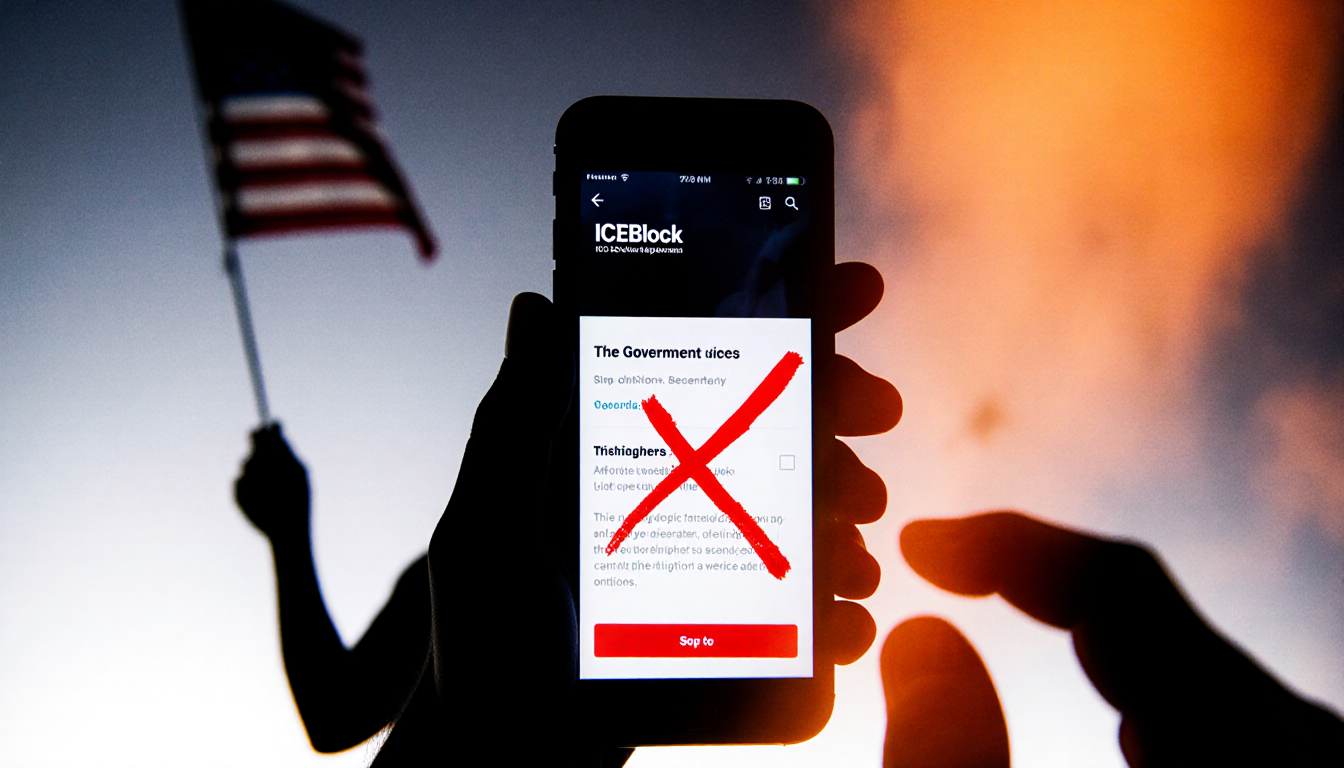

An app that let users track Immigration and Customs Enforcement (ICE) agents is now the center of a lawsuit accusing the Trump administration of violating free‑speech rights.
The Lawsuit
On Monday, Joshua Aaron, the Texas‑based maker of the iPhone app ICEBlock, filed a federal lawsuit against the Trump administration. Aaron says the government used its “state power” to force Apple to remove his app, and that the removal violated the First Amendment. He seeks a court ruling that ICEBlock is protected speech and that he did nothing wrong by creating it. The suit also asks the judge to protect Aaron from prosecution and to stop the “unlawful threats” he claims were made by Attorney General Pam Bondi, Homeland Security Secretary Kristi Noem, ICE Acting Director Todd M. Lyons, and White House Border Czar Tom Homan.
Aaron told reporters in an interview: “We’re basically asking the court to set a precedent and affirm that ICEBlock is, in fact, First Amendment‑protected speech and that I did nothing wrong by creating it. And to make sure that they can’t do this same thing again in the future.” He added that a key part of the lawsuit is to “basically have them stop threatening myself and my family.”
Background of ICEBlock
The app, launched in April, lets users see the locations of ICE officers in their neighborhoods. Aaron says it was designed to help immigrant communities protect themselves from surprise raids or potential harassment. At its peak, ICEBlock had more than one million users and was the most widely used ICE‑tracking app available on Apple’s App Store.
Immigrant advocates expressed mixed feelings about the app’s usefulness. Civil‑liberties experts noted that the removal of ICEBlock resembled actions taken by authoritarian governments. For example, in 2019 Chinese pressure led Apple to remove an app that enabled Hong Kong protesters to track police.
Apple’s Removal
In October, after Attorney General Bondi said ICEBlock “put ICE agents at risk” by enabling people to track ICE activity, Apple removed the app from its store. Apple complied after receiving an email that stated the app violated its policies because it provided location information that could be used to harm law enforcement officers. The email also mentioned new information “provided to Apple by law enforcement” that showed the app broke the App Store rules.
Aaron countered that ICEBlock works no differently from Apple’s own Maps app, which lets drivers know about nearby police speed traps. He said the removal was a political move rather than a legitimate policy violation.
Government Allegations
Bondi’s earlier statements to Fox News framed the app as endangering law enforcement and “giving a message to criminals.” She said, “He cannot do that. And we are looking at it, we are looking at him, and he better watch out, because that’s not protected speech.” The lawsuit claims these statements were part of an unlawful threat to criminally investigate and prosecute Aaron.
A relative of White House press secretary Karoline Leavitt was detained by immigration officials after allegedly overstaying a tourist visa that expired in 1999. Aaron cited this incident as evidence of the administration’s aggressive enforcement tactics.
Impact on Users
Since the app’s removal, users have reported that they can no longer receive real‑time updates on ICE activity. Aaron says the lack of information has created a “paramilitary force that can continue to operate with impunity.” He has repeatedly compared Trump’s immigration enforcers to the “Gestapo” secret police force of Nazi Germany, although the lawsuit itself does not make that comparison.
Aaron also noted that the app’s removal made it harder for immigrant communities to stay safe. “I mean, these are people that are wearing masks — which is the antithesis of everything about this country — and they are not identifying themselves, and they’re zip‑tying children and they’re throwing women into vans,” he said by phone on Monday.
Broader Implications
The lawsuit highlights the tension between national security concerns and free‑speech rights. It also raises questions about the extent to which government officials can influence private companies to remove apps that provide public information. The case may set a precedent for how future apps that track law‑enforcement activity are treated.
Google followed Apple in taking down some ICE‑tracking apps from its store in October, though ICEBlock was never available on Android. The removal of the app has sparked debate among civil‑liberties groups and tech advocates.
Key Takeaways
- Texas developer Joshua Aaron is suing the Trump administration for First Amendment violations after ICEBlock was removed from Apple’s App Store.
- The lawsuit alleges unlawful threats from Attorney General Pam Bondi, Homeland Security Secretary Kristi Noem, ICE Acting Director Todd M. Lyons, and White House Border Czar Tom Homan.
- The removal of ICEBlock has left over one million users without a tool that provided real‑time updates on ICE activity, raising concerns about safety and free speech.
The case remains pending, and a federal judge will decide whether the government’s actions were lawful and whether Aaron’s app is protected speech.
Closing
The outcome of this lawsuit could have lasting effects on the relationship between tech companies, the government, and the public. It also underscores the growing debate over how to balance law‑enforcement transparency with individual rights in the digital age.