

At a Glance
- Three offshore wind projects resume construction after federal judges block Trump administration stop-work order
- Five projects totaling 6 gigawatts were paused in December over radar-interference claims
- Judges in Virginia and Washington, D.C. ruled the Interior Department’s order was overly broad and poorly justified
- Two remaining projects still face legal limbo as hearings continue
Why it matters: The decisions clear the path for nearly $20 billion in clean-energy investment along the East Coast, where electricity prices are among the nation’s highest.
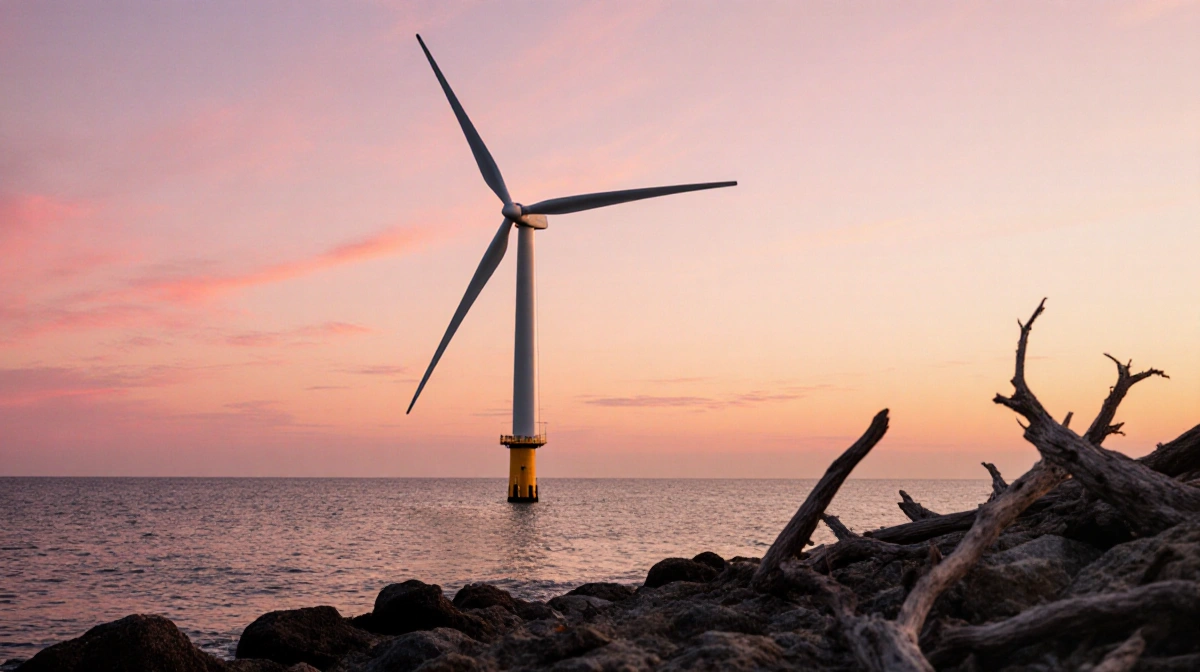
Federal judges have reopened construction on three major offshore wind farms after rejecting the Trump administration’s last-minute shutdown, dealing a blow to the White House’s effort to freeze nearly 6 GW of renewable power along the Atlantic seaboard.
The Department of the Interior issued blanket stop-work letters in December, claiming the turbines could scramble military or homeland-security radar. Within weeks, developers of Revolution Wind off Rhode Island, Empire Wind off New York, and Coastal Virginia Offshore Wind off Virginia sued to restart their sites. All three projects had already spent years securing federal permits that specifically addressed radar concerns.
Judges in separate Virginia and D.C. courtrooms sided with the developers in early hearings, finding the government’s rationale thin and the timing suspect.
Judges Fault Government’s Reasoning
U.S. District Judge Carl Nichols, a Trump appointee, told government lawyers their brief “doesn’t even include the word arbitrary,” even though Empire Wind developer Equinor argued the order was “arbitrary and capricious.” Nichols noted the Interior filing never explained why construction-rather than eventual operation-posed a security threat.
Across the courthouse, Judge Jamar Walker echoed the skepticism while hearing Dominion Energy’s challenge for the Virginia project. Walker said the sweeping order ignored site-specific mitigation already baked into each project’s federal environmental record.
The rulings let crews return to work after a 90-day freeze that idled specialized ships and thousands of union jobs.
Two Projects Still Stalled
Two other developments remain in legal limbo:
- Sunrise Wind, developed by Ørsted, faces a February 2 hearing
- Vineyard Wind 1 developers filed suit only Thursday and have yet to receive a court date
Together, the five paused projects represent roughly $20 billion in investment and could power more than 2 million homes.
Radar Concerns Aren’t New
Radar interference is a documented issue with wind farms; rotating blades can create clutter on operator screens. During the multi-year permitting process, developers agreed to turbine-layout tweaks and committed to funding radar upgrades at nearby military sites. Those mitigations were accepted by the Departments of Defense and Homeland Security before original approvals were granted.
The Trump administration offered no new technical evidence in court, according to filings reviewed by News Of Philadelphia. Instead, it relied on a broad assertion that “foreign-manufactured components” could somehow compromise national security.
President Trump has openly criticized wind energy, telling oil executives last week, “I’m not much of a windmill person.”
East Coast Energy Stakes
The legal wins come as electricity prices spike across the Northeast and Mid-Atlantic. Regional grid operator PJM has warned of rising capacity costs, and New England routinely posts the nation’s highest retail power rates.
A 2024 Department of Energy study estimates the East Coast could host 110 GW of offshore wind by 2050-enough to supply a third of the region’s demand and offset expensive natural-gas generation.
Nationwide, the offshore technical potential tops 13,500 terawatt-hours per year, triple current U.S. electricity consumption, though only a fraction is currently slated for development.
Key Takeaways
- Immediate impact: Construction crews can remobilize on three projects totaling 3.7 GW of capacity
- Legal precedent: Judges signaled future shutdown orders must cite project-specific evidence, not blanket claims
- Market signal: Investors watching the docket view the rulings as a green light for additional East Coast lease areas scheduled for auction later this year
Developers tell News Of Philadelphia they aim to hit federal production deadlines that qualify for generous investment-tax-credits set to phase out after 2032. Each month of delay raises financing costs and risks pushing projects past that window.